Blog » Conversations »
Your Brand Mentions Are Down. That’s Not Always Good News
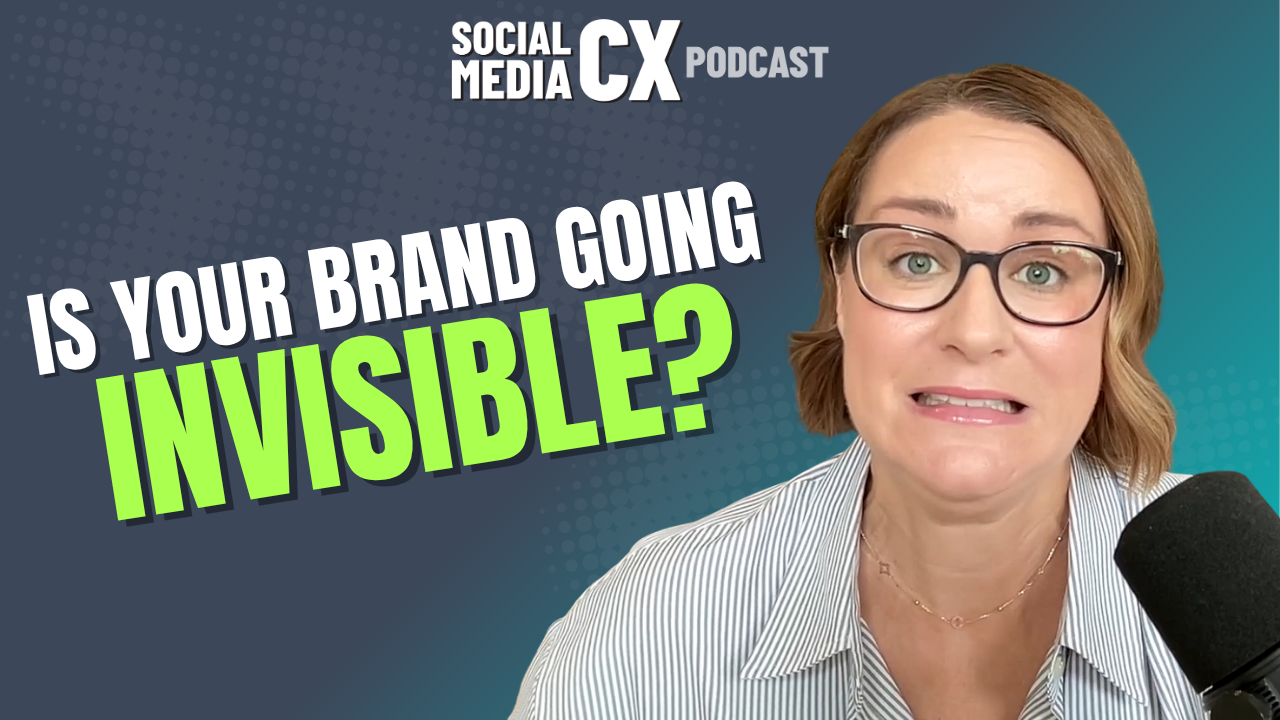
Table of Contents
A quieter social inbox can feel like a win. There are fewer complaints, fewer people tagging your brand, and fewer issues your team needs to jump in and resolve. Someone looks at the dashboard and thinks, Great. Things must be going well.
But that conclusion can be dangerously incomplete.
Brand mentions aren’t just a complaint tracker. They’re also a signal that people are talking about you at all. If your brand mentions suddenly start dropping, you need to understand why.
A quiet brand isn’t necessarily a healthy brand. You might actually be becoming an invisible one.
The “No News Is Good News” Myth
We’re used to associating brand mentions with problems. A customer tags you because an order hasn’t arrived. Someone leaves a complaint. A frustrated customer wants an answer.
Naturally, when those mentions decrease, we assume fewer problems must be happening.
Sometimes that’s exactly what’s going on. But there are three very different reasons your brand mentions might drop, and only one is automatically good news.
1. You Actually Solved the Problem
Let’s start with the best-case scenario.
Maybe your product improved. Your customer care team got faster. Your social team started giving customers better answers. The recurring issues that used to drive people to social simply aren’t happening as often.
That’s the kind of decline leadership hopes to see.
Unfortunately, genuine resolution isn’t the only explanation for fewer brand mentions. In my experience, it isn’t always the most common one either.
2. The Conversation Moved Somewhere Else
People could still be talking about your brand. You just can’t see them.
Think about all the conversations happening in private Slack communities, group chats, Facebook Groups, Reddit threads, and other spaces that don’t necessarily show up in your native social inbox.
Even public conversations can get missed if people use product names, stakeholder names, industry terms, or other language your tools aren’t tracking.
That’s the difference between relying only on what comes directly to you and using social listening proactively.
Social listening tools can help you widen that view. We use Sprout Social, while tools such as AlertMouse and Agorapulse also offer listening capabilities at different price points. The important thing isn’t which platform you choose. It’s whether you’re looking beyond the conversations that arrive directly in your inbox.
If your listening coverage doesn’t move with the conversation, your dashboard can show a decline even though people haven’t stopped talking.
You’ve just stopped hearing them.
And those conversations can matter far beyond your social dashboard. As we’ve explored before, Reddit conversations can even influence what AI learns and recommends about your brand. If you’re only paying attention when someone tags your official account, you may be missing an important part of the conversation.
3. Your Content Stopped Being Talk-Worthy
Then there’s the reason nobody wants to hear.
People might not be talking about your brand because you’re not giving them anything worth talking about.
Look at your content from the last quarter. Was it safe? Generic? Built primarily for reach, impressions, and eyeballs? Or did it actually give people a reason to respond?
Social platforms reward meaningful engagement. Comments, replies, shares, saves, and back-and-forth threads signal that people find your content worth spending time with. Those signals can help your content reach more people.
That’s also why the business value of social conversations goes far beyond engagement rate. The conversations happening around your content can affect visibility while also giving you valuable customer signals.
The opposite can compound too. If fewer people engage with or talk about your content, your reach can decline. Then fewer people see the content in the first place.
That’s when declining brand mentions can become part of a much bigger visibility problem.
How Fewer Brand Mentions Can Hurt Your Reach
This is where a seemingly harmless metric can start compounding in the wrong direction.
Your brand mentions fall. There are fewer conversations and meaningful engagement signals around your content. Your reach starts falling too.
Now fewer people see the content in the first place. That gives you even fewer opportunities to generate mentions and conversations.
Around and around it goes. Meanwhile, your dashboard can look remarkably calm.
That’s why brands that dismiss mention volume as a vanity metric may eventually find themselves wondering why their organic reach cratered.
How to Figure Out Why Your Brand Mentions Are Dropping
If your brand mentions are declining, don’t guess. Investigate what’s actually happening.
There are three places to start.
Check Your Social Listening Coverage
First, look at what you’re actually tracking.
Are you only seeing conversations coming directly to your brand? Or are you proactively tracking brand terms, products, stakeholders, competitors, and the language your customers actually use?
Without social listening, people can be talking about you without talking to you.
A gap in your listening coverage can look exactly like a genuine decline until you go looking for the conversations you’re missing.
Audit Your Last 10 Posts for “Reply-Ability”
Next, look at your last 10 social posts.
Don’t just count likes. Ask yourself whether each post gave someone a reason to respond, disagree, add an opinion, share, or save.
Did your content invite a conversation? Did it make someone feel or think something strongly enough that they wanted to respond?
If the honest answer is no, you may have found the reason your mentions are declining.
Look at What Changed Before the Drop
Finally, look at what happened immediately before your brand mentions started falling.
Did you change your content formats? Shift your tone? Pull back on questions or prompts? Stop using polls?
Mentions rarely fall for absolutely no reason. Something upstream usually changed.
Finding that change can help you understand whether you’re looking at a temporary shift or a larger problem with how your audience is responding to your content.
How to Explain Declining Brand Mentions to Leadership
Here’s where things can get tricky.
If everyone on your team is relieved that the social inbox is quieter, telling them that fewer mentions could be a problem can feel counterintuitive.
So move the conversation away from complaint volume. Talk about visibility.
A quieter inbox paired with declining reach isn’t necessarily relief. It can be a sign that the platform is deprioritizing your content because people aren’t moved to engage with it.
That’s why declining brand mentions shouldn’t be dismissed as just another social media metric. When fewer conversations are accompanied by declining reach, leadership may be looking at a visibility problem.
Is Your Content Giving People Something to Talk About?
A drop in brand mentions isn’t automatically bad. Maybe you’ve genuinely solved the issues that used to drive complaints. That’s worth celebrating.
But your listening coverage could also have gaps. Or people may simply be disengaging from your brand.
You won’t know which one you’re looking at until you check.
If your audit shows that your content isn’t giving people much reason to respond, you’ve identified the problem. The next step is fixing it.
That’s what our free Talk-Worthy Content course is designed to help you do. It will help you create social content that earns replies, sparks conversations, and gives people a reason to engage.
Because quiet isn’t necessarily neutral. Before you celebrate fewer brand mentions, make sure you understand what the silence is actually telling you.
Take the FREE Talk-Worthy Content course.
Read the Transcript
[00:00:00] Why fewer mentions can be bad news
Brooke Sellas: The brands treating mention volume as a vanity metric are the same ones who will be confused in six months about why their reach completely cratered.
Brooke Sellas: Hey, hey. Welcome back to the Social Media CX Podcast. I’m your host, Brooke Sellas, CEO of B Squared Media, author of Conversations That Connect, and today I want to challenge something a lot of teams quietly celebrate, which is a drop in brand mentions. Hmm.
If your mentions are down this quarter on social media and someone on your team is calling that a win, I wanna change your mind over the next few minutes.
Here’s the story I hear on repeat: a brand’s mentions on social media, those people, like, tagging you on social, mentioning you on social, dips. So we think nobody’s escalating complaints. The inbox feels calmer. Someone in a leadership meeting might say, “Hey, see? Things are going well. People aren’t talking about us as much because there’s nothing to talk about.”
And that sounds and feels really reasonable. But it’s usually wrong.
Here’s the no news is good news myth. Silence gets misread constantly on social media, because we’re trained to associate mentions with complaints. And yes, I will be real, oftentimes that is what’s happening. And so when we think fewer complaints, less noise, that must mean that there are fewer problems happening.
But mentions should never just be a complaints tracker for you on social media, because they’re really a measure of whether or not people are talking about you at all. Whether that’s positively, negatively, or in a neutral way. A quiet brand isn’t necessarily a healthy brand. I repeat, a quiet brand isn’t necessarily a healthy brand.
You might actually be an invisible brand. And who wants to be invisible? Not me.
[00:02:31] 3 reasons brand mentions decline
Brooke Sellas: There are three very different reasons that your mentions might drop, and only one of them is actually good news. So let’s go over what those reasons might be.
Reason number one is genuine resolution. So if your product improved, if your care team or social media team got faster with their replies and helpful answers, and the issues that used to generate conversation simply don’t exist anymore, that is a good reason.
That’s a good example. This is something that leadership does hope for, and it is real, but it’s also the least common explanation of why mentions have dropped.
Reason number two is that people moved the conversation somewhere you can’t see. So there is a growing case for what we call dark social, or places where it’s not out in public.
So private Slack communities, maybe there are group chats, Facebook groups, Reddit threads under different terminology than what your listening tool is tracking. When this happens, your brand mentions dropped because your listening coverage didn’t move with the conversation, not because the conversation stopped.
So while organically or natively you may see that things dropped, if you’re not using social listening, you only know reactively what people are saying about you. You’re not looking proactively out there at brand keywords, stakeholder names, product names, et cetera. So people are probably still talking about you, but if you’re not using social listening, that conversation could move to one of these dark social places, and you wouldn’t know.
[00:04:24] When your content stops being talk-worthy
Brooke Sellas: Reason three, and the one nobody wants to hear, is that your content stopped being talk-worthy.
People don’t mention brands that don’t give them anything to react to. If your last quarter of content was safe, and generic, and built for reach, impressions, eyeballs, instead of response or meaningful engagement, then that mention decline isn’t good. It’s not a great thing. It’s disengagement from your brand, and this is obviously a very bad thing.
And reason three is honestly, I think, the most common reason you’re seeing a drop in engagement or mentions. So this is important to think about as you’re building out your social media content. Is my content getting people to give me meaningful engagement? I’ve talked about this a million times, but all of the social media algorithms have moved towards meaningful engagement as a variable in the algorithm to show your content to more people or show it to less people.
Are you getting that meaningful engagement or are you missing out?
I introduced the idea of return on conversation a few episodes back, and this is exactly where that comes into play. Every major platform algorithm now rewards conversation over passive consumption.
They want to stop the scroll. So things like comments, replies, threads that go back and forth, all of those types of things, shares, saves, signal to the algorithm that your content is worth showing to more people. So if we think about that, your drop in mentions isn’t an isolated data point. It’s usually the visible symptom of a much bigger problem, which is that your content isn’t generating the conversation or meaningful engagement the algorithm is actively rewarding.
[00:06:35] How fewer mentions can lead to less reach
Brooke Sellas: Fewer mentions lead to less algorithmic reach, so you’re gonna also probably seeing your reach decline on social media. Which leads to fewer people seeing your content in the first place, which leads to even fewer mentions. It’s a never-ending cycle. It compounds in the wrong direction quietly while it looks calm in the dashboard.
So the brands treating mention volume as a vanity metric are the same ones who will be confused in six months about why their reach completely cratered.
[00:07:17] 3 checks to diagnose a drop in mentions
Brooke Sellas: So what do you do about this? I have three checks for you if your mentions have dropped, and you wanna know which of the three reasons is actually driving it.
Number one, I want you to check your listening coverage. Are you tracking beyond just what’s coming to you, right? That’s reactive. Are you proactively using social listening to track where terms about your brand, your stakeholders, your competitors, your products, your industry, all of that.. Are you tracking that on the platforms where your audience actually talks about these things?
Or just the ones you have natively or through your tool? If you’re not using social listening, bottom line, you’re going to miss those other conversations when people are talking about you, but not to you. And a gap in coverage looks identical to a genuine decline until you go looking, so until you use a social listening tool.
There are so many social listening tools you can use, and you know what? Maybe we’ll do a whole social listening tool episode. We use and love Sprout Social. There are smaller tools, like AlertMouse. There are listening tools through Agorapulse. So there’s all kinds of pricing and packaging strategies with social listening, and maybe I’ll just do a whole episode on that coming up.
Makes mental note. Okay.
The second thing I want you to do is to audit your last 10 posts for reply-ability. Not likes, not shares. Ask yourself, did this content, these last 10 posts that we put out on social, give someone a reason to respond, to disagree, to add their own opinions or feelings, to save it or share it?
If the honest answer is no, that’s your decline explained. You need to tell people what to do, entice people to give you that meaningful engagement.
The last thing I want you to do is look at what happened right before the drop. So was there a format change in your content? Did you maybe shift your tone?
Did you pull back on questions or prompts in your caption? Maybe you stopped using polls. Mentions rarely fall for no reason. They fall because something upstream changed, like the format of your content, or it could signal an algorithm change. But I’ve already told you what’s happening with the algorithms.
They’re looking for meaningful engagement. So again, comments, saves, shares. Those should be your three focus areas.
[00:09:53] How to explain the risk to leadership
Brooke Sellas: Now I did get this question from somebody who listens to the podcast, and I want to address it. They sent in a question that says, “How do I convince my team that fewer mentions is a problem when everyone’s relieved the inbox is quieter?”
Totally get this, especially if you do traditional social media management, you’re not really focused on the care or customer support function that social media offers. So I want you to reframe the conversation away from complaint volume entirely, and I want you to show your leaders who might be asking you this question, or your managers, the algorithm angle.
A quieter inbox paired with declining reach is not relief. It’s the platform, the algorithm deprioritizing your content because no one is moved to talk about your content, right? Your content isn’t moving. Comments are moving. Comment threads, really moving. A share is moving it. A save is saving it, right?
So that’s the business risk framed in a language that leadership already understands, which is visibility. So try that angle.
To recap for today, a drop in brand mentions is not, I repeat, not automatically good news. It can mean resolution is going great, but it can also mean missed listening coverage or people who are just disengaging with your brand.
Both not good things.
Platforms reward conversation, saves, shares, meaningful engagement. So fewer mentions often means declining reach, which compounds your problem further. Check your listening coverage, audit your content for reply-ability, and trace what changed right before these drops happened.
Now, if you go through and you do that audit, and the audit tells you that your content isn’t giving people much to talk about, that’s exactly what our free course, Talk-Worthy Content, is built to fix. It walks you through creating content designed to stop the scroll and to earn the kind of conversations that all of the social media platforms are rewarding right now, and that keeps compounding in your favor instead of working against you. You can grab it at bsquared.media.
Go to Courses, and then Talk-Worthy Content. I’ll also put the link in the show notes I’m pointing down if you’re watching this on YouTube. Anywhere you watch or listen, you can go to the transcript and see that link in the show notes, and again, it is a completely free course.
My final thought is that quiet is not necessarily neutral.
It’s either earned, if it’s a good thing, or it’s a warning if it’s those other two examples I gave. The only way to know which one you’re looking at is to actually go check instead of assuming that silence means everything’s fine.
Until next time, think conversation, not campaign.
Want to hear the full conversation? Listen to the Social Media CX Podcast on YouTube. And if your team is thinking about what responsible social listening in banking or financial services actually looks like at scale, check out the State of Social Care Report 2026.
Finally, as always, Think conversation, not campaign.™
The following two tabs change content below.

Brooke B. Sellas is an award-winning Customer Marketing Strategist and the CEO & Founder of B Squared Media. Her book, Conversations That Connect has been recognized nationally and is required reading for a Customer Experience class at NSU.
Brooke's influence in digital marketing is not just about her accomplishments but also about her unwavering commitment to elevating the industry standard of digital customer experience and customer marketing.
Latest posts by Brooke B. Sellas (See All)
- Your Brand Mentions Are Down. That’s Not Always Good News - August 26, 2026
- You’re Treating Business Intelligence Like Social Engagement - August 19, 2026
- Your Customer Complaints Are Shaping What AI Says About Your Brand - August 12, 2026


Written by award-winning strategist Brooke Sellas, this weekly 5-minute power-up will help you turn social interactions into loyalty, retention, and revenue.
Written by award-winning strategist Brooke Sellas, this weekly 5-minute power-up will help you turn social interactions into loyalty, retention, and revenue.

Share this article: