Blog » Social Care »
Your Content Might Be Training People to Ignore You
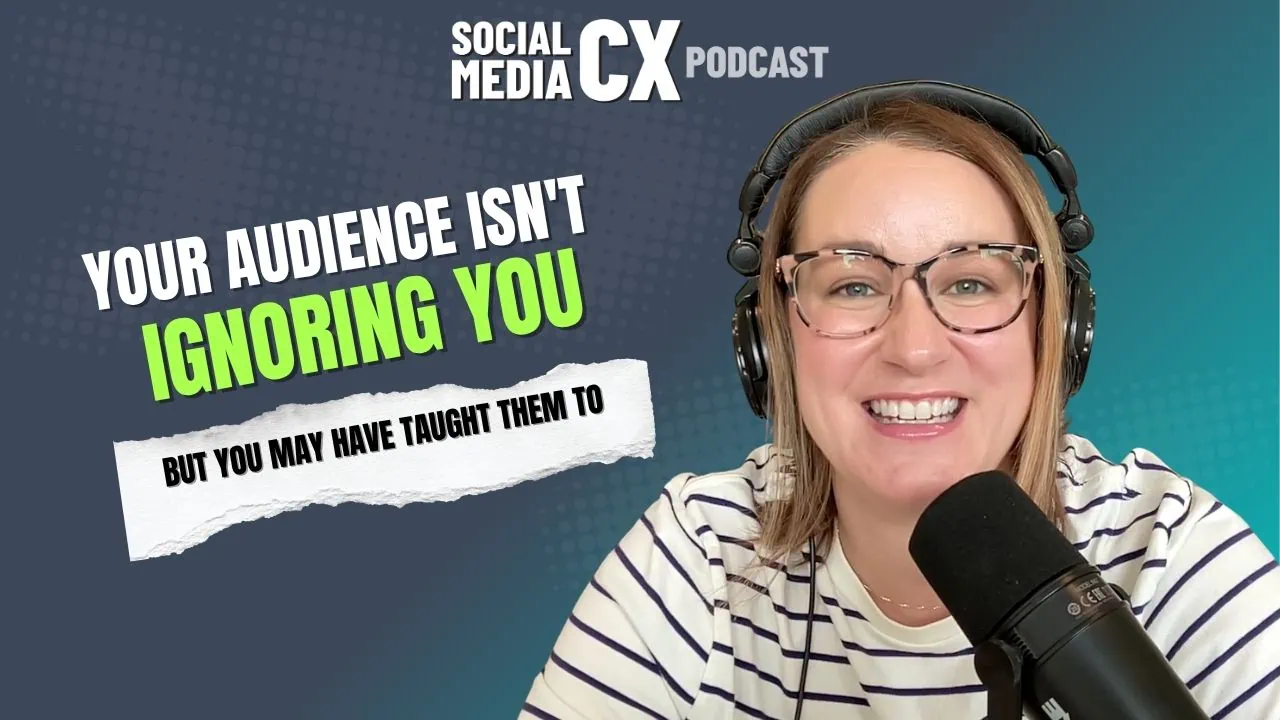
Table of Contents
Why Social Media Conversations Matter More Than Most Brands Realize
Most brands don’t set out to create content that gets ignored.
Yet every day, marketing teams publish posts that sound remarkably similar to what their competitors are saying. The content is polished, on-brand, and approved by multiple stakeholders. It checks every box on the content calendar.
Then it disappears without generating the discussion, participation, or customer insight the brand was hoping to create.
Over time, something more concerning begins to happen. Audiences stop expecting anything interesting from the brand at all.
That’s the hidden danger of forgettable content.
Your content might be training people to ignore you.
More importantly, it might be preventing the social media conversations that help brands understand customers, uncover opportunities, and prove business value.
The Problem Isn’t That People Don’t Engage
One of the most common statements in social media marketing is:
“Our audience just doesn’t engage.”
On the surface, that explanation seems reasonable. Posts receive limited interaction. Comments are scarce. Conversations never really get started.
However, people engage on social media every day. They answer questions, share opinions, participate in polls, react to ideas, and join conversations across countless communities. Engagement isn’t the problem. The problem is that many brands create content without creating opportunities for conversation.
That’s an important distinction.
When organizations focus exclusively on publishing, they often miss the real purpose of social media: creating a direct line of communication between brands and customers.
What an Insurance Company Taught Me About Customer Attention
A few years ago, I worked with an insurance company that believed engagement was impossible in their industry.
Their team was convinced that customers simply weren’t interested in interacting with insurance brands online.
When I reviewed their content, I saw a different problem.
The content was informative, but it wasn’t participatory.
Most of the posts relied on stock photography, generic messaging, and safe captions. They communicated information but gave customers no meaningful reason to respond.
In other words, the brand was broadcasting.
It wasn’t inviting conversation.
Once the strategy shifted, the results changed.
Instead of focusing exclusively on what the company wanted to say, the content began creating opportunities for participation. Polls, questions, and conversation starters replaced one-way messaging.
As a result, engagement increased because customers were finally given a role in the discussion.
The audience hadn’t changed.
The conversation had.
Why Cliché Content Creates a Bigger Problem Than Low Engagement
Most marketers worry about content performance.
They look at reach, clicks, impressions, and engagement rates.
While those metrics matter, they don’t tell the whole story.
The larger issue is that repetitive content shapes audience expectations.
Every interaction teaches customers what to expect from a brand. When content consistently feels predictable or interchangeable, audiences learn that there is little value in stopping, reading, or responding. Over time, that expectation becomes habit, and customers begin to scroll past content that once had the opportunity to start a conversation.
Eventually, they stop paying attention altogether.
That’s why cliché content is more dangerous than it appears.
It doesn’t simply reduce engagement.
It reduces attention.
And attention is the prerequisite for every meaningful customer relationship.
Why Social Media Conversations Create Business Value
Many organizations still view social media primarily as a content distribution channel.
The goal becomes publishing more content, reaching more people, and generating more impressions.
However, social media conversations create a different type of value.
They create understanding.
Every customer conversation reveals information that organizations can use to make better decisions.
A comment may reveal confusion about a product.
A question may expose an unmet need.
A discussion may uncover buying intent.
A complaint may signal a retention risk.
This is why social media conversations are not vanity metrics.
They are sources of customer intelligence.
Organizations that focus exclusively on content production often overlook one of the most valuable benefits of social media: the ability to learn directly from customers in real time.
The brands that gain the most value from social media are rarely the ones publishing the highest volume of content.
They are the ones learning the most from customer conversations.
The Connection Between Social Media Conversations and ROI
One of the biggest challenges facing social media teams is proving ROI.
Leadership teams want evidence that social media contributes to business outcomes.
That’s a fair expectation.
The challenge is that many organizations attempt to prove ROI before they build the systems needed to generate meaningful customer insight.
Social media conversations are the foundation of those systems. They reveal what customers are thinking, what they need, what frustrates them, and what influences their decisions. They also uncover buying signals, retention risks, and emerging opportunities long before those patterns appear in a dashboard.
That’s why conversations sit at the foundation of the CARE Framework. Before organizations can measure business impact, they must first create opportunities to learn from the people they serve.
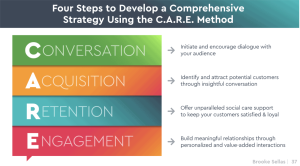
Before brands can identify Acquisition opportunities, understand Retention risks, or generate Engagement intelligence, they need customers talking to them.
Without social media conversations, organizations lose access to the information that makes better business decisions possible.
Stop Asking What to Post
Many content planning meetings begin with the same question:
“What should we post this week?”
A better question might be:
“What conversation do we want to start?”
That shift changes the role social media plays within an organization.
Instead of functioning solely as a publishing platform, it becomes a customer intelligence channel.
Instead of measuring activity alone, teams begin measuring understanding.
And instead of focusing exclusively on content production, brands focus on creating meaningful social media conversations.
Because the goal isn’t simply to publish more content.
The goal is to earn attention, create connection, and learn from the people you serve.
If your audience seems disengaged, don’t immediately assume they aren’t interested.
Ask whether you’re giving them something worth responding to.
The answer may reveal that the problem was never engagement at all.
It was the absence of conversation.
Ready to Create More Talk-Worthy Content?
If you’re struggling to move from broadcasting to conversing, our free Talk-Worthy Content course will help you create content that sparks discussion, participation, and meaningful customer engagement.
Because the goal isn’t simply to publish more content.
The goal is to create conversations worth having.
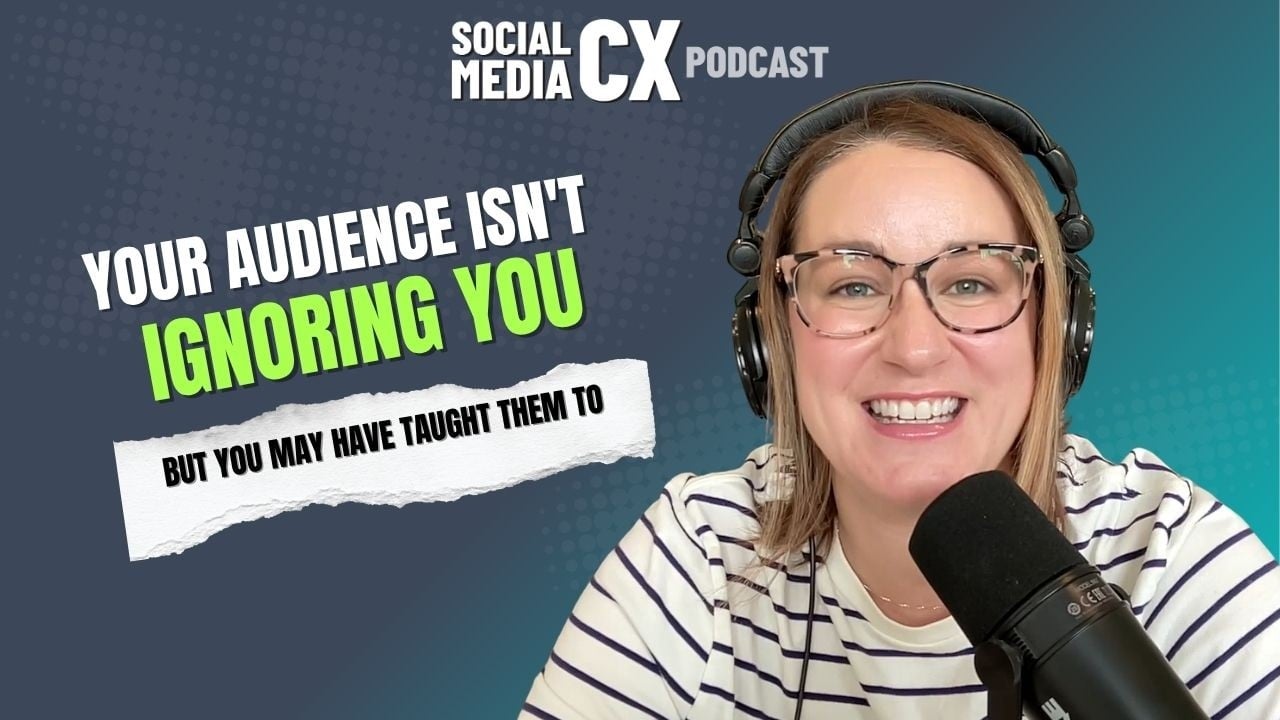
Read the Transcript
[00:00:00] Why social media isn’t a billboard
Here’s the thing about cliche content. It doesn’t just underperform on social. It actively trains your audience to ignore you.
Every time you post something forgettable or cliche, you’re teaching your followers that there’s no reason to pay attention to you.
Hey, hey, and welcome back to the Social Media CX Show. I’m your host, Brooke Sellas, CEO of B Squared Media, author of Conversations That Connect, and someone who has spent the last decade trying to convince brands that social media is not a billboard.
It’s not going super well for some of them, but we’ll keep trying.
Last month, we spent four weeks going deep on the Social Penetration Theory, a 1973 relationship framework that, as it turns out, explains basically everything about why some brands build real communities on social, while others just… post into the void. If you missed that series, go back, start with week one.
I promise you it’ll change how you think about content forever. But today, we’re turning the page. June is all about care. Not the feeling, although we’ll get there, but the framework: CARE. It’s a conversation coding system I built and wrote about in my book, Conversations That Connect.
And over the next four weeks, I’m gonna show you exactly how it works, and more importantly, why it’s the clearest path to building return on investment or an ROI case for social care that your C-suite will actually listen to.
Today, we’re starting with C, conversations.
[00:01:55] The insurance company that changed everything
A few years back, I got a call from an insurance company. Now, I want you to picture that for a second. Insurance, not exactly the industry you’d think of when someone says, “Killer social media presence,” right? Their team knew that too. So when I got on the phone with them, the vibe was almost apologetic.
“Our customers don’t really engage with insurance brands. Eh, sorry. We tried posting, and nothing really happened.” If this sounds familiar, you’re not alone. They brought me in to do an in-house training for their team, and the goal was to teach them how to build a social strategy around conversations instead of campaigns.
And when I got in front of that room, and I looked at their content, oh, boy, it was exactly what you would expect. Stock photos, generic captions, “Protect what matters most” with a picture of, like, a stock umbrella or something. Yeah, the kind of content that exists purely to fill a calendar and make someone in marketing feel like they showed up that day.
Pure cliche layer. If you did May with us, you know exactly what I’m talking about. If you don’t, you gotta go back and listen to the first episode in May when we talk about cliches. Here’s the Here’s the thing about cliche content. It doesn’t just underperform on social. It actively trains your audience to ignore you.
Every time you post something forgettable or cliche, you’re teaching your followers that there’s no reason to pay attention to you. So we blew up their content. Like, totally blew it up. We started from scratch with one simple premise: we’re gonna stop broadcasting, and we’re gonna start asking. So we introduced polls, simple, low stakes, genuinely curious questions directed at their audience.
Not ‘which policy is right for you’. Nobody’s answering that, y’all, and you know this. But questions that open the door to real conversation, questions that made people feel like the brand actually wanted to hear from them. And then do you know what happened? They went from essentially zero engagement and crickets to over 3% engagement every single month. On an insurance brand!
Y’all, 3% engagement every month is really good because average engagement is about three-ish percent, three and a half to under three, depending on your brand. But this was an insurance brand. I told you. I told you this stuff works. And my favorite part, they had me come in to train them and to give this training, but they left deciding that they wanted us to do it for them, so we became their social media management partner.
That’s how good it feels when this stuff starts working, y’all.
[00:04:52] One key shift most brands never make
So what actually happened there? This isn’t magic. It’s not a lucky post that went viral. It was a shift in how they thought about social from a content distribution channel to a conversation channel. That is the foundational shift in the CARE framework.
C stands for conversations. Conversations are the baseline. Before you can tag acquisition signals, A, before you can identify retention risk, R, before you can turn engagement into actual business intelligence, E, you have to start having these conversations on social. And most brands just simply aren’t doing it.
Not really. They’re publishing, they’re scheduling, they’re hitting post and crossing their fingers, but they’re not actually talking to anyone for the most part. They’re talking at everyone. The difference sounds subtle, but y’all, the results are not.
Here’s what I want you to understand about the C in care.
[00:06:00] Why conversations drive business value
Conversations are not a vanity metric. They are not a nice-to-have. They are raw material for every single business insight that comes later in this framework. No conversations, no acquisition data. No conversations, no retention signals. No conversations, no engagement intelligence. You cannot build an ROI case for social on a feed full of scheduled posts and zero replies.
The conversation layer is where everything starts, and if you’re sitting there right now thinking, “But our audience doesn’t engage,” I want you to go back to this insurance company. If an insurance brand can get to a 3% monthly engagement just by how they showed up in the conversation, you can totally do this, too.
The question isn’t whether your audience will talk to you. The question is if you’re giving them anything worth responding to. And you’re probably not.
All right. Now, I’m not just gonna leave you, leave you hanging with just start conversations, y’all, and no roadmap. If you’re still in that place where your content feels flat, where you’re posting and hearing crickets, where you genuinely don’t know how to shift from broadcasting to conversing, I built a course especially for this moment.
[00:07:34] How to shift from broadcasting to conversing
It’s called Talk-Worthy Content. It’s where I teach you exactly how to create content that opens conversations instead of closing them. Polls, opinion content, the social penetration or SPT layers we talked about in all of May, it’s all inside of this course. You can find it at bsquared.media. Run over to resources, courses, and then choose Talk-Worthy Content.
Start there. It’s totally free. Literally, all it takes to start this course is your email. Get those conversations flowing because next week, week two of the CARE series, we’re talking about what to do with those conversations once they start happening. Specifically, we’re talking about how to identify which ones are actually pre-purchase signals hiding in plain sight.
That’s right, pre-purchase signals, money. We’re getting to money in week two. Spoiler alert, also, there are way more of these acquisition signals than you think. As always, y’all, if this show is helping you think differently about customer experience, social media, return on investment on social media, please rate and review us wherever you’re listening or watching this podcast right now.
It helps me bring on more brilliant voices and keeps our community growing with intention. Until next time, think conversation, not campaign.
Want to hear the full conversation? Listen to the Social Media CX Podcast on YouTube. And if your team is thinking about what responsible social listening in banking or financial services actually looks like at scale, check out the State of Social Care Report 2026.
Finally, as always, Think conversation, not campaign.™
The following two tabs change content below.

Brooke B. Sellas is an award-winning Customer Marketing Strategist and the CEO & Founder of B Squared Media. Her book, Conversations That Connect has been recognized nationally and is required reading for a Customer Experience class at NSU.
Brooke's influence in digital marketing is not just about her accomplishments but also about her unwavering commitment to elevating the industry standard of digital customer experience and customer marketing.
Latest posts by Brooke B. Sellas (See All)
- You’re Treating Business Intelligence Like Social Engagement - August 19, 2026
- Your Customer Complaints Are Shaping What AI Says About Your Brand - August 12, 2026
- The Customer Signals Hidden Inside Your Social Care Data - August 5, 2026


Written by award-winning strategist Brooke Sellas, this weekly 5-minute power-up will help you turn social interactions into loyalty, retention, and revenue.
Tags: CARE framework
Written by award-winning strategist Brooke Sellas, this weekly 5-minute power-up will help you turn social interactions into loyalty, retention, and revenue.
Share this article: