AI Leadership: The Different Decisions Winning Companies Make
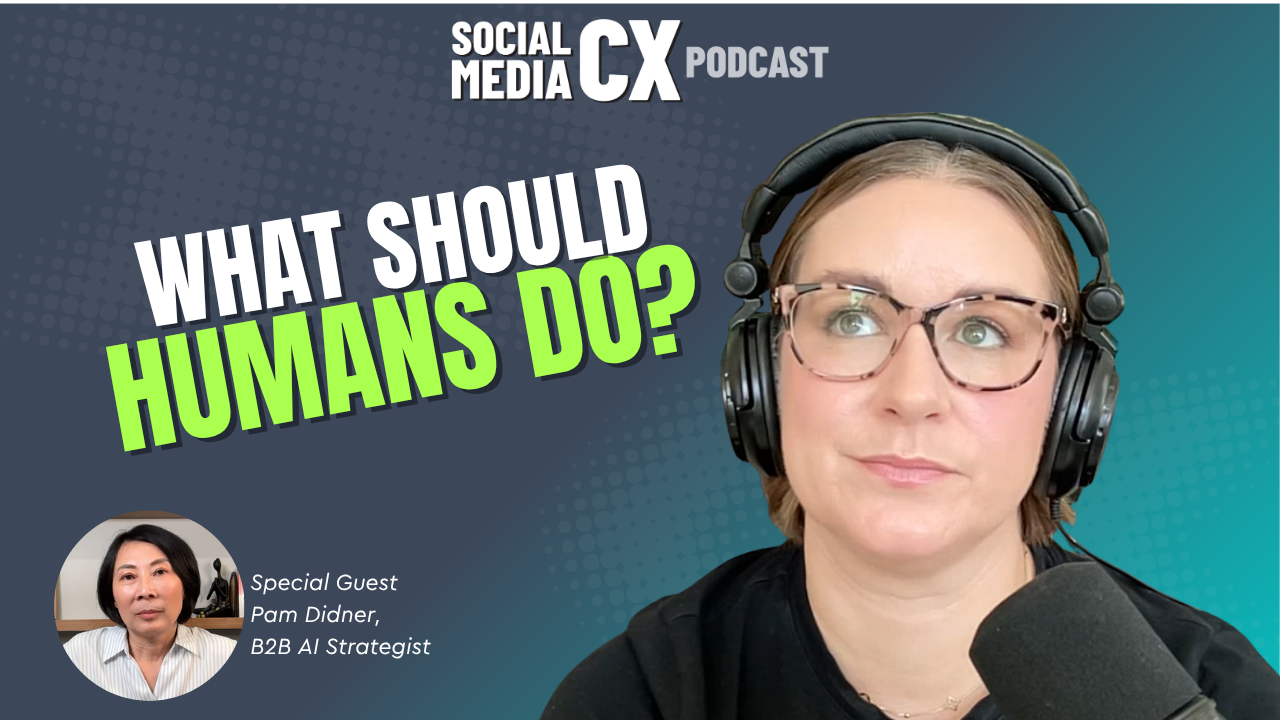
Table of Contents
Every organization is investing in artificial intelligence.
The headlines focus on the newest tools. Software vendors promise greater efficiency. Every platform seems to be adding another AI feature, and every executive team is under pressure to figure out where AI fits into the business.
But the organizations pulling ahead aren’t necessarily the ones using the most AI.
They’re making different decisions about it.
That’s the central lesson from my conversation with Pam Didner, globally recognized B2B AI strategist, keynote speaker, fractional CMO, and five-time author. Pam has been writing and speaking about AI since long before generative AI became a daily business conversation, and her perspective is refreshingly practical.
She isn’t interested in debating whether organizations should adopt AI. That decision has already been made.
Instead, she focuses on a far more important question—one that defines effective AI leadership:
Where does AI create value, and where does human judgment still matter most?
For leaders responsible for customer experience, marketing, and social media, that question has become a competitive advantage.
Because AI leadership isn’t about deciding whether to use AI.
It’s about deciding where AI belongs.
AI Has Changed. Leadership Has to Change With It.
When ChatGPT launched in late 2022, most organizations approached AI as a productivity tool. People experimented with prompts, generated content, summarized documents, and explored what the technology could do.
That isn’t where the conversation is anymore.
Pam describes today’s shift as moving from consumer AI to business AI.
Organizations are no longer asking AI for answers.
They’re asking AI to complete work.
That subtle shift changes everything.
When AI begins completing tasks instead of simply generating information, leaders have to decide which work can safely be automated—and which work should never lose human oversight.
That’s no longer a technology question.
It’s an AI leadership question.
The organizations succeeding with AI aren’t simply automating more work. They’re becoming intentional about which work gets automated.
Human-in-the-Loop Isn’t a Safety Net. It’s a Strategy.
One of the biggest misconceptions surrounding AI is that “human-in-the-loop” exists simply to catch mistakes.
Pam sees it differently.
Keeping humans involved isn’t about waiting for AI to fail.
It’s about deciding where human expertise creates the greatest value.
When I asked how organizations should determine where people remain involved, I expected a framework or maturity model.
Instead, Pam gave a remarkably practical answer.
It comes down to confidence.
How confident are you in the AI model supporting that workflow?
If confidence is high, AI can take on more responsibility.
If confidence is low, involve more people.
“I don’t think any company, any department, or any one of us has cracked that code, honestly.”
That honesty is refreshing because AI leadership isn’t about finding a universal formula.
It’s about making informed decisions based on the quality of your systems, your customer expectations, and the level of trust each interaction requires.
Pam even pushed back on the idea that organizations need to define an exact threshold before a human becomes involved.
“Sometimes it’s just a gut feel.”
That may sound surprisingly simple, but experienced leaders recognize exactly what she means.
You already know which conversations require empathy.
You already know which customer interactions are emotionally charged.
You already know which moments carry too much business risk to hand over entirely to automation.
AI leadership isn’t about removing human judgment.
It’s about applying that judgment intentionally.
The AI Comments Everyone Can Spot
One area where Pam and I found immediate agreement was AI-generated comments on social media.
Not AI-assisted writing.
Not content generation.
Comments.
The responses that are supposed to sound like a real person joining a conversation.
They’re becoming surprisingly easy to recognize.
Pam described them as overly proper, overly polished, and just a little too flowery.
I couldn’t agree more.
Many of these comments technically say the right thing.
They simply don’t feel like they came from another human being.
That distinction matters because customer trust has always been built through authentic interactions, not perfectly optimized language.
Pam shared that companies have approached her about using software that automatically comments on targeted accounts twenty-four hours a day.
She turned them down.
Her reasoning wasn’t about technology.
It was about relationships.
“If I’m not making an effort, I don’t deserve to win that prospect.”
That single sentence captures something much larger than social media.
AI can absolutely scale interactions.
Only people build relationships.
For organizations thinking about AI leadership, that’s a crucial distinction.
Not every customer interaction deserves automation.
Some moments create trust precisely because another human chose to show up.
A Prompt Isn’t a Shortcut. It’s a Strategic Brief
One of my favorite moments in the conversation came when Pam completely reframed prompting.
The internet is full of prompt libraries, templates, and “secret formulas” that promise better AI outputs. But Pam argues that the quality of the prompt isn’t about finding the perfect phrase.
It’s about giving AI the same strategic direction you’d give another person.
Her analogy couldn’t have been more practical.
When marketing teams brief a creative agency, they don’t simply say, “Create an ad.”
They provide context.
Who is the audience?
What channel is this for?
What point of view should come through?
What should people think, feel, or do after seeing it?
The better the brief, the better the creative work.
Pam believes AI should be treated exactly the same way.
“A prompt is the same thing. You are briefing AI so AI can give you a better response.”
That changes the way leaders should think about prompting.
Prompting isn’t a technical skill.
It’s a communication skill.
In many ways, it reflects the quality of leadership inside the organization.
Leaders who communicate clear objectives, clear context, and clear expectations tend to get better work from people.
The same principle applies to AI.
Pam even admitted that many of her prompts are longer than the responses they generate.
“Sometimes my prompt is longer than the response. That’s fine.”
That isn’t inefficiency.
It’s preparation.
The organizations getting the most value from AI aren’t relying on clever prompt hacks.
They’re investing the time to communicate what makes their business different.
Without that context, AI produces exactly what you’d expect:
Generic ideas.
Generic messaging.
Generic content.
And in a world where everyone has access to the same technology, generic has quickly become the biggest competitive disadvantage.
Enterprise AI Leadership Is About More Than Choosing the Right Tool
One of the realities of enterprise organizations is that individual teams rarely choose which AI platform they’ll use.
IT makes that decision.
Security teams make that decision.
Procurement makes that decision.
Marketing often inherits it.
That led us into a conversation about Microsoft Copilot.
For years, Copilot developed a reputation for lagging behind other AI platforms.
Pam agreed that the criticism was fair.
At the time.
But that perception hasn’t kept pace with the technology.
Today, Copilot is powered by many of the same large language models that organizations already trust through tools like Claude and ChatGPT. The quality gap has narrowed considerably.
The bigger conversation isn’t really about Copilot at all.
It’s about governance.
AI leadership means understanding not only what your tools can do, but also what they cost, how they’re integrated into your business, and what tradeoffs come with enterprise adoption.
Pam pointed out that many of Copilot’s more advanced capabilities come with additional token costs layered on top of existing licensing fees.
That means organizations can unintentionally increase AI spending long before anyone notices.
Technology decisions don’t stop after implementation.
They require ongoing leadership.
Because AI isn’t simply another software subscription.
It’s an operating capability that affects budgets, workflows, and resource allocation across the organization.
When AI Becomes the First Conversation
Perhaps the most thought-provoking part of our conversation centered on something many organizations haven’t fully considered yet.
Increasingly, customers aren’t discovering brands first.
They’re asking AI.
Whether someone is looking for a software platform, researching a service provider, or comparing potential partners, AI is becoming part of the buying process before a customer ever visits a website.
That changes the role of every public customer interaction.
Every review.
Every answered question.
Every social media conversation.
Every customer experience.
They aren’t simply serving today’s customer.
They’re becoming part of the information AI uses to recommend tomorrow’s customer.
This idea builds naturally on another conversation we recently had on the podcast about how public conversations influence AI recommendations.
Pam takes that thinking one step further.
She believes we’re moving toward a future where the first interaction in many buying journeys isn’t human-to-human.
It’s AI-to-AI.
Imagine a buyer asking AI for recommendations.
At the same time, imagine organizations using AI to qualify leads, answer initial questions, and determine whether someone is ready to speak with sales.
Before two people ever meet, two AI systems may have already exchanged information, filtered options, and narrowed the field.
“That just sounds sad. Does it?”
Pam laughed as she said it.
Maybe it does.
But whether organizations like it or not, it’s becoming increasingly realistic.
The implication for AI leadership is significant.
If AI increasingly owns the beginning of the customer journey, then the human moments that follow become even more valuable.
Organizations won’t differentiate themselves because AI started the conversation.
They’ll differentiate themselves by what happens when people finally enter it.
Measuring AI Success Requires Different Questions
Like many marketing leaders, I wanted to know how Pam helps organizations measure AI’s impact. After all, every investment eventually has to answer the same question:
Is this actually improving the business?
Her answer was refreshingly honest.
“It’s very hard.”
Not because AI lacks value, but because measuring its contribution is more complicated than many organizations assume.
“We can’t even reliably measure a human’s contribution to revenue most of the time,” she pointed out. “Now we’re going to measure AI’s?”
It’s a fair challenge.
Rather than trying to attribute every dollar directly to AI, Pam encourages organizations to become more intentional about what they’re measuring.
On the sales side, that might mean using AI to analyze sales conversations and improve messaging, then tracking whether those changes influence pipeline growth or revenue over multiple quarters.
On the marketing side, it could mean using AI to accelerate testing, improve messaging, or refine creative, while measuring whether those changes improve marketing qualified leads or conversion rates over time.
The key is focusing on one or two variables at a time instead of assuming every improvement came from AI.
Not every success metric has to begin with revenue.
Some begin with efficiency.
If AI reduces the time required to complete an RFP from a week to four hours, that’s meaningful business value even if it doesn’t immediately generate additional revenue.
Effective AI leadership means knowing the difference between productivity gains and revenue gains—and recognizing that both matter.
The Investment Most Organizations Underestimate
One of the most candid moments in our conversation came when Pam shared her own experience adopting AI.
Like many business leaders, she’s investing heavily in new tools, experimenting with automation, and even working with an AI automation specialist to redesign parts of her business.
She also admitted something many technology vendors rarely emphasize.
Right now, she’s spending more than she’s getting back.
“I know in the future I will gain efficiency, but the amount of money I’m spending right now outpaces anything I’m gaining.”
That’s not failure.
It’s reality.
AI adoption isn’t simply about paying twenty dollars a month for a chatbot.
At the enterprise level, organizations are investing in technology, implementation, governance, employee training, workflow redesign, experimentation, and ongoing optimization.
The software itself is often the smallest expense.
The larger investment is learning how to integrate AI into the way the organization actually works.
That’s another hallmark of strong AI leadership.
Leaders don’t expect transformation because they purchased new technology.
They understand transformation comes from redesigning the systems around it.
There are no shortcuts.
Five AI Leadership Lessons Every Organization Can Apply
Every organization will approach AI differently, but Pam’s advice offers a practical framework for making stronger leadership decisions.
Start with confidence, not automation.
The more confidence you have in your AI models, the more responsibility they can take on. Where confidence is low, human judgment should remain part of the process.
Treat prompting like strategic communication.
The quality of AI output depends on the quality of the direction it receives. Brief AI the way you’d brief your best agency—with context, audience, objectives, and a clear point of view.
Protect the moments that build trust.
AI can accelerate workflows, but not every customer interaction should be automated. Some conversations create value precisely because another person chose to engage.
Measure outcomes intentionally.
Don’t expect AI to magically improve every business metric overnight. Identify the outcomes you’re trying to influence, test deliberately, and measure progress over time.
Plan for AI to become part of the customer journey.
Increasingly, customers will discover, evaluate, and compare brands through AI before they ever visit your website or speak with your team. Every public interaction contributes to that future recommendation.
AI Leadership Is Becoming the Competitive Advantage
For years, conversations about AI focused on the technology itself.
Which model is better?
Which platform should we use?
Which prompt gets the best response?
Those questions still matter.
But they’re no longer the questions that separate organizations.
The companies winning with AI aren’t simply adopting new technology faster than everyone else.
They’re making more thoughtful decisions about how that technology supports the business.
They’re deciding where AI creates efficiency.
Where human judgment protects trust.
Where automation improves the customer experience.
And where people remain irreplaceable.
That’s what AI leadership looks like.
It’s not deciding whether AI belongs in your organization.
It’s deciding where it belongs—and having the discipline to keep humans involved when those moments matter most.
Because in the end, AI won’t become your competitive advantage.
The decisions your leaders make about AI will.
Want to hear the full conversation with Pam Didner? Listen to this episode of the Social Media CX Podcast for even more practical insights on AI leadership, customer experience, and the future of human-centered marketing.
And if you’d like to dive deeper into Pam’s work, explore her books, The Modern AI Marketer in the GPT Era and The Modern AI Marketer: Guide to Gen AI Prompts, or connect with her on LinkedIn for more practical guidance on leading AI inside modern organizations.
Read the Transcript
[00:00:00] How to Brief AI for Better Results
[00:00:00]
Pam Didner: When you try to brief your agencies, and you will write a solid brief sheet to brief your agency about the campaigns so they can go about creating concept. They can come up with a theme.
They know who the target audience is. They will come back to you with a recommendation of the paid media channels or whatnot. A prompt is the same thing. You are briefing AI so AI can give you a better response.
Brooke Sellas | B Squared Media: Before we get into it, I want to properly introduce today’s guest, who I am proud to call a true friend. We literally just spent the last five minutes in the green room here, like, talking about beauty tips, which I love to talk to Pam about beauty.
Pam Didner: That’s actually a very important thing. Anybody who wants to talk about beauty tips with Brooke and me, please, we love to have a conversation.
Brooke Sellas | B Squared Media: Pam’s your gal. But what I’m even more excited to talk to Pam about, [00:01:00] than even makeup tips, which is saying a lot, is AI. And if you don’t know Pam Didner… no, we’re doing it. We’re doing it. It’s amazing. It’s just as good as makeup, and just as nuanced too.
Pam Didner: Oh, totally. I agree with you on that one.
Brooke Sellas | B Squared Media: Pam Didner is a globally recognized B2B AI strategist. She’s a keynote speaker. She’s a fractional CMO. She’s a five-time author whose work sits at the intersection of sales, marketing, and AI, and she also helps Fortune 500 companies and high growth enterprises align their teams, operationalize generative AI, and turn their marketing and sales investments into measurable revenue. She’s also the author of the Modern AI Marketer series, which is now refreshed for 2026. [00:02:00] 2026. She’s one of the clearest, most practical voices I know when it comes to making AI actually work along real side organizations, and I’ve honestly had the pleasure of seeing her speak multiple times, so I can tell you firsthand, not just because she’s my friend, she is the real deal.
In fact, I will give you this kudos because I don’t know if you’ve heard it. Andy Crestodina is in a mastermind group with me, and he had you speak at Content Jam this year, and he.
Pam Didner: I know.
Brooke Sellas | B Squared Media: Was raving about your performance at Content Jam.
Pam Didner: He’s very kind. I Venmo him a lot of money, so I just make sure.
Brooke Sellas | B Squared Media: He meant it. I’ve seen it happen. You’re not getting away with the shy, humble thing here.
But anyways, y’all.
Pam Didner: Thank you.
Brooke Sellas | B Squared Media: All that to say, welcome to the show.
Pam Didner: Thank you. I appreciate it. Yeah. Thank you so much for having me. It’s always wonderful having conversation with you about everything. I mean everything, you know? So it’s great.
Brooke Sellas | B Squared Media: I wanna start somewhere [00:03:00] personal because I think it kinda sets the tone for what we’re gonna talk about today, and you’ve been writing and speaking about AI in marketing for years, long before it became cool or before, you know, it became, like, the shiny new thing that we’re all talking about now. And now that we’re all talking about it.
Pam Didner: Yeah
Brooke Sellas | B Squared Media: and every company is built with AI, AI first, every tool has an AI feature of some kind, every conference has some sort of AI.
Pam Didner: AI.
[00:03:31] What’s Actually Different About AI in 2026
Brooke Sellas | B Squared Media: Track or hack, right? Now it’s everywhere, but from where you sit, what’s actually different about where we are today in 2026 versus the AI hype of, like, two or three years ago?
Are brands actually doing anything with AI, or are they still just kind of playing around?
Pam Didner: You know, great question. And it’s amazing that everybody’s taking AI for granted [00:04:00] now, even though ChatGPT was launched only on November 30th, 2022. And I wrote a little book about AI in 2019, and at that time, it’s more about predictive analytics and, like major brands such as Google, Amazon, like when you, when you search on something, they will predict like, in terms of what you’re gonna do next.
And how many time when you buy something on Amazon way back then, they will recommend other things to buy. Way back then, that’s AI. That is AI. It’s a predictive, right?
And of course, when they launch a ChatGPT, they have a pre-trained model that kind of change everything. But between now, 2022, and 2026, I think the biggest change is moving kind of like a consumer AI to like a business application AIs, if you will.
Way back, [00:05:00] in 2022, 2023, when ChatGPT was very hot, you know, what we do is prompting. We prompting about everything, right? We want to get answers. But in 2026, after Anthropic’s launch Claude, have you noticed in Claude it’s about tasks.
Brooke Sellas | B Squared Media: Yes.
Pam Didner: What tasks can we complete? So to me, the biggest change is moving from like, a consumer type of usage to kind of like a business applications.
What are the things can be completed by AI for the business-related work? And that is the direction that we are shifting.
Brooke Sellas | B Squared Media: That makes sense. Like if finding those efficiencies to work smarter.
Pam Didner: Yes.
Brooke Sellas | B Squared Media: Not harder, reduce human capital, et cetera, et cetera.
Pam Didner: Mm-hmm.
[00:05:51] Human-in-the-Loop as a Competitive Advantage
Brooke Sellas | B Squared Media: I wanna talk about something else that I know is central to your philosophy because it aligns with my philosophy a lot, which is keeping a human in the loop.
Pam Didner: [00:06:00] Yes.
Brooke Sellas | B Squared Media: And on this show, we talk constantly about how AI can absolutely be a killer, investment for, for customer experience or CX. It can handle volume, but humans are the ones who build the trust, and I think that there’s, like, tension there because everybody wants to use AI for, customer experience, social care, which is what we do.
Pam Didner: Yep.
Brooke Sellas | B Squared Media: How do you you scale using AI in a customer experience program and still make it feel like humans are there and make sure that the customer’s feeling something?
Like, how do you think about the human in the loop as a principle, not necessarily like a safety net for AI mistakes, but as an actual competitive advantage?
Pam Didner: That question is hard to answer. Honestly, I’m serious, because I want to give a very thoughtful answer to you and your audience. If you look at the [00:07:00] spectrum of how to use AI, there’s always like, okay, we can tilt it a little bit more on the left, use AI more, or tilt it on the right, use human more.
And that tilting or that balance, it really depends by company to company, the industry to industry, or even workflow to workflow, okay? So when should we inject human and at what stage that human needs to get involved? Not at the point, like you said, at a disaster. Oh my God, oh my God, something happened, we need to involve human.
That’s way too late, I agree. But how do we kind of maintain that? And I don’t think any company or any department or any one of us has cracked that code, honestly. Because it depends, right? So let’s just use customer experience as example. If a customer experience [00:08:00] if, is a 1-800 number that somebody can call, obviously we know the initial stage or the initial touchpoint is possibly taken care of by AI.
AI probably will have the interaction with you, so that first touchpoint is a AI conversation, you, a human’s gonna have a conversation with AI. A lot of time, that’s the way to scale, because if you have a huge amount of call coming in, you need some sort of filtering process, and having AI doing that, that’s the right things to do.
However the quality of local model of that AI is super important. It’s how you train that AI to adjust or to answer the questions, and how can you make that questions or how the AI responds to be very comprehensive.
Brooke Sellas | B Squared Media: Yes.
Pam Didner: To me, that part is hard to do it right. Granted, now more and more local model or small, local model or small large [00:09:00] language models are developing, but we are still in the process trying to optimize that.
Is that helpful? So to me, the human part of it, it really depends on how good your small local model is. What is your confidence level in terms of how AI can really take on some of those tasks? Ranges from simple, semi-complicated, to whole lot complicated type of questions that it needs to answer.
So how confident are you about your small local model? That will determine in terms of what is the human’s involvement, engagement should be. Is that helpful? To me, like, the confidence level and the quality of that model is super important. If you don’t have a high confidence, you know what? Inject more humans to it.
Brooke Sellas | B Squared Media: Yeah.
Pam Didner: There’s not much to it, you know? That’s just, [00:10:00] gauge it. You don’t really need to have, like, okay, do I need to actually have like, 75% or 78% confidence level? No, sometimes it’s just a gut feel.
Brooke Sellas | B Squared Media: Yeah.
Pam Didner: And that will help you to dictate the human resource allocation. So to me, it’s that quality that am I saying something?
Brooke Sellas | B Squared Media: No, no, I liked what you said. I just was repeating what you said
Pam Didner: Oh, so sweet. So sweet, and I completely forgot what I just said.
Brooke Sellas | B Squared Media: Oh, no. It’s okay. Human resource allocation. I was like, "Yeah." Yeah, I mean, that’s what it is,
Pam Didner: Yeah, it is. So then, you know, then determine how confident you are with AI model, and then what kind of resource you want to allocate on the human side.
Brooke Sellas | B Squared Media: Same.
Pam Didner: That would be my take.
Brooke Sellas | B Squared Media: No, I’m totally aligned. You have to have confidence in what you’re doing. You have to know what tool you’re using. You have to make sure the tool works. Checks and balances, iterations.
Pam Didner: Mm-hmm.
[00:10:56] Can You Spot an AI Comment?
Brooke Sellas | B Squared Media: All those things. I think in that same vein, [00:11:00] a lot of brands are using AI for social media right now, and that makes sense, right?
Because you content is kind of becoming a commodity with AI, ’cause, you know, you can generate captions, you can schedule your content, you can.
Pam Didner: Yeah. And you can repurposing them many, many formats.
Brooke Sellas | B Squared Media: Repurpose. Yes, repurposing, I love using AI for repurposing. Autoresponding to comments, though, is becoming a thing and on the surface I think those things feel really efficient. But my concern is when AI starts handling that social layer.
Pam Didner: Yeah.
Brooke Sellas | B Squared Media: The comments without, you know, human judgment and oversight, me it feels like you’re scaling noise a little bit. Like, how do you feel?
Brooke Sellas | B Squared Media: What’s your take on AI social when it comes to the comments? Like, we know people are gonna use it to create content.
I’m not here to fight that battle. That’s not the hill I wanna die on.
Pam Didner: No.
Brooke Sellas | B Squared Media: AI commenting I’m starting to get a little like, mm-kay, I
Pam Didner: don’t know.
I do agree with you. I mean, honestly, [00:12:00] so I’m just being very honest, I will read comments like people, left, and I will literally guess, like, that’s a AI comment.
Brooke Sellas | B Squared Media: You can tell. You can.
Pam Didner: Absolutely.
Brooke Sellas | B Squared Media: I can tell anyways.
Pam Didner: I mean, seriously.
Brooke Sellas | B Squared Media: With the obvious ones anyway.
Pam Didner: It’s very obvious. It’s way too proper, number one . It doesn’t like a human talk.
Brooke Sellas | B Squared Media: Yes.
Pam Didner: Too proper. And also use the words you feel a little flowery, and you feel like it’s all very pompous, you know?
Brooke Sellas | B Squared Media: Ah, pompous. That’s a way.
Pam Didner: I will read it and I was like, "Okay." And the other thing is like, if they are actually the people who leave comments and you know English is not their second language, you know, I just can tell, right? So I think, and then there are tools out there. Actually, somebody tried to sell me this tool.
Basically, I can comment 24/7 to a targeted account. [00:13:00] And I was like, "No, I don’t want to do that." I mean, I either comment, I either spend time commenting on it or I don’t spend time doing it. Yes, you are totally right. For prospects, like they are, they are prospects I want to reach out, because they are the prospect I want to reach out, then I need to make an effort.
Brooke Sellas | B Squared Media: Because connection and trust I feel like comes from us, not machines.
Pam Didner: You know what I’m saying? I need to make an effort. Right, if I’m not making an effort, I don’t deserve to win that prospect. But on the other hand, can you use AI to actually make it easier for you? Of course. But in terms of comment, yeah, I have a strong point of view about that. And I know, I respect people who use it.
I totally understand, and I get it. And to me, that’s absolutely a personal preference and a personal decision.
Brooke Sellas | B Squared Media: Let’s talk about your new book, because you have like, over 95 tested [00:14:00] prompts across sales and marketing, and you have a whole dedicated section on social. And one of the things I love about your approach to prompting is that you It’s not about AI getting to do the work for you. The way I took it is that it’s about AI getting to do better work with
Pam Didner: With you. Yes. Mm-hmm.
Brooke Sellas | B Squared Media: So for someone who is managing those social conversations at scale, right? So community managers, social care teams, maybe customer experience practitioners, whoever it may be, what does good AI prompting actually look like in that context?
[00:14:41] How to Brief AI Like You’d Brief an Agency
Brooke Sellas | B Squared Media: Like, what’s the difference between a prompt that produces those kind of generic AI slop answers or comments and one that actually sounds like your brand?
Pam Didner: So there are several factors that needs to be added into a good prompt. And again, there’s no [00:15:00] shortcut.
Everybody, "Well, I’m gonna write a prompt, something will be produced." Yes, something will be produced, but is it something good?
Brooke Sellas | B Squared Media: Probably not. Yeah.
Pam Didner: So in general, what I always tell, my attendees who actually come to my session is, you know, when you try to brief your agencies, and you will write a solid brief sheet to brief your agency about the campaigns so they can go about creating concept. They can come up with a theme.
They know who the target audience is. They will come back to you with a recommendation of the paid media channels or whatnot. A prompt is the same thing. You are briefing AI so AI can give you a better response. So if you give AI solid information, for example, you know, you are writing a campaign, you are writing a LinkedIn post, not Instagram [00:16:00] post, you are writing LinkedIn post, and you basically said, "Hey, you are speaking on your behalf."
You tellin’, you know, it’s like a prompt for a PM dinner, who is B2B marketing consultant, AI speaker, whatever. And you should look at the past post, you know, what I have done, and also this is targeted for whom, what are the specific topic or the couple key points, like you need to have a point of view, right?
For example, you’re like, "I don’t want to have. I want to have a point of view. I want you, AI, to inject these couple points as a part of LinkedIn post." So you give AI enough information to differentiate you from the others.
Then it should give you something slightly better. However, when I give you the prompt example, they are starting points, everyone. I’m giving you a starting point. I want you to edit, I want you to modify, I want you to add information on top of it. [00:17:00] But this is a starting point to get you like, "Oh, okay, this is how I’m gonna write it."
Frankly, honestly, you don’t even have to buy a book. You don’t have to buy this book. You can basically just go to a prompt, say, "Write this prompt for blah, blah, blah, blah," give additional information, and then AI can write a prompt for you for AI. AI write prompts for AI. You can do that, too. But the thing is, you need to have a vision or specific ideas what do you want to convey. To me, is very important. Don’t ever lose that. What do you want to say, and what is your point of view, right?
Brooke Sellas | B Squared Media: I think if people who don’t have a point of view, which let’s be honest, there’s some people who just don’t, AI does a disservice to those.
Pam Didner: Yeah.
Brooke Sellas | B Squared Media: because they don’t have that POV. I love what you said. I wanted to underscore this for everybody who’s watching or listening, write this one down, what Pam just said. Just like you would create a brief, a content brief for a client or for your own firm, [00:18:00] whatever, in your own team or other teams, create that brief.
Brief.
For AI. Hello, that’s so smart.
Pam Didner: And by the way, sometimes my prompt is longer than the response. That’s fine. I’m actually okay with that. I give them enough information.
Brooke Sellas | B Squared Media: Yeah.
Pam Didner: It’s better output. And it’s quality over quantity, right? The output is shorter, doesn’t mean longer is better, or sometimes it does, but not necessarily in every situation.
Brooke Sellas | B Squared Media: Yeah.
Pam Didner: That’s my thought. Seriously from my perspective, you know, give enough context so that AI can actually help you. And like I said, you need to have a point of view. If you being, if you are marketer, you already have a certain kind of point of view, then stand up for it, honestly.
Brooke Sellas | B Squared Media: Yeah, I couldn’t more.
[00:18:54] What’s Really Running Behind Microsoft Copilot
Brooke Sellas | B Squared Media: Something else want to dig in with you because I have you here, and, and this comes up constantly with our [00:19:00] enterprise clients. So we work with a lot of large organizations, and they don’t get to choose their AI tool, right?
Pam Didner: I know.
Brooke Sellas | B Squared Media: Like, being handed to them. So IT may come in and say, "You’re using Copilot."
Pam Didner: Yeah.
Brooke Sellas | B Squared Media: "You’re using Claude."
Pam Didner: Yeah.
Brooke Sellas | B Squared Media: right? They have no say in the matter, and I know you’ve talked about this extensively, and by the way, you actually have a dedicated Copilot chapter.
Pam Didner: Chapter. I know everybody, nobody likes Copilot.
Brooke Sellas | B Squared Media: Nobody does, but Pam does trainings. She has a whole chapter in her book, so go read it if you are. But my question is for brands who are operating inside of these you know, enterprise AI constraints.
Pam Didner: Yeah.
Brooke Sellas | B Squared Media: What they need to understand about making Copilot, or whatever the tool is, actually work for marketing and social? And are there specific use cases where for teams managing, you know, social, marketing, those types of things?
Pam Didner: [00:20:00] First of all, let’s just get this out of the way. Whenever I told everyone like, I’m a Copilot trainer, everybody was like: "Are you okay?" You know, "Did something happen to you? Did you kind of went through some sort of dramatic life-changing experience, like you want to put yourself in such a misery?"
By the way, I agree with you 100%. And I always tell my audience, "You know what? I’m only teaching it, you have to use it day in and day out." Ha ha ha. No, I’m kidding. Anyway, but what I want to say is two years ago, you know, like, that perception is, like, Copilot, it’s just not very good. And it was correct.
It was not very good. And then now they actually use Claude and also OpenAI large language models as the back end.
Brooke Sellas | B Squared Media: Oh, okay.
Pam Didner: So whatever information that you are enter into say, Copilot right now, the large language model they use in the back end is basically Claude’s and also [00:21:00] OpenAI’s, ChatGPT’s. So there’s not huge difference.
So the quality-wise, it’s probably very similar. Just want everybody to understand that. That’s number one. Number two is for longest time, people go to Claude, they build the skill, and which is fantastic, and they with the skill.md, you can make a lot of your projects or tasks scalable. Well, they actually did, a early adoption program with many enterprises, to actually clone.
Not clone, that sounds bad. They developed the Copilot features in Copilot. They made that generally, they made that general available, I think on June 19th, which is two weeks ago. So if you actually go to Copilot right now, there are two tabs. One is Chat, the other one is Copilot. So the Copilot looks very similar to Claude However, the biggest downside of that is you can use [00:22:00] skill.md, you can use Cowork in Copilot right now, which is great.
But it’s expensive. It’s on top, the token usage is on top of your licensing fee. So if you actually just do a very simple task, it’s probably gonna cost you $1 to $2, but if you do somehow very complex tasks, in-depth research analysis, it may cost you up to $15 per pop. So it’s expensive. Just be aware that if you use Cowork in Copilot, there’s incremental cost.
In fact, that’s probably no different than your $20 subscription, and then you run over it, and you have to pay additional usage unless you are a Max user on Claude. If you pay $100 a month, you get such a mileage out of it. Unfortunately, they don’t have that pricing [00:23:00] on the Copilot side just yet.
I’m pretty sure they probably will implement that in the future. But in the meantime, it’s whatever you will, you will see, and the licensing fee, plus the incremental token usage. So Copilot, at the end of the day, at this point, it’s not bad. I think the perception is out there, like, "Oh my God, it was so bad."
Ugh, you cry. But right now, it’s not. It’s actually quite good, honestly.
Brooke Sellas | B Squared Media: Good. I didn’t know all this, so I’m learning. I’m learning alongside you, audience.
Pam Didner: You know what? This, nobody uses Copilot unless they have to. I get it.
Brooke Sellas | B Squared Media: We’re an Office 365 company, and so we’re testing Claude and Copilot.
Pam Didner: Copilot, yeah. Mm-hmm.
Brooke Sellas | B Squared Media: It’s interesting that you’re saying all this about Copilot, ’cause now I can go back to the team and be like, "Hey, this is what I heard about Copilot, so maybe we could use Copilot.
Pam Didner: You should. Yeah, I would, I would. The thing is, either way, Brooke, it’s not gonna be [00:24:00] cheap for you. If you are in M365 environment, if you actually have a full Claude integrated into your M365 environment, you know what? Your token usage is gonna go up anyway. So there’s incremental costs that you’re gonna pay on the Claude side.
But if you are using Copilot on the Copilot, they are gonna charge you as well. So I would, my thought on this is just be very conscious about your budget, because it can go beyond your budget very quickly. It’s a budget discussion, okay?
Brooke Sellas | B Squared Media: Yeah, yeah. Oh, I don’t know if I hope the team’s not listening, but I don’t know if I trust y’all to keep inside of budget until the AI, but that’s another conversation for another, another day.
[00:24:49] The New Buyer Journey
Brooke Sellas | B Squared Media: I wanna talk about something else that you talk about a lot, which is how AI is reshaping the buyer journey.
Pam Didner: Yes, completely.
Brooke Sellas | B Squared Media: [00:25:00] Customers are increasingly relying on AI for recommendations and information, which us making AI now that first touchpoint before they go to your website or before perhaps they talk to your brand. we actually talked about this on a recent episode also with Danny Kirk, we were talking about Reddit and GEO, and he was saying how the conversations happening on social are literally training AI that recommends brands.
And so my question for you is, from a sales and marketing alignment perspective, how does like, again, I’m being selfish, I’m asking this for me, how does social care fit into that picture?
Because the way I see it, every social conversation a brand has publicly is now doing double duty. We’re serving the customer, but we’re also now feeding and training the
AI that influences the next customer’s decision. Is that right? Like, am I thinking about that [00:26:00] correctly?
Pam Didner: Yes, you are. I think there are several layers to this and, let me see if I can break that down. Okay. So, there are AI visibility AEO layer, which is you have to optimize your website or you have to optimize your third-party presence and to make sure that increase the probability of AI visibility when AI makes recommendations.
And in the past with Google, like Google will have, you know, kinda like a pay recommendation and they have tons of organic recommendation, like follow after the pay, right? You know. And there’s a lot of, recommendation and people can click, click, click, click. Right now it’s almost like one shot.
So what is your recommendation for the restaurant? And then it’s like, okay, AI was like, "These are like my [00:27:00] four recommendations." Like, it’s like that, it’s kinda like a one shot, right? You either make it or you don’t make it, right? That sounds very harsh, but that’s kinda that. And so there is AEO layer and then, to me that’s, you have to optimize your website.
There’s not much to it from my perspective. And then you have to also spend some money on the third party presence, which is a lot of work. Ugh, it’s AI’s creating so much work for humans, it’s insane. And then there’s another layer which is like, the social layer that, you focus on, which is other people’s communication to that, right?
So that part of it, sometimes you don’t really have control or you can facilitate, but from my perspective, the conversation is happening all the time. Chances are the brands probably don’t have a full control of it. It may address the issues, you know, at the different channels and to [00:28:00] correct customers’ perceptions, make an effort.
I think that’s all good, but on the social layer is so wide. You know, I don’t know, Brooke, how you do social listening nowadays
Brooke Sellas | B Squared Media: Yeah. Well, a lot of it. We do a lot of it. And then there’s two things a client can do, right? We can listen, and then we can find those keyword conversations about the brand, stakeholders, products, whatever. We can passively collect that voice of customer data.
Pam Didner: Yeah.
Brooke Sellas | B Squared Media: Preference is, yes, passively collect that and actively join the conversation.
Pam Didner: Mm-hmm.
Brooke Sellas | B Squared Media: So if they’re asking a question, be helpful. If they’re making a complaint, fix
Pam Didner: friction.
Fix the problems, yeah. Mm-hmm. So that’s just to me is a second layer. And then there’s another layer that is really, like, the first touch point, which is the customer journey. It’s beyond the recommendation. You know, like, somebody just like, "Oh, who is the, the social care expert?" And Brooke, your name [00:29:00] comes up.
Yay.
Brooke Sellas | B Squared Media: I would hope so.
Pam Didner: And then, then that’s kind of like, oh, I make a mental note. And then when I have a conference and I was like, I need to find somebody can actually talk about social CX. Oh, Brooke. Then I go to your website. That’s assumed that’s a first touch point, but I got that information, obviously.
Brooke Sellas | B Squared Media: Got it from AI. Yeah.
Pam Didner: I got it from AI.
But in general, what I have noticed right now is many… I ask everybody who, come to my website organically, and I always ask, "How did you find me?" It’s always combination of organic, Google search, organic LinkedIn search, and then there’s AI recommendation. And a lot of people, a lot of people use all three of them.
I’m talking about on the B2B side.
Brooke Sellas | B Squared Media: Yeah.
Pam Didner: Okay? So they are not using… it’s not mutually exclusive. They’re using all the channel merge, [00:30:00] combine, go back and forth, here and there. You know what I’m saying? So now I started the customer journey and I say, "Hey, I have a conference. I want to explore if I can use Brooke."
Right? So, and I started reaching out to you and go to your website. But sometimes, sometimes that first touch point can come from AI and AI do the outreach first if you set up automatic process. You know what I’m saying? So all of a sudden, from my perspective, the first touch point in the future is AI talking to AI.
Brooke Sellas | B Squared Media: Yes, I get behind
Pam Didner: On the supply side.
Brooke Sellas | B Squared Media: Actually.
Pam Didner: You know what I’m saying? Like we are asking AI like what are the top three software platform and then so AI make that recommendation. But at the same time, you know, when, when people try to sell something to [00:31:00] us, that first touch point is the AI come to us, try to sell something to us before they pass that.
You know, all of a sudden I become a qualified leads and then AI pass that to human. So if you think about it, the seller side and the buyer side, the first touch point is AI, talking to AI themselves.
Brooke Sellas | B Squared Media: No, I think.
Pam Didner: Sad. That just sounds sad. Does it? That just sounds sad.
Brooke Sellas | B Squared Media: I think you’re onto something. I really think, yes, I think that’s probably what’s gonna happen, where we’re going.
Pam Didner: Exactly. Because there are so many things and options out there, and humans, we cannot, if we have too many choices, we’re just crumbling down.
Brooke Sellas | B Squared Media: Analysis paralysis.
Pam Didner: We need.
Brooke Sellas | B Squared Media: Cheesecake Factory menu.
Pam Didner: Yeah, we need somebody to filter things out for us. Yeah.
[00:31:49] Can You Actually Measure AI’s Impact on Revenue?
Brooke Sellas | B Squared Media: Yes, yes. One other thing that I absolutely must ask you about, because you talk a lot about connecting marketing to revenue, which is [00:32:00] basically the whole argument that we try to make for social care as well, right?
Like, if you want return on investment from social because everybody says they don’t have it, it’s because you’re not doing social care. You’re not tying it to revenue KPIs. When AI is involved in social and marketing work, you know, all the work that we do, does measurement need to change? Because what are you working with with your clients on metrics to help actually tell the story of if our AI is actually working?
Are, you know, are we seeing results versus just using it and we feel like something happens, but I think a lot of times we’re confusing motion with progress.
Pam Didner: You know, it’s very hard to measure AI’s efficiency and effectiveness in the context of revenue. So I want to make that very clear. It’s hard. It’s hard. It’s not easy. I mean, honestly, it’s very hard to even measure [00:33:00] humans’ contribution to revenue, and now we are going to measure AIs? Right? I would just be very serious. We cannot even solve the first problem. Nowadays, another layer of complexity, we were like, "Ah," crumbling down.
Brooke Sellas | B Squared Media: No.
Pam Didner: So the way I usually look at it where, working with, my clients is we kind of break it down where the AI that they use a lot. So for example, on the sales side, and I’m just using a couple.
I’m gonna use a couple examples, and then you can tell me if that makes sense. For example, I want to use sales, and then come back, I’ll come back to marketing. On the sales side is that all the sales transcript, the conversations being recorded and the feed into AI, and then they will, spill out in terms of how you… what are the better messagings or, the better [00:34:00] way that salespeople can talk about their products. And if you actually use the revised messaging, you can kind of start tracking for that quarter or for that several quarters after that, you see kind of like a revenue shift, revenue changes, or revenue acceleration.
So you need to be very intentional about it. Like you focus on one or two variables and then see if that really changing anything. So that’s one way of doing it. On the marketing side, what do we usually care the most, and that has direct impact to revenue is MQL.
Brooke Sellas | B Squared Media: Mm-hmm.
Pam Didner: Right? It’s like, so if we actually do use AI extensively to modify our messaging, changing out and do AB testing faster, or changing our creative based on AI’s recommendations, whatever that is, again, you have to do a control environment a bit for a while to see if that, if you use AI to do some of those [00:35:00] work, is that changing the goal that much?
Brooke Sellas | B Squared Media: Yeah.
Pam Didner: You have to do that actually for not just like one or two months. It is usually six to eight months at a time to actually see if there are changes. So that’s more kind of like a direct revenue impact. The other one is automation, which is you don’t focus on the revenue impact, you focus on efficiency gain.
In the past, it usually take to get a RFP, RFQ ready, that response for, yeah, RFP. If you want to get that ready, usually take, like, a week turnaround. Now with AI, it’s literally four hours. Let’s assume that, okay? Then that’s, to me, that’s a efficiency gain, and that should be counted as well. But that not necessarily have a direct impact to revenue.
Brooke Sellas | B Squared Media: Yeah.
Pam Didner: So yeah.
Brooke Sellas | B Squared Media: But well, maybe it does in the roundabout way that you’re saving.
Pam Didner: You’re saving [00:36:00] time, but you’re saving capital, but there’s not revenue generation.
Brooke Sellas | B Squared Media: Right.
Pam Didner: Does that make sense? So you have to be very cognizant, from my perspective, is the management needs to fully understand if they want to use… if they want to use AI and they really want to track if AI is bring, you know, the efficiency or the revenue impact to them, they have to be very specific in terms of what they want to track.
But honestly, at this point, can I also be very honest with everybody?
Brooke Sellas | B Squared Media: Please.
Pam Didner: I’m using myself as an example. I’m using a lot of tools. I’m doing a lot of efficiency and testing, so I’m trying to automate a lot of my processes. That means I buy a lot of tools to make that happen. I also hire an AI automation specialist to work with me.
I know in the future I will gain efficiency, but amount of money I’m spending right now outpace anything I’m gaining.
Brooke Sellas | B Squared Media: You’ve gotta [00:37:00] invest in the deep work.
Pam Didner: You have to invest.
Brooke Sellas | B Squared Media: And the investment itself.
Pam Didner: Exactly. So that if you take the initial investment against the potential revenue gain in the future, I can tell you it’s not close, because your initial investment is gonna be big at the enterprise level.
Okay.
Brooke Sellas | B Squared Media: That’s good for people to know though. We think of it as like free or cheap because they have the free versions or the $20 a month versions, but to set it up for an organization, I think.
Pam Didner: Yeah.
Brooke Sellas | B Squared Media: A lot more work and a lot more investment and a lot more deep thought.
Pam Didner: Nah, true, true. And no shortcut. I mean, everybody’s looking for shortcut. Well, none, okay, everyone?
[00:37:41] Pam’s New Book and Where to Find Her
Brooke Sellas | B Squared Media: Please no. Yeah. Before I let you go, I would like for you to tell us about the new book. So you’ve refreshed The Modern AI.
Pam Didner: Marketer.
Brooke Sellas | B Squared Media: In the GPT area and The Modern AI Marketer:
Pam Didner: Oh, prompts.
Brooke Sellas | B Squared Media: GenAI Prompts.
Pam Didner: Yeah. Mm-hmm.
Brooke Sellas | B Squared Media: So what’s [00:38:00] new in them? What’s in them, period? And where can people find them?
Pam Didner: Oh, you can find it on Amazon, just go Amazon. And this is, like, literally 170 pages, so it’s not very, it’s not a lot. And you can jump around. The way I write the chapters is you can jump around and read it. You can look at chapter content and then basically say, "Oh, yeah, who cares about AI history?" Skip that.
"Who cares about understanding AI?" Might skip that. You can like, jump around and then read it. You won’t, like, get lost, okay? And I added the Copilot and also ChatGPT here. I mean, Copilot and the Claude here as well. So this is more kinda like how you should approach AI. You think about it, if you’ve been using AI, like using prompt in the past two years, and you want to think a little bit differently, this book is for you.
Or if you are kinda like just starting doing AI, I have a lot of customers that they were [00:39:00] like, "Mm, I only use prompt, like, occasionally. I don’t know how to use it." Well, this book is great. And like I said, you can jump around, and you can read when you are watching Netflix. So it’s a very easy read, and there’s no hype.
And it’s very much knowhow, and then focused on B2B marketers. And then this is just the prompt.
Brooke Sellas | B Squared Media: It’s very tactical.
Pam Didner: Examples. It’s very tactical. It’s very tactical. I’m not here to give you… I’m not giving you a series. I mean, you know the series and the trends, whatever. And I’m not even talking about compliance.
I’m not even talking about ethics. You know, it’s like I just.
Brooke Sellas | B Squared Media: Do the thing.
Pam Didner: Know how to do things, and how you should approach it, how you should think about it. That’s it. That’s it.
Brooke Sellas | B Squared Media: Yes.
Pam Didner: Okay. Yeah.
Brooke Sellas | B Squared Media: I love it. Well, and then also tell everybody where they can find you. Like, where do you hang out?
Pam Didner: Oh, LinkedIn. I actually are pretty active on all social [00:40:00] media channel. When I say active, it’s once a week it’s active. Ah.
Brooke Sellas | B Squared Media: Hey, that’s active.
Pam Didner: All right, but I’m very active on LinkedIn. I think for business professionals, I’m a B2B marketers, obviously by default is actually LinkedIn, and the other one is hello@pamdidner.com.
That’s my email address. If you have specific questions, you would like to have therapy sessions, as you know, I completely understand sometimes you’re just like, "I need to cry." I get it. I get it. I get it. And, if you have any questions, just reach out to me and I’m more than happy to help out
Brooke Sellas | B Squared Media: Awesome. I will include all of those links, so both of the books, the website, the LinkedIn paige for Pam, I’ll put her email, all of that in the transcript notes. So wherever you’re watching or listening, just head down to the transcript underneath, like, the video or on the show itself, and you’ll see those links, and you’ll be able to click over and connect with Pam. So please go do that because Pam has been [00:41:00] amazing. Thank you so much, Pam.
Pam Didner: Thank you so much for having me, girl. Yay.
Brooke Sellas | B Squared Media: Of course. Anytime, always.
As you heard Pam say, AI isn’t coming for social media, it’s already here. The brands that are navigating it well, meaning the use of AI, won’t be the ones using the most tools or automating the most interactions. As you heard Pam say, there’s a lot of discernment and intent and deep work and critical thinking that goes into it.
The brands who do succeed with AI in social media, social care, or customer experience, CX, will be the ones who figure out exactly where that human has to stay in the loop, and then they will build their systems around that. As always, if this show is helping you think differently about customer experience, social [00:42:00] media, ROI on social media, social care, please rate and review us.
It helps us bring on more brilliant voices like Pam and keeps our community growing with intention. Until next time, think conversation, not campaign.
Want to hear the full conversation? Listen to the Social Media CX Podcast on YouTube. And if your team is thinking about what responsible social listening in banking or financial services actually looks like at scale, check out the State of Social Care Report 2026.
Finally, as always, Think conversation, not campaign.™

Latest posts by Brooke B. Sellas (See All)
- You’re Treating Business Intelligence Like Social Engagement - August 19, 2026
- Your Customer Complaints Are Shaping What AI Says About Your Brand - August 12, 2026
- The Customer Signals Hidden Inside Your Social Care Data - August 5, 2026

Written by award-winning strategist Brooke Sellas, this weekly 5-minute power-up will help you turn social interactions into loyalty, retention, and revenue.
Written by award-winning strategist Brooke Sellas, this weekly 5-minute power-up will help you turn social interactions into loyalty, retention, and revenue.
Share this article: