The Revenue Opportunity Hiding in Customer Conversations
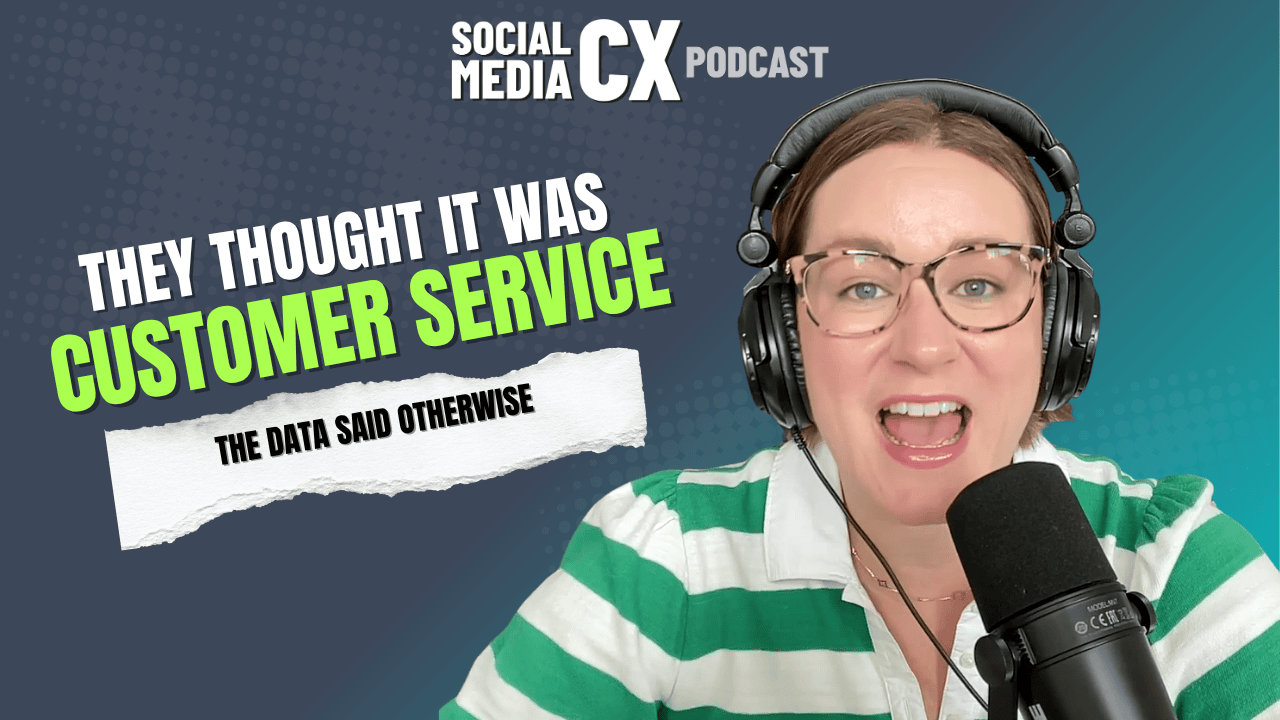
Table of Contents
Most organizations invest heavily in understanding customer behavior. They analyze market trends, track buying patterns, and build increasingly sophisticated reporting systems. Yet some of the most valuable signals of purchase intent may already be entering the business every day through customer conversations. The challenge isn’t finding those signals. It’s recognizing them for what they are.
The Customer Intelligence Most Organizations Overlook
For years, social media leaders have been asked the same question by executives:
How do we prove business impact?
The search for that answer has produced no shortage of dashboards, attribution models, engagement metrics, and reporting frameworks. Yet despite all of that effort, many organizations still struggle to connect social media activity to pipeline, revenue, and growth.
The problem may not be the reporting.
The problem may be where we’re looking.
When organizations try to measure social media ROI, they often focus on content performance. They look at impressions, engagement rates, clicks, and follower growth. While those metrics can provide useful operational insight, they rarely help executives understand how customer behavior connects to business growth.
Leadership teams are looking for a clearer picture of demand. They want to know what influences buying decisions, where customers encounter friction, and what signals indicate future revenue opportunities. Those answers rarely appear in a dashboard of engagement metrics alone.
More often, they emerge through direct interactions with customers. The questions people ask, the concerns they raise, and the information they seek before making a purchase can reveal far more about business opportunity than a click or a like ever could.
Why Customer Conversations Matter More Than Most Brands Realize
Most organizations think about customer interactions through the lens of internal departments.
Marketing creates awareness.
Sales drives revenue.
Customer service resolves problems.
From an operational perspective, that structure makes sense. From a customer perspective, it doesn’t exist.
Customers don’t think in departments. They don’t wake up and decide they’re about to have a marketing interaction, a sales interaction, or a customer service interaction. They are simply trying to solve a problem, answer a question, or make a decision.
That distinction matters because it changes how we interpret customer behavior.
A question about pricing isn’t necessarily a customer service issue. A comparison between products isn’t necessarily a marketing interaction. A request for clarification about features isn’t necessarily a support ticket.
Very often, those interactions are part of the buying process itself.
Customers are gathering information, reducing risk, and determining whether they’re ready to move forward. In other words, they’re revealing purchase intent.
The challenge is that organizations frequently categorize these interactions based on where they arrive rather than what they represent.
When a buying question enters a social care queue, it is often treated as a support interaction. The immediate need gets resolved, the ticket gets closed, and everyone moves on.
What often gets missed is the signal behind the question.
The Brother International Discovery
Recently, my team completed a customer conversation analysis for one division of Brother International.
Like many organizations, the expectation going into the study was straightforward. Most inbound conversations would likely be support-related. Questions about products, troubleshooting requests, and customer complaints would make up the majority of activity.
Instead, the data told a very different story.
Nearly 80% of inbound conversations reflected purchase consideration before a sale ever happened.
The conversations weren’t centered on troubleshooting or complaints. Customers wanted to compare products, understand pricing, evaluate features, and determine which option best fit their needs. Many were actively gathering information to reduce uncertainty before making a purchase decision.
What made the finding so significant was that none of these interactions looked like traditional sales conversations. On the surface, they appeared to be routine customer inquiries. In reality, they represented customers actively moving through the buying process.
Yet every one of them represented a customer actively moving through the decision-making process.
That finding stopped people inside the organization in their tracks, and for good reason.
The implication wasn’t simply that social media was valuable. The implication was that a significant amount of demand generation activity was already happening inside channels the organization largely viewed through a customer service lens.
The demand existed.
The purchase intent existed.
The customer questions existed.
What was missing was a system for identifying and measuring those signals consistently.
The Demand Generation Data Most Organizations Never See
The Brother example highlights a larger challenge facing many organizations.
Leadership teams want visibility into demand. They want to understand customer behavior, identify barriers to conversion, and make better decisions about growth.
To accomplish that, companies invest heavily in research and analytics. They build reporting systems designed to uncover customer insights and improve forecasting.
Yet some of the most valuable indicators of purchase intent never make it into those reports.
Think about what happens when a customer asks about pricing on social media. Or compares two products. Or asks whether a specific feature will meet their needs.
Those questions often reveal more about buying intent than a like, a share, or even a website visit.
More importantly, they provide context.
They help organizations understand what information customers need before they buy, what concerns are slowing decisions, and where friction exists in the customer journey.
When those conversations are viewed as isolated interactions, the insight remains hidden. When they are categorized and analyzed as a group, patterns begin to emerge.
Those patterns represent business intelligence.
Why Traditional Social Media ROI Measurement Falls Short
One of the reasons social media ROI remains difficult to prove is that many organizations are measuring activity rather than intent.
Activity metrics tell us what happened.
Intent data helps explain why it happened.
That distinction is important because executives are rarely concerned with whether a post generated engagement. Their focus is on business outcomes: understanding demand, identifying pipeline opportunities, and gaining visibility into future revenue potential.
Customer conversations can provide a direct line to those insights because they reveal what people are trying to accomplish before a purchase decision is made. Questions about where to buy a product, comparisons between competing options, and requests for clarification about features or pricing all provide clues about a customer’s stage in the buying journey.
While these interactions may not fit neatly into traditional attribution models, they often represent some of the clearest indicators of purchase intent available to an organization. When viewed collectively, they offer valuable insight into customer behavior and future revenue opportunities.
The Future of Customer Intelligence
The organizations that gain an advantage over the next decade may not be the ones producing the most content. They may be the ones that become better at understanding customer intent.
Every day, customers reveal what they want, what they need, what they are considering, and what is preventing them from moving forward.
They reveal it in conversations.
The organizations that learn how to identify, categorize, and analyze those conversations gain access to a layer of customer intelligence that many competitors never see.
That is why conversation intelligence matters.
Not because conversations replace traditional metrics, but because they provide context those metrics often cannot.
They help organizations understand not only what customers did, but what they were trying to do next.
And that may be one of the most valuable revenue signals available to modern brands.
Turn Customer Conversations Into Business Intelligence
Most organizations already have access to customer conversations. The challenge is identifying patterns, uncovering intent, and turning those interactions into actionable business intelligence.
That’s exactly why I created the CARE Blueprint.
The CARE Blueprint provides a framework for identifying acquisition signals, understanding customer intent, and connecting customer conversations to meaningful business outcomes.
Because some of the most valuable revenue opportunities aren’t hiding in dashboards.
They’re hiding in customer conversations.
Read the Transcript
[00:00:00] How one data point changed an entire strategy
What we found stopped everyone within the company in their tracks. Nearly eight out of 10 inbound conversations reflected purchase consideration before a sale ever happened.
Hey, hey, and welcome back to the Social Media CX Podcast. I’m your host, Brooke Sellas, CEO of B Squared Media, author of Conversations That Connect, and your official guide to turning social media from a cost center into a revenue engine. Doesn’t that sound nice? This is week two of our June CARE series.
Last week we talked about C, or Conversations, and why they’re the foundation of everything. Why that brands aren’t having conversations yet can’t build anything on top of it. And how an insurance company, yes, insurance, got over 3% monthly engagement just by showing up differently on social. If you missed that one, go back, because it’s the foundation of everything we’re building this month.
[00:01:09] What acquisition means in the CARE framework
But today we’re talking about the A, which stands for Acquisition. We tag all of those incoming conversations to see how much of it is acquisition, so intent to buy. And I’m gonna share a story that generally changed how one of our clients thinks about their entire business. Not just their social strategy, but their entire business.
So strap in!
[00:01:33] The Brother International story
Several years back, we started working with Brother International. You probably know Brother because of their printers or their sewing machines or their label makers. They are a global technology brand with a massive product catalog and a very active social presence. We came on to manage their social care, and when we do that, we did what we always do, which was we started tagging and coding every inbound conversation.
So we’re responding to those, yes, and we’re closing the loop or closing support tickets, yes, but we also wanna categorize what people are saying and why they’re saying it to the brand about the brand and so on and so forth. And this is where things get interesting Because for Brother, like most brands, here’s what they assumed going in: social’s for support. It’s for those complaints. People come to us on social when something’s broken, when they have a question, when they’re frustrated, so they assumed that the majority of the conversation would be support.
They didn’t think that pre-purchase conversations or acquisition would be there. They said if anything, they thought maybe 5% of their inbound conversation would be acquisition or pre-purchase conversations. But that assumption is usually very wrong. What we found for Brother in those early days was that almost 20% of their inbound conversation was acquisition-related or buying intent related.
[00:03:00] The surprising 80% buying intent finding
More recently, we ran a 90-day tagging intent study across their inbound social care conversations for one of their divisions, Sews. And what we found stopped everyone within the company in their tracks. Nearly eight out of 10 inbound conversations reflected purchase consideration before a sale ever happened.
Let me say that one more time. 80% of the conversations coming into their social channels around the Sews division were happening before anyone had bought anything, and they were about buying something. Almost 40% were tagged as purchasing intent. Almost 25% were price inquiries directly asking about the price of the product, and almost 16% were features and spec questions.
So this is where people asking things like, “Where can I buy this?” People comparing models, people who were ready to spend money, and they were landing in the social care queue. So when we brought that data to Brother, they were shocked and excited, hopefully in that order. Because once you see those kinds of numbers, once you understand that your social inbox isn’t just a support desk, that it’s also an active sales pipeline, you can’t unsee it.
And Brother didn’t just file this away in this report that we built, they’re now figuring out how to roll out a social selling strategy across every single one of their departments. Starting with, obviously, the sewing products division, where the acquisition signals are the loudest and the results might be the most dramatic.
That is what acquisition tagging does. This is the A in CARE. It doesn’t just tell you what’s happening in your social channels, it tells you what’s possible. It tells you how to get to return on investment for social.
[00:05:05] Examples of acquisition conversations
So let’s talk about what acquisition tagging actually is and how it works inside of the CARE framework so that you can do this too.
When we talk about acquisition in CARE, we’re talking about identifying and coding every inbound social conversation that signals pre-purchase intent.
So that might include things like purchasing interest, price inquiries, feature and spec questions, setup barriers where someone’s trying to figure out if your product will work for them before they buy, or where can I buy messaging, also product comparisons or competitor comparisons.
These are not support conversations. They are sales conversation. And the problem that we see is that most brands are treating these things like support tickets. They’re responding, but with generic answers. They’re closing the loop and moving on, “Here’s where you can buy it, here’s the link,” and then moving on.
They’re not tagging, they’re not tracking, and they’re not feeding that data anywhere meaningful. Which means they have no idea how much revenue potential is sitting in their social inbox every single day. The acquisition tagging layer of care fixes all of that because it gives you a system for identifying those conversations, coding them consistently and critically, building a data set that you can take upstairs to leadership.
[00:06:34] The social media metric leadership actually wants
Here is the truth about C-suite and social media. They don’t care about engagement rates. They care about pipeline and revenue. They care about return on investment, ROI. Acquisition tagging gives you the bridge between those things. I want to come back to that Brother number for a second, because I know some of you are sitting there and thinking, “Okay, but that’s Brother International, big brand, big product catalog, lots of inbound volume.
That’s not us.” And here’s what I want you to know. We have seen acquisition percentages ranging from twenty percent all the way up to sixty or seventy percent on specific product lines across our client base. The brands that are surprised by those numbers are surprised because every single one of them assumed they were sitting at zero or maybe five percent at the most.
Every single one. Literally every single client we’ve ever spoken to has said zero to five percent would be acquisition-type conversations. So this is not a Brother International story. It’s an every brand story. The question that I think you should be asking yourself isn’t whether acquisition conversations are happening in your social channels, because they probably are.
[00:07:49] Introducing the CARE Blueprint
It’s whether or not you are paying attention to the conversations that are happening and labeling or tagging them in such a way that helps you see that bigger picture. If this is making you think, “I need to understand what’s actually happening in our social conversations,” that’s exactly where the Care Blueprint comes in.
The Care Blueprint is a course that I built specifically to teach you this system, how to set up your conversation coding, how to tag acquisition signals, how to build the reporting that makes your C-suite sit up straight. You can find it at the link in the show notes, so wherever you’re listening to this podcast or watching this podcast, head on over to the show notes, the transcript, and you’ll see a link to that course.
And because you are listening to this show, if you use the code SMCX, as in Social Media Customer Experience, at checkout, you will get 50% off. That brings the course down from $97 just to $48. $48 to learn the system that is now helping Brother International discover 80% of their social conversations were pre-purchase pipeline.
I mean, come on, y’all, pretty darn good.
[00:09:14] Next week preview
Next week, we’re going to be talking about the R in CARE, which is retention tagging. So if acquisition is the C-suite wake-up call, retention is where the real volume lives. It’s also where the most compelling cost math is hiding. Because everyone knows it’s cheaper to keep a customer than it is to find a new one.
However, very few brands know exactly how much retention is actively already happening in their social channels or what it’s actually worth. We’re gonna talk about that next week, so do not miss out.
As always, if this show is helping you think differently about customer experience or social media strategy, please rate and review us wherever you’re listening to this podcast, or watching, right now.
It helps us bring on more brilliant voices and keeps our community growing with intention. Until next time, think conversation, not campaign.
Want to hear the full conversation? Listen to the Social Media CX Podcast on YouTube. And if your team is thinking about what responsible social listening in banking or financial services actually looks like at scale, check out the State of Social Care Report 2026.
Finally, as always, Think conversation, not campaign.™

Latest posts by Brooke B. Sellas (See All)
- You’re Treating Business Intelligence Like Social Engagement - August 19, 2026
- Your Customer Complaints Are Shaping What AI Says About Your Brand - August 12, 2026
- The Customer Signals Hidden Inside Your Social Care Data - August 5, 2026

Written by award-winning strategist Brooke Sellas, this weekly 5-minute power-up will help you turn social interactions into loyalty, retention, and revenue.
Written by award-winning strategist Brooke Sellas, this weekly 5-minute power-up will help you turn social interactions into loyalty, retention, and revenue.
Share this article: