
Blog » Social Care »
Predictive Social Care: The Mindset Shift Most Teams Need!
Table of Contents
Most social care teams are not failing.
They react as fast as they can inside systems that do not help them win.
That distinction matters because the future of social care is not about responding faster; it is about seeing issues earlier and preventing the most damaging moments before they spiral.
The Real Problem With Reactive Social Care
Reactive social care looks productive on the surface:
- Messages answered.
- Tickets closed.
- Response times tracked.
But underneath that activity is a pattern that quietly erodes trust, team morale, and long-term impact.
Customers often reach out on social only after frustration has already built. By the time they post publicly, the emotional moment has already peaked. Teams respond quickly, but they still arrive late in the cycle. Even quick replies feel misaligned when empathy arrives after patience has gone.
When teams capture insights at all, they usually log them long after the moment has passed. Monthly or quarterly reporting increases the distance between what customers experienced and when leadership hears about it. This disconnect carries real consequences. People inside the organization see social as helpful but not strategic, and valuable signals surface too late to change outcomes.
And the result is not just customer dissatisfaction. It shows up as churn risk, repeated escalations, and teams stuck in constant defense mode. This is not a people problem.
It is a timing problem.
Faster Responses Are Not the Future, Predictive Social Care Is!
When social care struggles, the instinctive solution is speed.
- More coverage.
- Higher headcount.
- Faster replies.
But faster reactions do not undo damage that is already in motion.
Once frustration becomes public, trust erosion has often already begun. Silence after engagement can signal a customer who has quietly churned. Escalations repeat because root causes were never addressed upstream.
The future of social care is not faster reactions. It is earlier awareness, driven by recognizing early signals of customer expectations on social.
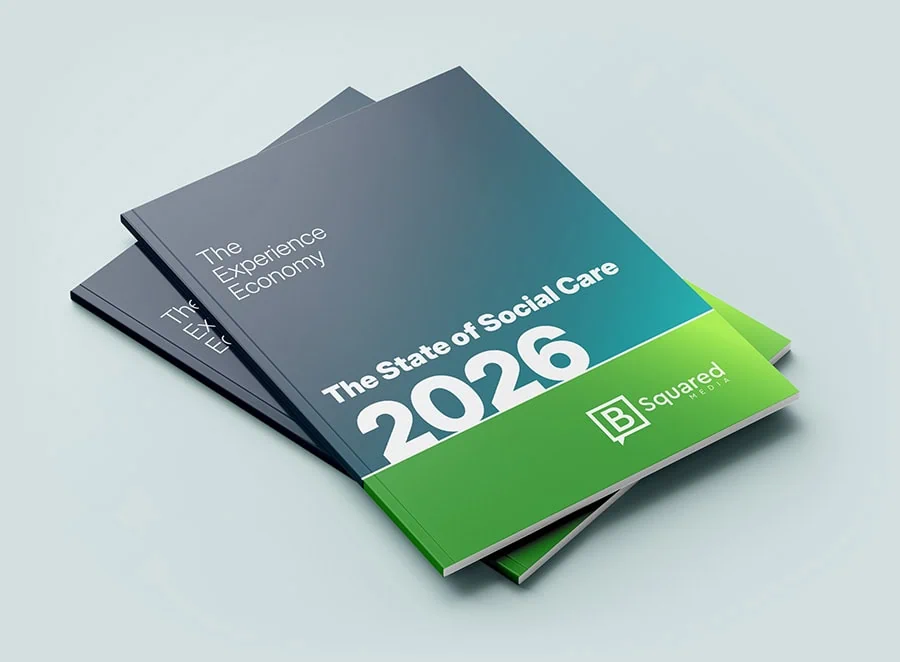
It’s ready and full of social care insights. Download The State Of Social Care 2026 now!
What Predictive Social Care Actually Means
Predictive social care is often misunderstood. It is not about replacing humans with AI or guessing what customers want. It is not about futuristic command centers or complex dashboards designed to impress leadership.
Predictive care is about recognizing patterns early, while there is still time to act.
In practice, this means paying attention to repeated questions that point to confusion in the customer journey. It means noticing subtle language shifts that signal frustration before complaints are formally lodged. It also means recognizing when engagement drops off after an interaction, a common precursor to churn that is easy to miss if teams are only tracking volume and speed.
Predictive care is not about prediction in the abstract. It is about prevention rooted in real customer behavior.
The Early Warning Signals Most Teams Miss
High-performing social care teams learn to spot signals that others overlook.
- Product-related issues often surface on social days or even weeks before support tickets spike.
- Delivery questions cluster before broader dissatisfaction emerges.
- Policy confusion shows up in comments long before formal complaints arrive.
These moments are much more than anomalies. They are early warnings.
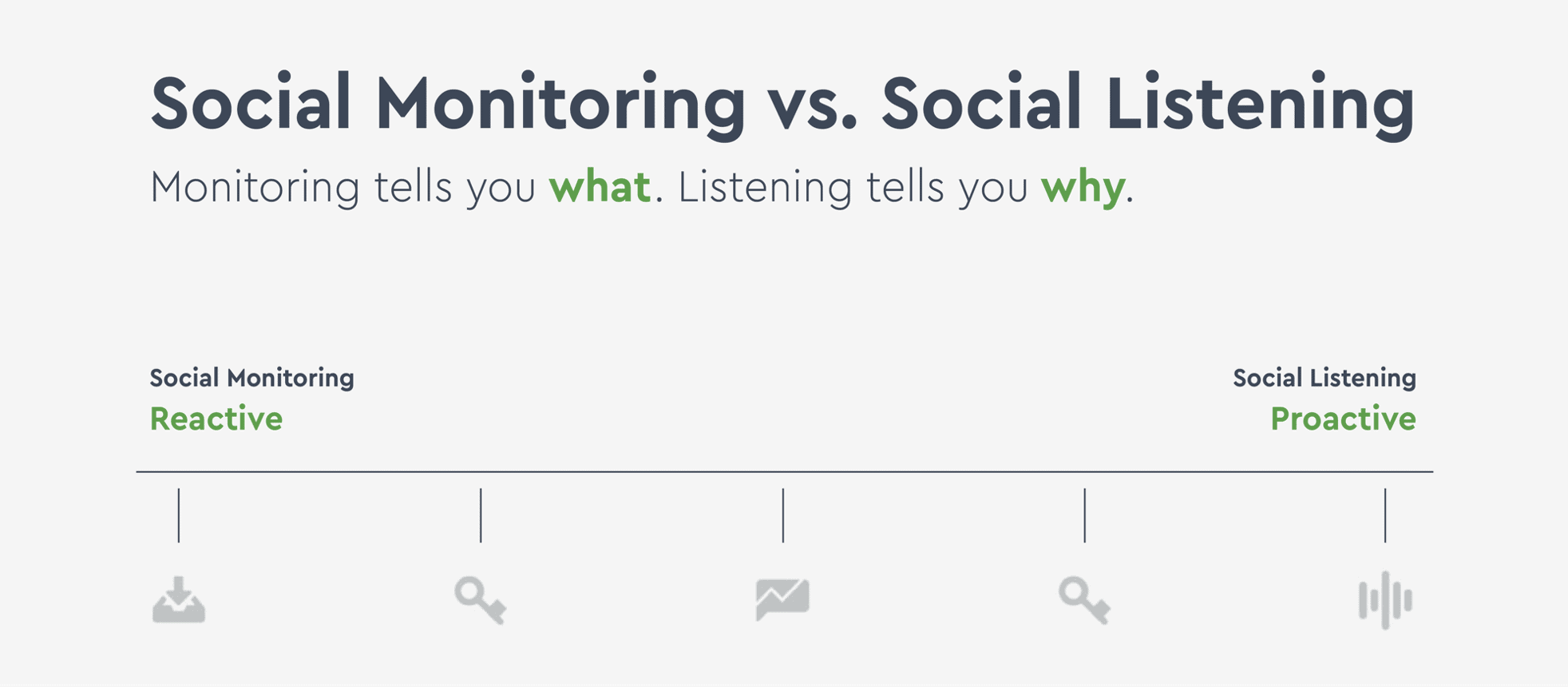
When teams are trained to identify and interpret these patterns with social listening, social care stops being a reactive cleanup and becomes an intelligence system. This shift does not require more tools. It does require a different way of listening.
From Reporting to Real-Time Insight Loops
Too many organizations treat social insights as reports. Data is gathered, summarized, and shared long after decisions have already been made.
High-performing teams do something much simpler and far more effective. They run weekly “what we heard” loops. These are not dashboards or slide decks.
They are focused conversations built around three questions:
What Are Customers Asking Repeatedly?
Repeated questions are rarely about convenience alone. They point to friction, confusion, or gaps in messaging.
What Are Customers Worried About?
Concerns often surface indirectly. Tone, phrasing, and hesitation matter just as much as explicit complaints.
What Are Customers Hinting At But Not Saying Out Loud?
The most important signals stay implied, and predictive care begins when teams learn to hear what customers leave unsaid.
Social teams share these insights with product, marketing, customer support, operations, and leadership, bringing everyone into the loop so social care becomes truly strategic.

Burnout Is About Ineffectiveness, Not Volume
Message volume is often blamed. But volume alone is rarely the root cause.
Exhaustion sets in when teams solve the same problems repeatedly. When issues escalate again and again. You share insights, but nothing changes.
That sense of ineffectiveness is what wears teams down.
Predictive systems change that dynamic as teams prevent issues instead of endlessly resolving them, act on insights, and actively acknowledge and address patterns.
Work becomes purposeful again. Not easier, but sustainable.
Scaling Without Adding More Headcount
One of the clearest findings from recent social care research is that teams are hitting a capacity ceiling.
Adding more people does not fix this long-term. Volume will always grow faster than headcount.
Predictive care shifts the question from “How do we respond to everything?” to “How do we prevent the most damaging moments from happening at all?”
By addressing issues upstream, teams reduce unnecessary volume downstream. Impact increases without requiring constant expansion.
This is how you scale social care with intelligence, not just output.
Try This Simple Four Week Shift Toward Predictive Care
Overhauling your entire system isn’t necessary. Instead, focus on consistency and visibility.
For four weeks, summarize what customers are asking, fearing, or hinting at on social. Share those insights weekly, outside your team. Then observe what happens.
- Do product teams adjust?
- Does marketing refine messaging?
- Does leadership ask follow up questions?
If nothing changes, you haven’t failed. You’ve gained clarity. And identified exactly where predictive social care breaks down in your organization.
Where to Go Next
If predictive care resonates, the next step is understanding your current maturity.
You can also explore broader industry benchmarks and frameworks that outline what proactive social care looks like in practice.
The choice is not whether social care will continue. It is whether it remains reactive or becomes one of the most intelligent systems your organization has. That decision changes everything.
What signals are you seeing on social right now that your organization may be reacting to too late? Let us know in the comments section below!
Listen to the episode, now:
FAQs About Predictive Social Care
1. What is predictive social care, and how is it different from reactive social care? Predictive social care is a social support model that focuses on spotting early warning signals in customer conversations so teams can prevent issues before they escalate into public frustration or churn. Reactive social care teams answer incoming messages quickly, close tickets, and track response times after customers are already upset. This often means trust has already started to erode.
2. Why are faster response times not enough without predictive social care? Faster responses still arrive late if the customer only reaches out after frustration has built, so even a rapid reply can feel misaligned once patience is gone. Without predictive social care to catch patterns and root causes earlier, teams stay stuck in a cycle of repeated escalations and constant defense, which increases churn risk and stress on the team.
3. What signals should teams track to make predictive social care work in practice? Teams practicing predictive social care watch for repeated questions, clustered delivery or product issues, policy confusion in comments, and subtle language shifts that show frustration before formal complaints appear. They also pay attention when engagement drops off after an interaction, since that often signals quiet churn that standard volume and speed reports miss.
4. How can we start moving from reactive support to predictive social care in just a few weeks? A simple starting point is to run a four-week “what we heard” loop where the social team summarizes what customers are asking, fearing, and hinting at each week, then shares those insights beyond social. This lightweight predictive social care practice helps product, marketing, operations, and leadership see early signals in time to adjust messaging, fix friction, and prevent repeat issues.
5. How does predictive social care reduce burnout and help us scale without endless headcount growth? Burnout often comes from feeling ineffective, solving the same problems over and over, while nothing changes. Predictive social care shifts the work toward preventing issues and seeing upstream fixes actually land. By addressing the most damaging patterns early, predictive social care reduces avoidable volume downstream, allowing social teams to scale their impact without having to endlessly add people.
Read the Transcript
[00:00:00] The mindset shift that changes everything
Brooke Sellas: Predictive care helps shift the focus from how do we respond to everything all at once, everywhere, to how do we prevent the most damaging things from happening in the first place?
Brooke Sellas: Welcome to the Social Media CX Podcast, the show about what really happens when brands stop broadcasting and start having real conversations with their customers on social. I’m Brooke Sellas, and around here we believe that conversations beat campaigns every single time.
All right, y’all. We’re starting with another hard truth. Because most social care teams aren’t failing; they’re reacting as fast as they can, but they’re inside systems that were never designed to help them win. And that’s exactly what we uncovered while working on the State of Social Care 2026 report.
It isn’t a lack of effort or a lack of empathy, it’s really more of a lack of early signals, shared insights, and organizational readiness. So today I wanna answer one core question. What does social care actually look like when it works for both customers and for the people doing the work? Once you can see that future state, clearly you can’t unsee the gap anymore.
[00:01:27] Real signs of reactive social care
Brooke Sellas: Here’s what reactive social care looks like, in case you don’t know. Customers are reaching out on social when they’re already frustrated, so you’re getting those complaints coming through on social.
Teams respond quickly, but they’re late in the emotional cycle. So maybe it took them a while to respond or they’re not responding with the appropriate tone or empathy.
Insights are getting logged, maybe, quarterly. Not daily in real time, as these conversations are happening. And because of all of this, leadership sees social as helpful but not strategic. It’s the whole, we don’t see a return investment with our social media efforts. That whole thing. And y’all, this is not a people problem. This is a timing problem.
By the time most issues surface on social, the damage is already in motion. We’ve got trust erosion. We have churn risk. We have what we call escalations and re-escalation, meaning when people have to be escalated to a customer support or a legal or an hr, whatever the situation is. And we have burned out teams constantly playing defense.
This showed up loud and clear in our report. If you’re following along, look at chapter six, where we talk about the challenges and the future of social care.
The future, by the way, isn’t faster reactions, it’s just earlier awareness. Let’s demystify this all because predictive gets thrown away way too casually.
[00:03:11] What predictive social care actually means
Brooke Sellas: Predictive social care does not mean replacing humans with ai. It does not mean guessing what your customers want. And it definitely doesn’t mean building some futuristic command center, although that’s what a lot of brands seem to be doing today. What it does mean is this: you start recognizing patterns long before they turn into problems.
In practice, this is what that looks like: repeated questions on the same product or delivery. Code, or whatever it may be, hint at confusion, a problem, a pothole on the path to purchase, as I call it in my book, Conversations That Connect. Language shifts that signal frustration before a complaint. So a lot of times if we’re really paying attention in real time, in the moment, we can kind of see the signal of frustration show up before it actually turns into a lodged complaint.
It also looks like silence after engagement that often proceeds churn. So you try to fix it. Maybe you’re late, you’re getting silence back. They’ve probably already churned. Yikes, we definitely don’t want that.
[00:04:27] 3 early warning signals to start tracking now
Brooke Sellas: And it also looks like product issues surfacing socially days, sometimes weeks before tickets spike. So again, you start to see early signals that help you prevent churn or crises or an uptick in tickets. At B Squared Media, we call these intense signals and early warnings. And when your team learns to spot them, everything changes.
This might be the biggest operational shift we see. Most organizations treat social insights like this: they gather the data, they compile the reports, they share the reports monthly, quarterly, and then they hope someone reads them. Sound familiar? But high performing teams are doing something radically more simple.
They’re running weekly "what we heard" loops. Not dashboards or 40 slide decks, one focused conversation. Each week, they ask, what are customers asking about repeatedly? What are they worried about? And what are they hinting at but not quite saying out loud or outright? And then, and this is key, they share that insight or those insights outside of the social team.
They talk with product, they talk with marketing, they talk with CX or customer support and leadership. Sometimes they even talk to legal or operations teams. This is where social care stops being a service function, by the way, and starts becoming an early warning system for you.
[00:06:18] Why burnout isn’t about volume
Brooke Sellas: I also wanna talk about burnout for a second. Because the report surfaced something important, which is burnout isn’t just because of message volume, meaning you’re, you might be getting a ton of messages, but it’s really more about feeling ineffective.
When teams are solving the same issues over and over and over again. When they’re seeing the same issues and problems being escalated over and over and over again, and when they’re sharing insights that go nowhere. Where no action is taken over and over and over again. That’s when exhaustion starts to set in.
Predictive systems help you change that dynamic because when you’re using predictive systems, your teams start to see issues being prevented, not just solved or resolved.
They see insights being acted on. Which means they’re not having to solve that same problem over and over and over again. They see the patterns are acknowledged by leadership. And that something’s being done. I’m not saying you’re gonna solve all of the problems that you have overnight, but taking action on the insights is where all of this starts to come together.
[00:07:41] How to scale without more headcount
Brooke Sellas: It’s where work becomes sustainable again. Not easier per se, but purposeful, which helps with burnout. One of the strongest through lines in the report that I saw is this: social care teams are hitting a capacity ceiling and adding head count alone doesn’t fix this. Why? Because volume will always grow faster than people.
Predictive care helps shift the focus from how do we respond to everything all at once, everywhere, to how do we prevent the most damaging things from happening in the first place? How can we stop some of that volume in the first place? That’s how your team scales with impact and not just output.
[00:08:36] The 4-week plan to go predictive
Brooke Sellas: So here’s what I want you to do starting this month or next month, but start it soon. For four whole weeks, the entire month, I want you to summarize what customers are asking, fearing or hinting at on social. Remember those three questions that I asked earlier? I’ll repeat them again. What are customers asking repeatedly? What are they worried about? What are they hinting at, but not saying outright? Those are the three questions.
So summarize that and then share it weekly outside of your team. Share it with product, marketing, customer support, whomever. And then I want you to observe, did product listen? Did marketing adjust messaging? Did leadership ask follow up questions? Did anybody ask follow up questions? If the answer is no, that’s not failure, but it is clarity.
You’ve just identified the gap between where you are and where predictive social care actually begins. Connecting the dots yet?
If this episode clicked for you, I have two next steps. Number one is obviously you need to go download the State of Social Care report and grab the 2026 Social Care Playbook from Talk to Trust.
Yes, we built a playbook, not just a diagnosis or a report. You can find that playbook inside of chapter eight.
And two, request a social care audit. If this all sounds like. It’s really familiar and you’re not sure how to move forward, go to our website and request a social care audit. And what we will do is we will align your social care program to the maturity framework that is shared in the report in chapter seven.
We’ve already had one of the largest asset managers in the world come to us for 2026 to use this audit and evaluate whether they’re truly ready to move from a reactive to a proactive social care program. Just saying. Either way, no matter which of those two things you do, you are not dabbling, you are not being idle.
You are not sitting on your laurels, laurels, laurels. Yeah, I think that’s it. You’re actually deciding whether or not your social care stays reactive. Or becomes one of the most strategic intelligent system that your organization has. And that choice, y’all, it changes everything.
Hey, if you loved this podcast, do me a big solid and head on over to rate this podcast.com/smcx.
That’s S as in snake, M as in mouth. Mouse mouth. Mouth or mouse, C as in cat, and X as in x-ray. Ratethispodcast.com/smcx and until next time, think conversation, not campaign.
Thanks for tuning in to the Social Media CX podcast. If you loved today’s episode, don’t forget to subscribe, leave a review and share it with someone who needs to up their social care game.