Brands Are Watching You: What Creators Don’t Know About Social Listening with Danny Gardner
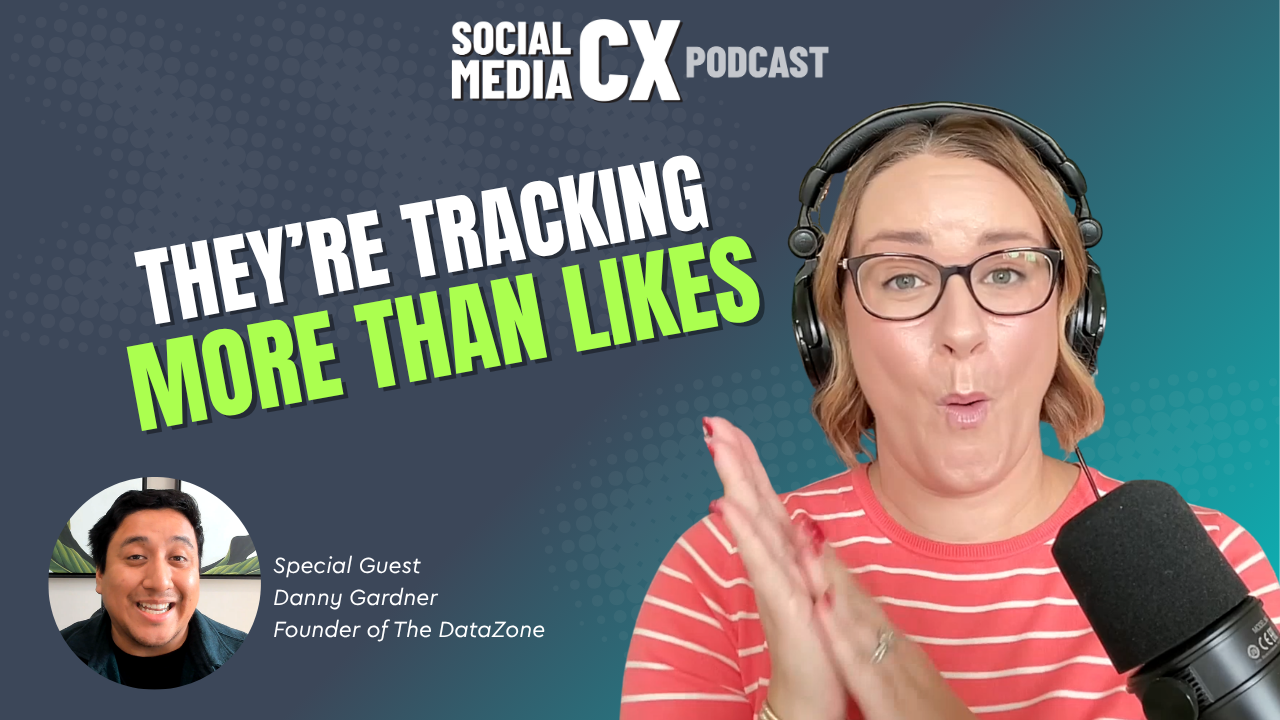
Table of Contents
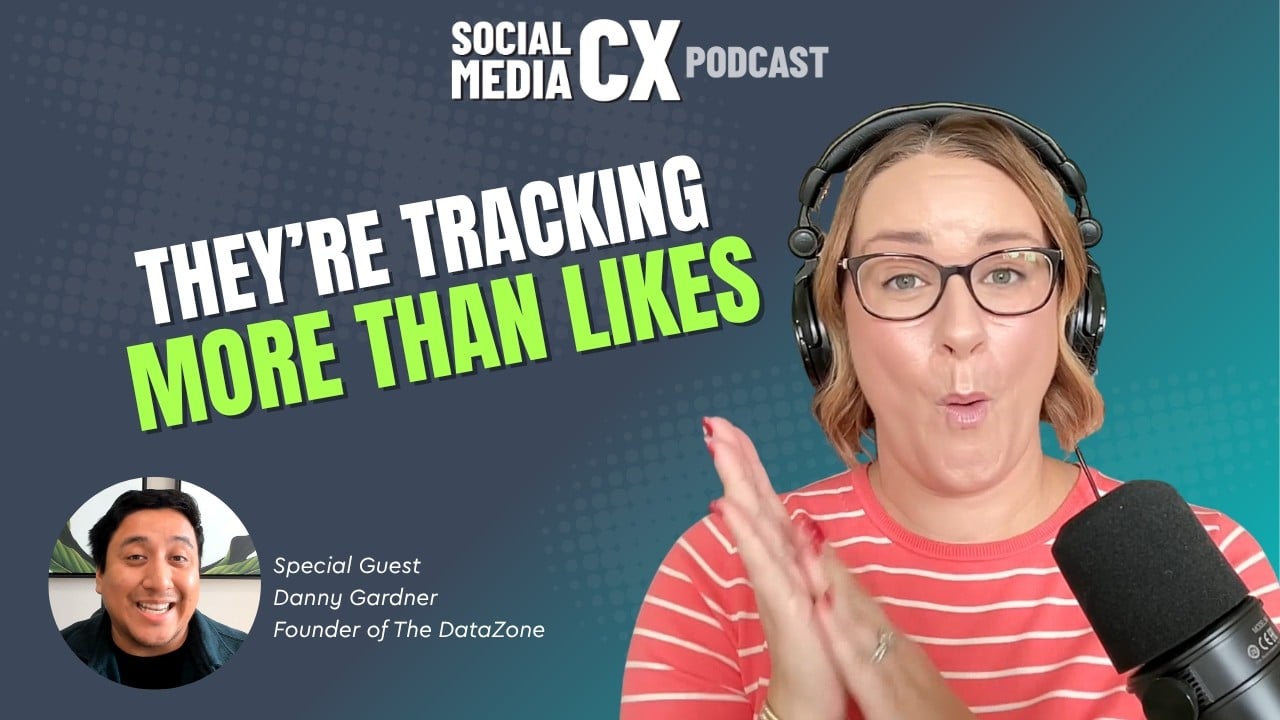
Brands use social listening to discover creators, analyze audience engagement, review past partnerships, and identify people already talking about their products. That information helps brands evaluate potential partners, measure campaign performance, and decide which relationships to develop. But most creators never see the analysis happening behind the scenes. On this episode of the Social Media CX Podcast, Brooke Sellas talks with Danny Gardner, founder of The DataZone, about what brands are actually tracking, why creators should optimize for social listening, and how both sides can use that intelligence to build stronger partnerships.
Brands are paying attention to more than follower counts when evaluating creators.
Through social listening, they can identify organic brand mentions, examine audience engagement, review previous partnerships, and discover creators who may be a good fit for future campaigns.
For creators, this means their content can influence partnership opportunities long before a brand reaches out.
But there’s another side to this conversation. Brands may be collecting valuable information about creators and their audiences without using those insights to improve their relationships.
On the Social Media CX Podcast, Brooke Sellas talks with Danny Gardner, founder of The DataZone, about how social listening works from both perspectives and what brands and creators can learn from each other.
What Is Social Listening, and How Do Brands Use It to Evaluate Creators?
Social listening is the process of tracking and analyzing online conversations to understand what people are saying about a brand, product, industry, or topic.
When brands apply social listening to creator marketing, they’re looking for more than popular accounts.
They may examine:
- Organic brand mentions: Who is already talking about their products without being paid?
- Audience engagement: How do people respond to a creator’s content?
- Previous partnerships: Which brands has the creator worked with before?
- Affiliate links and disclosures: What existing commercial relationships can be identified?
- Audience fit: Does the creator’s content and audience align with the brand’s goals?
Danny explains that brands can identify affiliate links in YouTube descriptions and discover partnerships through disclosures such as #ad, #sponsor, and #partner.
These public signals help brands identify creators worth investigating.
Once a partnership begins, brands may also analyze private campaign performance data provided by creators. That information helps determine whether the investment delivered the intended results.
However, collecting the information is only the beginning.
Why Do Creator Partnerships Often Feel Transactional?
A creator completes a campaign, delivers the agreed-upon content, and sends the performance numbers.
Then what?
Sometimes another opportunity follows. Other times, the creator never hears from the brand again.
Danny experienced this disconnect while analyzing a roster of more than 100 creators across TikTok and Instagram.
He had access to campaign performance information, but the creators and their representatives didn’t necessarily receive meaningful feedback.
As Danny explains:
“One of the biggest reasons that creators feel like this is so transactional is because they don’t get any feedback.”
A creator might meet a campaign’s reach objective but still deliver less value relative to the cost than another partner.
Without that context, they don’t know why the brand decided against another campaign.
This creates a missed opportunity for brands, too.
Sharing relevant performance insights can help creators understand what worked, what could improve, and how future collaborations might deliver better results.
For brand leaders, the lesson is simple: Collecting performance data is not the same as using it to build better partnerships.
What Social Media Metrics Don’t Tell Brands About Audience Behavior
Likes, comments, shares, and impressions still matter.
Danny considers these traditional metrics useful directional indicators. They help brands compare content performance and identify patterns.
But they don’t capture every way people interact with content.
Someone might screenshot a post, share it through a private message, or read it without leaving a public reaction.
Danny learned this firsthand when a friend showed him screenshots she had saved of his content. Another person admitted that he regularly consumed Danny’s posts but avoided publicly liking them because they were competitors.
Neither behavior would have been obvious from his engagement reports.
This doesn’t mean every post with low engagement is secretly successful. It means visible engagement provides only part of the picture.
Where available, Danny recommends looking at additional indicators such as share rate and video completion rate.
For brands, these measurements can provide more context about how audiences interact with creator content.
The goal isn’t to abandon traditional metrics. It’s to understand what they measure and what they leave out.
How Can Brands Discover Creators Through Social Listening?
One of the most useful applications of social listening is finding people who already have an authentic connection to a brand.
Danny experienced this when he shared a LinkedIn post featuring Liquid IV.
The post generated approximately 4,000 impressions. Soon afterward, a brand executive contacted him to say they had seen it.
Danny had around 5,000 followers at the time.
The company eventually sent him a product mailer.
His experience illustrates an important point: brands don’t necessarily need to wait for creators to pitch them.
They can use social listening to identify people who are already discussing their products, sharing experiences, or participating in relevant conversations.
Danny describes the opportunity for brand marketers:
“You need to be able to design content and do social listening so that you can find these people who are organically talking about you.”
For brands, those organic conversations can reveal potential partners whose interest in the product existed before a sponsorship agreement.
They also provide another source of information about how people experience and discuss the brand.
How Can Creators Optimize Their Content for Social Listening?
Creators who understand how brands use social listening can make more intentional decisions about their content.
Danny recommends starting with the brands they genuinely want to work with.
That doesn’t mean filling every post with brand tags or turning every conversation into a sales pitch.
Instead, creators can use a simple process.
1. Identify the brands that fit your content
Consider the products, services, and industries that naturally align with your interests and audience.
Danny uses examples from travel, lifestyle, and consumer products to demonstrate how creators can identify relevant companies.
2. Listen to what customers are saying
Review recent conversations about those brands and their competitors.
What questions keep appearing? What problems are customers describing? How do people talk about the products?
Danny suggests that, for larger brands with sufficient conversation volume, reviewing the previous 30 days can provide a useful starting point.
3. Create content that responds to real needs
Use those insights to identify opportunities for useful content.
An educational creator might answer a recurring customer question. A travel creator might demonstrate how a product fits into a common travel situation.
The goal is to create something relevant to the audience while showing an understanding of the brand’s customers.
4. Make authentic brand connections visible
When a product naturally belongs in the content, mentioning or tagging the brand can make that connection easier to discover.
Danny explains that these organic mentions can become part of the information brands collect through social listening.
Over time, they may help a creator appear in a brand’s research and evaluation process.
For creators, social listening becomes more than a way to monitor conversations. It becomes a way to understand opportunities and make informed content decisions.
For brands, the same activity can reveal creators who already understand their customers.
Why Do Some In-House Social Listening Programs Fail?
Social listening can provide valuable intelligence, but purchasing an expensive platform doesn’t guarantee useful results.
Danny has worked with enterprise listening tools and helped organizations build their internal capabilities.
One recurring problem is that companies invest in sophisticated software without developing the expertise needed to use it.
Teams may struggle to configure queries, understand platform limitations, or translate the data into useful findings.
Sometimes, the tool simply goes unused.
Danny is particularly clear about the importance of assigning responsibility:
“If you’re a hiring manager, you’re looking for someone to own this, it can’t be a side project.”
This can be challenging when social listening becomes one more responsibility for an already busy social media manager.
A successful program needs someone who understands the technology, knows which questions to ask, and can explain the findings to other departments.
But technical expertise alone isn’t enough.
How Can Brands Turn Social Listening Data Into Business Decisions?
Danny learned that one of the most effective ways to communicate social listening insights was also one of the simplest.
He included screenshots of actual social media conversations in his reports.
Instead of presenting data alone, he showed colleagues the posts and discussions behind the findings.
That made the information easier to understand.
It also encouraged questions.
Over time, those conversations helped other teams recognize the value of social listening and become more interested in using the insights.
Danny describes how his approach evolved from producing a high volume of reports to developing deeper qualitative analysis and more useful findings.
For CX and marketing leaders, this is an important distinction.
The value of social listening isn’t the number of reports a team produces. It’s whether those findings help the organization make better decisions.
That might mean identifying a potential creator partner, recognizing a recurring customer problem, improving a campaign, or understanding how people actually talk about a product.
The technology collects information. People still need to interpret it and decide what happens next.
Start Listening Smarter
Social listening creates opportunities on both sides of the creator-brand relationship.
Creators can better understand the brands they want to work with and the conversations shaping their industries.
Brands can discover potential partners, evaluate performance, and use customer insights to build more effective relationships.
But neither side needs to begin with an enormous listening program.
The first step is knowing what to listen for.
B Squared Media’s free Listen Smarter workbook introduces the BIC framework: Brand, Industry, and Competitor.
It helps you identify the conversations worth tracking, the questions to ask, and how to turn what you learn into action.
Download the free Listen Smarter workbook and start making more informed decisions with your social listening data.
Quick Recap
Brands are analyzing creator content, and most creators have no idea it’s happening. On this episode of the Social Media CX Show, Brooke Sellas, CEO of B Squared Media, talks with Danny Gardner, founder of The DataZone, about what social listening actually looks like from the brand side, and why creators should treat it as something to optimize for, not ignore.
What is social listening?
Social listening is the practice of tracking and analyzing what’s being said across social media, including comments, mentions, sentiment, and trends, to understand audience behavior and inform brand strategy.
Do brands actually analyze creator content?
Yes. Brands increasingly treat creator content as a listening input, analyzing sentiment, engagement patterns, and messaging alongside traditional customer conversations, not just as a distribution channel.
Why should creators care about social listening?
Understanding that their content is being analyzed changes how creators can approach what they post. Treating content as a signal rather than a broadcast gives creators more control over how they’re perceived and measured by the brands they work with.
How can brands build in-house social listening capability?
Brands can start by identifying the signals they currently underweight or miss, such as sentiment embedded in creator content, and treating creators as a data source rather than only a marketing channel.
What’s the difference between watching and listening on social media?
Watching is passive observation. Listening involves systematically analyzing what’s being said, including sentiment and nuance, to surface insights that inform decisions, not just track visibility.
Read the Transcript
Brands Are Watching Creators
[00:00:00]
Danny Gardner: That’s the advice I would give to every creator that’s watching this, is that you don’t know who’s watching or listening, and it could lead to the next big opportunity.
And you don’t have to be a 500,000 follower creator either, right? I got that DM when I was at 5,000 followers.
Brooke Sellas | B Squared Media: Welcome back to the Social Media CX Podcast. I’m your host, Brooke Sellas, CEO of B Squared Media, author of Conversations That Connect, and today we’re gonna flip the script on social listening because most of the time when we talk about social listening on this show, we talk about it from the brand side. What are customers saying? How fast can we respond? What’s the sentiment doing out there?
But my guest today lives on both sides of the social listening equation as a brand marketer and a creator, and he said something recently that really struck me, which was, “Most creators have no idea that brands are actively analyzing them.”[00:01:00]
Danny Gardner is the founder of The Data Zone. He spent years as a brand marketer, he’s also an active creator himself, hosting his own podcast and live stream. So he’s not theorizing about what we’re gonna talk about today. He’s lived it from both sides. Danny’s take is simple, but it’s going to change how a lot of you think about posting on social because social listening isn’t a brand tool anymore.
It’s something creators should actively understand and optimize for. Danny, welcome to the show.
Danny Gardner: Thank you so much, Brooke. It’s so wonderful to be here. Thank you for such a wonderful introduction. Like you said, I mean, social listening is probably one of the most powerful tools any modern marketing toolkit, whether you’re an agency, whether you’re a freelancer, whether you’re a major enterprise. Being able to actively listen and transform what your consumers are saying at scale is very difficult.
Historically, it’s always been difficult [00:02:00] because it’s required such a niche skill set, and niche because it’s really a combination of many different skill sets: data storytelling, analytics, data science, digital marketing, and so many other things today. those companies that have been able to kind of tap into the power of this realize how specialized and how skillful it is, are reaping the benefits. You know, and I think that’s a larger call to action I was just talking about the other day, is that now I think you’re starting to see a real difference in distinction between people who are really good at advertising and really poor at advertising.
Advertising that is very consumer-led not consumer-led, you know, which leads to controversy and a mix of other different things, misinformation, brand speech, hate speech. There’s so many different things that can stem from lack of social listening, great social listening, and just from poor social listening that happened to miss a thing or two.
So it’s really a tremendous opportunity. so excited to be here, Brooke. You yourself, you know, as a fellow creator, it’s always great to [00:03:00] team up.
Brooke Sellas | B Squared Media: Thank you. I am just giddy with excitement.
Danny Gardner: Me too.
The Creator Feedback Gap
Brooke Sellas | B Squared Media: Start with what most people get wrong. So when you say that most creators don’t realize that brands are analyzing them, what does that analysis usually look like in practice? ‘Cause I know you’ve been on both sides.
Danny Gardner: You know, I sometimes say this anecdotally, but it’s really rooted in conversations I’ve had offline. I’ve been very fortunate to get to travel the industry and to speak about social listening and measurement and all the things that this profession is.
And having met people with 500,000 followers, million followers, five million followers, you know, all these different people, one of the biggest questions they have, you know, this is a separate conversation that people in the creator space are having, is why does everything feel so transactional?
And I’m talking to these creators as the guy who, the last few years, I mean, it wasn’t always part of my job to measure creators. in [00:04:00] working at Halion, I was responsible for analyzing, you know, the roster at any given time was, you know, 100 something people, you know, and across TikTok and Instagram.
And so it was rather difficult to organize on the data side. I remember thinking, I’m like, “One of the biggest reasons that creators feel like this is so transactional is because they don’t get any feedback.” Right?
If I perform, you know, if I’m contracted for five posts, but before I share my data back, which is another issue, a lot of these creators to just take screenshots of things.
It’s not very easy to export from Meta Business Suite from the mobile experience. And, you know, what I’ve realized is that, oh, they’re not getting feedback from the brands.
And as someone who’s worked on the brand side for the majority of my career. You know, I’m like I’m never in the room. You know?
And some of this I just, I think is just the ways of working, it’s the size of teams. But I remember thinking, I’m like, “Well, none of our brand marketers and my peers have any insight into how stuff performed. do.” Right? And I started to think, I’m like, I should [00:05:00] be the one in front of these creators, in front of their talent agents, and it’s such a-
No one else has ever talked about this, but it’s one of those aha moments where I’m like, oh, you know what? Because I’ve had these conversations offline with these major creators, that’s exactly what they’re looking for.
Why didn’t you come back to us? Or what did you really like? If I’m contracted in a cohort of six other creators for a campaign, did I perform?
I might be the lowest performing in the campaign. No one has that insight, right? And so, you know, and companies are starting to come around to this in their maturity, but we were very much there after about a year, and me kind of Rubik’s cubing all the data and the reporting, but at that point we had the insight.
I had an exact reason as to why we shouldn’t come back to a macro creator who’s great, and they achieved, you know, partially, the objective we had for them, which was reach based.
But was it worth the price, which is the other side of the equation? and what we paid them? And at it from the same side, as am I as a creator, [00:06:00] right?
I should probably be charging more. I don’t know, I don’t have that insight because the brands don’t have benchmarks or any historicals or any reference or a data person. So there’s so many different challenges in modern marketing today and in creator marketing, and people aren’t talking about it.
And I talk with a lot of people, and no one brings this up. So it’s kinda one of those hidden things that like I’ve seen firsthand, and I’m like, “Why don’t we have this conversation enough?”
I go to all these panels and all they talk about is, you know, we want more autonomy and this feels transactional.
I’m like, like the answer lies in the data and, I need to be more vocal about that, I guess. So that’s been my foray over the last few years, specifically in the creator side. But Brooke, social listening, as you can appreciate too, is so and used in so many ways.
Brooke Sellas | B Squared Media: Yes. Yes. I love everything that you said, and we do a little bit of influencer marketing for our social care not really like a forward service that we offer. It’s not something you’ll find on our website, but this is, the same conversation’s been happening, Danny, that you’ve been hearing, I think, for the last couple [00:07:00] of years.
It’s been a lot more around like it’s not enough that they’re just posting the content. The content has to move. It has to garner something, engagement or buying intent or questions, FAQs. And so this is, I think, timely. And this is our chance. This is our chance to tell everybody, “Hey, the game has changed. Let’s figure out how to change it together.”
Measuring Creator Content
Brooke Sellas | B Squared Media: So in your viewpoint, going to the brand side, what do you think brands should be measuring when they’re using social listening specifically to creators and creator content versus just, you know, general social listening?
Danny Gardner: So it’s a great question. I feel like I just answered a lot of this at a very high level for my friend Meredith Kline, who’s a Substack author, and she’s a contributor for Inc. Magazine, or the business website.
She was asking about, you know, kind of passive engagement and passive impressions. it’s kind of the same thing. It’s like I still am a firm believer that a lot of the top line metrics that we measure, your likes, your [00:08:00] comments, your shares. They’re still, I think, great directionally, right? I can generally tell because it’s all relative, right?
If I have a big creator, I’m expecting them to average probably about 20,000 likes. You know, obviously scale it up and down. So having that data is still useful because it’s a public metric, and it’s what’s easily accessible and scalable in modern social listening tools, social media management tools. So I don’t think it’s right to necessarily disregard them.
Part of what I wrote in this contribution was that so much intent and measurement lies in some of the metrics that we didn’t always prioritize we can’t see, your screenshots, shares to private groups, text messages. My friend Olivia, who’s in the social listening space, I remember I was with her over the summer, and she showed me on her phone. She’s like, “Danny, here’s all the posts that like, I’ve screenshotted you.”
And she’s wonderful woman. I remember thinking, I’m like… And she likes plenty of my post, but I’m like, “I had no idea.” I’m like, so much content is captured [00:09:00] from me, myself as a creator.
in my DMs. One of my good friends who I competed against for a long time, I remember him telling me, I’m like, “You know, Danny, I can’t like your stuff ’cause I’m a competitor, but I love everything you’re doing.”
I’m like, “First of all, I like all of your company’s content stuff.” I’m like, you know, “And I know this in social listening, your social listening team can’t see any of this on LinkedIn.” I know that for a fact ‘ cause there’s significant limitations.
so I think traditional metrics are still a very valuable answer. One of the guys I had on my podcast, Gabe Davis, who works at Anthropic, hates engagement rate, and I’m a firm believer.
Like, I like engagement rate. I think it controls for type of audience, I completely hear now the other side of, like, why people don’t like this. But I also look to newer things like share rate, you know, video completion rate, right? Where that’s accessible and available.
Because it tells you, you know, insight that you wouldn’t normally have through you know, a touch point that is now almost outdated, right?
Now, you can see it anecdotally. Next time you go look at a viral post that [00:10:00] you’ve saved, you’ll notice that, you know, there’s 300 comments, 20,000 likes, 30,000 shares or sends, right?
And so I’m like, the indicator has really changed as far as like what performs best. This advice and insight applies to both your organic social and your creators, which I view as an extension of organic. And so we all log into the same app, right? I log into the same app that MrBeast logs into, right? It’s all the same data.
His data’s just significantly better ’cause he’s the ultimate example. But that’s the kind of dichotomy of metrics that I see is, like, here’s your kind of established directional metrics that will always exist. They’re still useful. Don’t write ’em off.
People do, but they shouldn’t. And then there’s your passive engagement, right? An impression is still worth a lot. It’s always kind of been discredited as like the, well, it doesn’t lead to anything, and it’s top funnel.
But I know this from my experience as a creator too, is that a lot of these people who are seeing my content still consume and ingest it or share it or screenshot it, and I [00:11:00] have no way of measuring that.
Brooke Sellas | B Squared Media: Right?
Danny Gardner: But all I needed was this one little piece of anecdotal evidence to know in my DMs, if one person who doesn’t like my stuff watches and consumes it and loves it, hundreds probably do. And so, like there’s, there’s a certain point of extrapolation you can use there. But for creators, that’s very much what I think, like they don’t realize that brands are doing and analyzing them that way.
So I always love– I get such a kick out of it when I meet creators, I’m like, I tell them what I do. They’re like, “Oh, that, that’s so cool.” And these people are infinitely cooler than me, know? But I’m like, they’re interested in this because they don’t realize that brands do it.
And are looking for fit in their audience, right. And previous brand mentions that they’ve had and previous brand partnerships. All that data is a footprint, and they know that ’cause they’re creators. They’re building that footprint for this very reason.
So I think shedding a light on just the technical aspect of this has been very, very eye-opening for creators. I think it’s gonna make for just better relationships. I think you’ll see more deals get done, which is happening organically, but [00:12:00] I think you’ll also see the quality of relationship and long-term deals increase because of this and because of social listening.
Brooke Sellas | B Squared Media: Yes. I couldn’t agree more with everything that you said. And something that you said earlier, you know, like you were saying like, “Nobody’s really talking about this,” and you feel like we owe it to creators, you owe it to creators to kind of explain it.
Getting a Brand’s Attention
Brooke Sellas | B Squared Media: So explain it. Like, what changes for a creator once they understand they’re being listened to and analyzed, not just watched?
Like, what changed for you since you’re actually doing it?
Danny Gardner: Yeah. I’ll give you an example myself. So one of the things that I learned too, I mean, maybe this isn’t a bad ex- isn’t a great example because I know social listening. So I’m a creator that comes in already knowing social listening.
But I started posting every once in a while about some of the stuff I travel with, you know, including some of the brands that I’ve worked on. And so my old colleagues used to love that ’cause I didn’t always give them that earned media for free.
But I shared a picture of Liquid IV [00:13:00] and Stacy, who was the CMO, now she’s at this company Bobbie, this mother’s care brand, she messaged me after I got like 4,000 impressions on that on LinkedIn, and she was like, you know, “Danny, we saw your post.” You know, I was writing about social listening.
She was like, “You know, we know a thing or two about social listening ourselves,” like hint, hint, wink, wink. And I’m like, “That’s so funny that this would reach the exact person Who I knew they were hiring for about a year ago to see this. And I remember thinking, I’m like, “Oh, because I posted that, there’s probably brands that see and track it that I wouldn’t…”
And like Liquid IV’s a big consumer brand. You know, so they ended up sending me a mailer, you know, it was really cool. That’s what I think was like the aha moment for me, was like, now I can plant these seeds of brands that I work with organically, and you never know what it’s gonna lead to.
Or even better, competitors of these brands will see. that’s the other key thing. And so if we can relate this to some of the brands that I’ve worked with, advice I’d give B2C creators and B2B creators, [00:14:00] right, is like consider that. That you’re actively being listened to, and think about the content that you make, right?
Especially when it doesn’t involve, you know, upselling yourself or your service or your company, right? You’re doing entertainment content that you just love to do. Use that as an opportunity to showcase the brands you like, right? My friend Leah Haberman, who’s a wonderful content creator in the space too, I remember she started posting a lot more about fashion.
And I’m like, I remember telling her, I’m like, “Leah, like I loved it, like you love this and you’re making this your thing.” ‘Cause I thought about it too, I’m like, a lot- I’m not wearing it right now.
But I wear a lot of Psycho Bunny and Cuts, you know, two of my favorite brands to all the events I go to. And I’m like, I would love a sponsorship from them because it’s very visible and you’re, you’re in person.
And so when you’re thinking about planting those seeds, that’s just, I mean, it’s one of the smartest things you can do as a creator because, again, more brands other through their agencies or in-house are actively looking for this, right?
And the creator software as a service also looking for this. So once creators learn that social listening is a thing to [00:15:00] optimize for, just like AEO, GEO and cert, right?
All these other kind of discoverability led initiatives and tactics, right? Creators are already really good at optimizing for this. Let’s give them one more, because they don’t know that this exists.
But and hopefully that’s an interesting example just from my own career, but that’s the advice I would give to every creator that’s watching this, is that you don’t know who’s watching or listening, and it could lead to the next big opportunity.
And you don’t have to be a 500,000 follower creator either, right? I got that DM when I was at 5,000 followers and now I’m at 8,000. You know? So like it doesn’t matter what size you’re at, people are actively listening and looking for people that they can delight.
Brooke Sellas | B Squared Media: to me because much to what you’ve been saying, I travel a lot. I do a lot of speaking, training, consulting all over. And I’ve always thought like I should tell people, like, this is how I travel. This is the makeup I use. ‘Cause I get a lot of questions from, like, my female friends like what foundation is that?”
Or What blush is that?” Or, “What lippy is that?” You know? So [00:16:00] I’ve thought about it, but I’m like, that’s not me. Like, I don’t know anything about makeup. I just know what I like. Or I do travel a lot, but it’s what I like. So I feel like you’re giving me a little bit of a pep talk. Like try it.
I can just try it and see what happens. If it tanks, it tanks. But I won’t know unless I try.
Sharing Personal Content
Danny Gardner: You’d be surprised, and Brooke, I was just having this conversation. I was with Morgan Young the other day, who’s, also, one of the top voices on LinkedIn, and she’s so impressive. And I was saying the same thing.
I was asking her about, like how do you think about like you know, lifestyle content? She might have actually introduced this first, and she was like, “You know, I’ve gotten questions from my followers like, ‘Why don’t I do more lifestyle?'” Because she’s very into fashion and into beauty, too. I’m like, I told her, I’m like, “Morgan, I would watch that,” you know? And I’m like, it’s so much more.
At a certain point you have followers that have been with you for years, where they’re more intrigued about you as a person, maybe not more, but 50/50 I’d say, right? And like some of your other [00:17:00] interests and what you do. So I mean, because it’s so like on-brand, right, for you.
Because you travel and you have this business persona and you have this brand, don’t think it would be out of touch.
And again, it doesn’t have to be, you know, its own content pillar. It can be two or three things, and you do it because it’s fun.
And because someone … all it takes is one person to ask you, right, what your makeup routine is or what’s your travel routine or how do you pack. I thought about that, too, as I look at my luggage on my office floor here that needs to be unpacked.
I’m like, I have, like I have tripods and the ability to do that type of overhead content. I’m like, and it’s a quick like 20-second video. Like would anyone actually watch this? And I remember thinking, I’m like, I love watching them. I love my creators and all the I follow like men’s lifestyle guys and.
Brooke Sellas | B Squared Media: Yeah.
Danny Gardner: Like, they buy some expensive stuff.
And I’m like, it’s aspirational content and like people like that, and I like it.
Brooke Sellas | B Squared Media: Yeah.
Danny Gardner: It’s an interesting kind of line to walk, you know? And Morgan also had a great insight for me, was that she’s walking the line of like, I don’t wanna come off as like this [00:18:00] person who’s like flaunting like their stuff, that they’re like they’re better than other people. people And I told her the same thing. I’m like, “I’m very privileged to be able to get to travel and do the things I do.
Brooke Sellas | B Squared Media: Yes.
Danny Gardner: So I don’t want people to think that like it’s just given to me, too.” And she, it was so funny. We were joking, is that like no one sees like the red eye and like the countless hours of like lost sleep. And your back hurts for a week.
Brooke Sellas | B Squared Media: Yeah.
Danny Gardner: You know? So all this to say, Brooke, I mean, like I absolutely would try it. And anyone else listening that makes content, it’s a tremendous opportunity to just do what you love. I’m fortunate. I love talking about social listening, if you couldn’t tell.
But I also like talking about like other things. Like that’s why I think really is a deep insight for me over the last year. People like learning about other things that you, you do.
Brooke Sellas | B Squared Media: They do.
Danny Gardner: They want to get to know better.
Brooke Sellas | B Squared Media: It’s the human side of things. It’s like I, when I talk about, this is a terrible name, brilliance concept, but you know, I did my undergraduate thesis study on the social penetration theory.
And it says that the way we build trust relationships with, are through levels of self-disclosure. When you look online at like LinkedIn, at [00:19:00] branded content, right, most of it sits in cliches and facts.
Well, cliches and facts do nothing to move a relationship forward, form a relationship, form trust. Where that happens is opinions and feelings.
And so really what I think you’re hitting on from like a sociology, psychology part of marketing is we feel closer to people, those parasocial social relationships start to form when those opinions and feelings are being shared.
Sometimes that’s hard to do with what we do for work, but if we post a, a makeup video or a travel video here and there, people feel like they’re getting to know you, Dani, or me, Brooke, or whomever. So I, it makes sense to me. You’re convincing me, I guess. Let’s just say.
Danny Gardner: I didn’t realize I didn’t realize there was a theory behind it, but there’s psychology and sociology behind so much of what we do.
Brooke Sellas | B Squared Media: Yes
Danny Gardner: And the behaviors we exhibit even as marketers. So that’s so interesting. I did not know.
Brooke Sellas | B Squared Media: Oh, yeah.
Danny Gardner: I wanted to come on because I knew [00:20:00] I’d learn a whole bunch of stuff from you too, Brooke.
Brooke Sellas | B Squared Media: I’ll send you my book where, after the show, but I’ll send it to you and it gets all into that nerdy stuff if you like it. But you’re convincing me, so I feel like for people who are watching or listening, we might be convincing them too.
Social Listening for Creators
Brooke Sellas | B Squared Media: So let’s say they’re like, “Okay, I’m picking up what you’re putting down, but what is, how do I optimize for social listening? Like, what does that look like on the creator side?” Could you walk them through what you would do to set up and optimize social listening for themselves as a creator?
Danny Gardner: Yeah, and this is actually a good thing to talk about ’cause it’s probably one of the biggest headaches, I think, for freelancers and for creators themselves. I have a lot of experience with enterprise level social listening. You know, I’m talking about companies, that’ll charge you $50,000, $200,000 a year.
You know, the average creator can’t afford this, nor would they get the most utility out of it. And so I think they’re for companies like, you know, one of the companies I work with called Dash Social.
You know, they’re working on basically a lightweight version of what social listening is. And one of the things that I’ve, you know, [00:21:00] worked with them on is like there’s an addressable market for this, where not everyone needs this fully always on enterprise level social listening.
You can break it up a la carte in, in, into smaller pieces. No one needs, you know, the full fire hose for everything, I think that’s a misconception a lot of people have. So that’s one part of the equation, is that accessibility isn’t fully there.
It will be, where you’ll be able to spend, say, $500 a month and you’ll have access to listening to certain brands and topics.
So if I’m a creator, right? If I come from the travel space or whether I come from the beauty space or retail or what have you, or general lifestyle, right?
Some of these are very, very big content pillars, right? And there’s a lot of creators, a lot of saturation. How do you establish competitive advantage? Well, a lot of it comes down to soft skills and personality, right? Some people have it.
Well, some people have it and up against other people who also have it, but some people are just better, right?
And like that’s one of the things I always tell myself, there’s always someone better, there’s always someone more creative, there’s always someone that knows more. You know, and I’m like, and that’s good because I’m [00:22:00] constantly learning and trying to find those, those people. But the advice on the technical end I would give them is still the same that I mentioned before, right?
When you’re thinking about content, right? Think about, you don’t even necessarily need social listening all the time, is, right, think about the key brands you’d wanna work with, right?
If I work in travel, I wanna attract, MasterCard, American Express, right, and the major airlines, expedia.com, Trustpilot, right?
Some of these other, some of these other Advil, right? I mean, that, that was one of the big usage occasions for us is, you know, when you travel, you bring travel size Advil. So when you’re optimizing for that, yes, if you have access to social listening, and now creators are big enough that they’re their own media companies.
They can absolutely afford a lightweight Hootsuite, Talkwalker, right, some of these companies. the way that I would focus for them, especially if they’re new to social listening, is the same way that enterprises do. You start with your brand, right? I mean, you may not necessarily wanna listen to yourself, the creator, but think about some of the brands that you wanna work with, right? Liquid IV is a good example.
I’m actively running social listening on Liquid IV through my business [00:23:00] because it’s a brand I would love to work with, ’cause I don’t think they do enough on the B2B side. so it’s one of those things I’m like, ” Okay, I have to optimize and figure out ways that can inject myself that’s not just purely me using the product,” right?
This is travel, it’s lifestyle based, and that’s what I’m trying to figure out. I haven’t quite cracked it yet, but I know if I’m doing social listening, I’m also listening to DripDrop and Hydrate and some of these other brands, right? Where am I seeing the opportunity for them, right? They’re also working with creators.
On the social listening side, talking about YouTube before this.
You can also see through social listening when people have affiliate links. So you can see all of these Amazon storefronts captured through the bio descriptions in YouTube.
And so creators may also not know that, but that’s also great for brands, too, ’cause that’s one of the biggest reasons I would find Element and Liquid IV, ’cause they have affiliate marketing, and it’s showing up in the brand mentions and the links.
So now I’m capturing this, and now I know all these big podcasters are running affiliate links through the brand and through [00:24:00] YouTube. What does that lead to eventually? A formal brand partnership. And then you can just see that through social listening, through disclosures.
#sponsor, #partner, right, #ad. So all this paints a much larger picture, and I don’t think creators know that like brand marketers are actively doing that, and not every brand marketer knows how to do that.
So that’s where I’m, like, trying to teach other people on the brand side, is like you need to be able to design content and do social listening so that you can find these people who are organically talking about you.
So that’s advice, you know, for brand marketers, for creators, right? If you’re doing social listening, with just the brands in the space that you’re in, right? Think about it, right?
Like, again, if you’re travel, it’s Mastercard, right? It’s travel brands. Take a look at what’s being said. You don’t need a year’s worth of data to go look at, right?
The last 30 days is enough, and especially for these bigger brands, there’s enough.
Brooke Sellas | B Squared Media: Yeah.
Danny Gardner: And enough volume. You’ll get really good insight into how the brand is described. Maybe you’re a content educational creator. Maybe you can address a pain point, and use that as a way to make content, you never know.
[00:25:00] People are gonna discover that. The more you tag these brands organically, the more likely you’re gonna show up in their rankings and in their data. So no, I haven’t met a single creator who’s really doing that well, but I hope in the next few years that every creator is doing some form of this, even if it’s really basic.
Brooke Sellas | B Squared Media: Y’all better listen to Danny. He’s paving the way. This is, I think this is your lane, man. Like, this is it. Like, people need to listen to you. I think this is amazing. You’re doing-
Danny Gardner: I’m trying.
Brooke Sellas | B Squared Media: -great, sweetie.
Danny Gardner: Pointing a lot of my passion.
Brooke Sellas | B Squared Media: You’re doing great, sweetie. Yeah, in the words of Kris Jenner.
Well, let’s bring this back to brands for a second, since we’re on, we touched on brands a little bit just now, because a lot of my audience, obviously, are brands, and they sit on the other side of this.
So for brands who are building a listening capacity in-house instead of outsourcing it, what’s the biggest gap that you see?
Like, what, when brands are building up these social listening queries, are you seeing gaps? They’re just, like, a [00:26:00] miss that you think is happening?
Danny Gardner: There’s a few different things. This is a great question I’ve seen so many other companies that get stumped on this. Some of it boils down to culture, some of it boils down to cost, right? And so when I first started at Pfizer, the company that we were working with called Meltwater.
A company that I work with very very closely, um, you know, it wasn’t mine. That, you know, my boss, the woman who hired me, had selected it. And I came into the company and I was like, I happened to be using Meltwater before, so I was like, “Oh, well, that’s very convenient.” But so much of that, you know, experience could have gone a completely different way, right?
Building In-House Listening
Danny Gardner: There’s a learning curve to these tools, implementation. I’m working with a couple clients where that’s literally what they’re paying me to do. “Dan, can you help us set this up? Like we don’t know what to do.”
And I’m like, something that I take for granted I can do in my sleep because I’ve done it so many times, is actually a really, really important and critical [00:27:00] step and fault of a lot of companies where they sign a tool, and then they don’t get enough utility out of it.
They don’t know how to ask the right questions, and then it sits there, and then they wonder why they have a, you know, $100,000 loss, and then no one’s logged into the tool, right?
So that’s a very common complaint. The biggest thing, and I can share my personal experience from this, is you really have to take the time to become a power user, right?
If you’re in a role to do that, and this is very hard if you’re a social media manager, and this is like one of the 15 things that you’re responsible for doing.
But I think there’s more social media managers who are like, obviously the creatives and the copywriters, than there are social listeners.
So there is an expectation that you will need to know how to do this, and it’s probably one of the more powerful skills you can learn a social media marketer And so what I learned is that I had to really become a power user of these tools.
I was already very good, but I had to become the best. In my mind, right, I had to become the best that there ever has been, right? And that’s [00:28:00] the pep talk I would give myself. I’m sure there were plenty of other great power users.
But I remember thinking, I’m like, never gonna get the most out of this data if I can’t explain every question that my brand marketers are gonna ask me.” And some of them are really basic, right? How much access do we have to Discord? And then it became TikTok in 2022. And there’s so much that like I had to learn the ins and outs, the API documentation, endpoints, right? So all of this stuff is really technical, but you have to take the time to learn it.
And so this comes down to hiring, too. If you’re a hiring manager, you’re looking for someone to own this, it can’t be a side project.
You’re gonna fail, and I’ve seen every single company that treats it as a side project fail. Not a single one has succeeded, not surprising. and then the other piece, as I was saying, Brooke, is culture, right?
So much of my success in the first like 12 months of my career, was from being able to describe what I was seeing online, which took a lot of technical skill, into something that was really simple. And one of the biggest cheat [00:29:00] codes that I had was so simple, and it was screenshots.
Would take screenshots of of Advil, ThermaCare, you name it, of them natively on Twitter on Facebook or on Instagram, and people loved it.
It’s enough to get their attention to say, “What is that? What is that, and how do I get more of that?” They would literally point it. You know, and so I’m like, I’m sitting here and I’m like, okay, guys, this is just, it’s literally just a page like, anecdotes of like this is reinforcing the trend that the insight just gave you, right?
I’m not just pulling this out of thin air. Here’s three posts as anecdotal evidence. And that would stir up so many more questions, and that’s exactly what I want in the first six months of onboarding I want to answer as many questions as I can.
I want to produce as many reports as I can. a certain point over the next few years, it became less about the quantity of reports and more about the quality, right?
We got much better at deep listening. got better at qualitative analysis, [00:30:00] modeling. I mean, you know, I pioneered some of these methods that we did. you know, so that’s where I think that was all the result of doing a lot of the fundamentals really well, and it’s something that everyone can do, right?
You know, when you see a cool post, something that may make someone go, “Oh,” or, “Ah,” right? Like these are such basic human reactions, but it’s enough to get them to ask another question And not look at their phone and, you know, onto their next meeting. Some people you’ll be able to win over easily. Some people won’t give you the time of day.
But when you’re in a big company, the people who really appreciate and are really good at brand marketing will recognize how important this is as an input, even more important today. So that’s the advice I would give to anyone starting out in brand. Treat it like, you know, it’s, it’s a baby. You need a specialist, you need a deep expert, you have to embed it in the culture, right?
In the culture of your company, right? And so that’s harder in some companies than others, but it starts with evangelism.
It starts with, you know, high quantity output. [00:31:00] It comes with being in the room. It was really gritty. I mean, I ran from meeting to meeting. I stayed up late answering emails and questions, And then it got to the point where I didn’t have to answer questions anymore, and then when it became self-serve.
So there’s a maturity model, and I talk about this, and I’ve given other presentations on it if you’re interested, anyone listening. but that’s the advice I’d give. If you’re starting from square one.
Free Listening Workbook
Brooke Sellas | B Squared Media: Before we wrap, I want to give you something to actually do with everything Danny is laying out. If you are starting to think, “Okay, but how do I even start with social listening?” We’ve got you. We put together a free workbook called Listen Smarter. It breaks social listening down into the simplest framework we could come up with, which are three areas to listen inside of, brand, industry, and competitor.
We call it BIC or B-I-C. It walks you through what to track, what to ask, and what to actually [00:32:00] do with those data points that you find. No jargon, no overwhelm, just a real starting point. And yes, it’s free. I promise there’s no catch hiding there. You can grab it by going to bsquared.media/social-listening-workbook.
That’s bsquared.media/social-listening-workbook with dashes in between the words. Use it and start listening smarter this week. Okay, now let’s get back to Danny!
Building Lasting Partnerships
Brooke Sellas | B Squared Media: Last question for you here, if you had one thing that you wish every creator, like yourself or otherwise, knew about social listening, what would it be?
Danny Gardner: That’s a tough question. I feel like I gotta answer that a few different ways. The biggest thing I would want people to walk away with is that there is, [00:33:00] there is almost infinite opportunity that comes from great social listening, whether you’re a brand or whether you’re a creator. All the advice I just gave you from experience on both sides of the aisle is that, you know, it’s a seed, right?
You’ve heard me say this many, many times, but when you plant a seed with a creator, or if you’re a creator, plant a seed with a brand, right? It starts as a little thing, but as you’re actively social listening and you’re learning more about the brand or of the creator, right? It helps fuel the relationship and to water the seed. It’s a long play.
My entire career has been one big, long play. It’s one of the best skills that I’m bad at a lot of things in life, but one of the best things I have is foresight. I can kinda see around the corner in certain things and, you know, I’m like, I’ve always been a long-term thinker, ever since I realized that in like college.
You know, and I realized, I’m like, “Okay, if I plant a seed today, right? Eventually it will blossom into this very, very large thing.” And social listening is very much [00:34:00] that way too. It’s a snowball effect. Everything that I did corporate side and as a creator is cumulative. It started as a really small thing that no one saw.
I remember posting online and, you know, I’d get six likes and I’d get 50 impressions.
But I kept going. You know? Yeah it’s a long play. It’s real easy to get discouraged, and that’s where like 95% of people quit.
It’s really easy to.
Brooke Sellas | B Squared Media: Yes
Danny Gardner: But, you know, those people that are in it for the long haul, and I still got a long way to go.
There are so many people I look up to, and I have so many other goals and aspirations. So always remember that like it’s a long play. You’re never finished.
And that, you know, recognize that social media is one of the most transformational technologies of our lifetime, right up there with AI and the internet.
I don’t think that there’s been anything more transformative in information technology than social media. And so when you think about that, there should be millions of people analyzing the internet and social media and the creators on it. There’s not.
There’s maybe like 6,000, 8,000 pure play people on the entire planet that do this. there’s many [00:35:00] more that do it as a side thing, but that’s a tremendous opportunity today.
So if there’s any advice I can leave with you in social listening on either side, plant a seed today ’cause it’s gonna grow into a tremendous oak tree over the next five to 10 years.
Brooke Sellas | B Squared Media: Absolutely. I couldn’t have said it better myself, and I’m just, everything you said, I’m just eating it up with a spoon over here. Where can people find you, follow you, find out about all of the cool social listening stuff you do, talk to you as a creator, all that?
Danny Gardner: you can follow me on LinkedIn. I’m Danny Gardner. You can find me at thedatazone.ai, which is my personal website. You can also find my media kit. If you wanna work with me, I work as both a consultant, I work as a content creator, I do workshops, I do a host of other different things. I do a lot of content creation, both video, long form. You can follow me on Substack. I write the Substack called Hear Me Out. I just passed 100
subscribers a couple months ago. Congrats.
So that’s more long form. That’s like if you guys want more nitty-gritty or just diary-based stuff, it’s a great creative outlet for me.
I have so much fun doing it, so you can follow me [00:36:00] there. That’s Danny’s Data Zone, but it’s called Hear Me Out. Yeah, that’s where you can follow me. Hope to keep in touch. And Brooke, this has been so much fun. These were great questions, by the way. I just, you can probably tell
I’m a fan of the industry. I’m a fan of creators like you, and that’s why I love doing these. And so I’m so glad I was able to join you, especially ’cause I’ve been looking forward to doing this for a few months. I’m glad we could finally sit down and do it.
Brooke Sellas | B Squared Media: Me too. I knew I was gonna lap up everything you said, and I totally did, so we will definitely have to have you back to talk all things social listening, ’cause it’s such a vast topic.
But the one thing I want y’all to hear, what Danny said, there is such a vast opportunity, whether you’re a creator or a brand, I don’t understand why everybody’s not using social listening.
So if you heard that advice, if you take one thing away, start now. Until next time, think conversation, not campaign.
Want to hear the full conversation? Listen to the Social Media CX Podcast on YouTube. And if your team is thinking about what responsible social listening in banking or financial services actually looks like at scale, check out the State of Social Care Report 2026.
Finally, as always, Think conversation, not campaign.™

Latest posts by Brooke B. Sellas (See All)
- Brands Are Watching You: What Creators Don’t Know About Social Listening with Danny Gardner - October 14, 2026
- Meta Changed the Rules. Is Your Social Media Strategy Ready? - October 7, 2026
- Your NPS Score May Be Ignoring Your Most Important Customers - September 30, 2026


Written by award-winning strategist Brooke Sellas, this weekly 5-minute power-up will help you turn social interactions into loyalty, retention, and revenue.
Written by award-winning strategist Brooke Sellas, this weekly 5-minute power-up will help you turn social interactions into loyalty, retention, and revenue.

Share this article: