Blog » Social Care »
Social Media Impersonator Scams: A Social Care Horror Story for Financial Brands
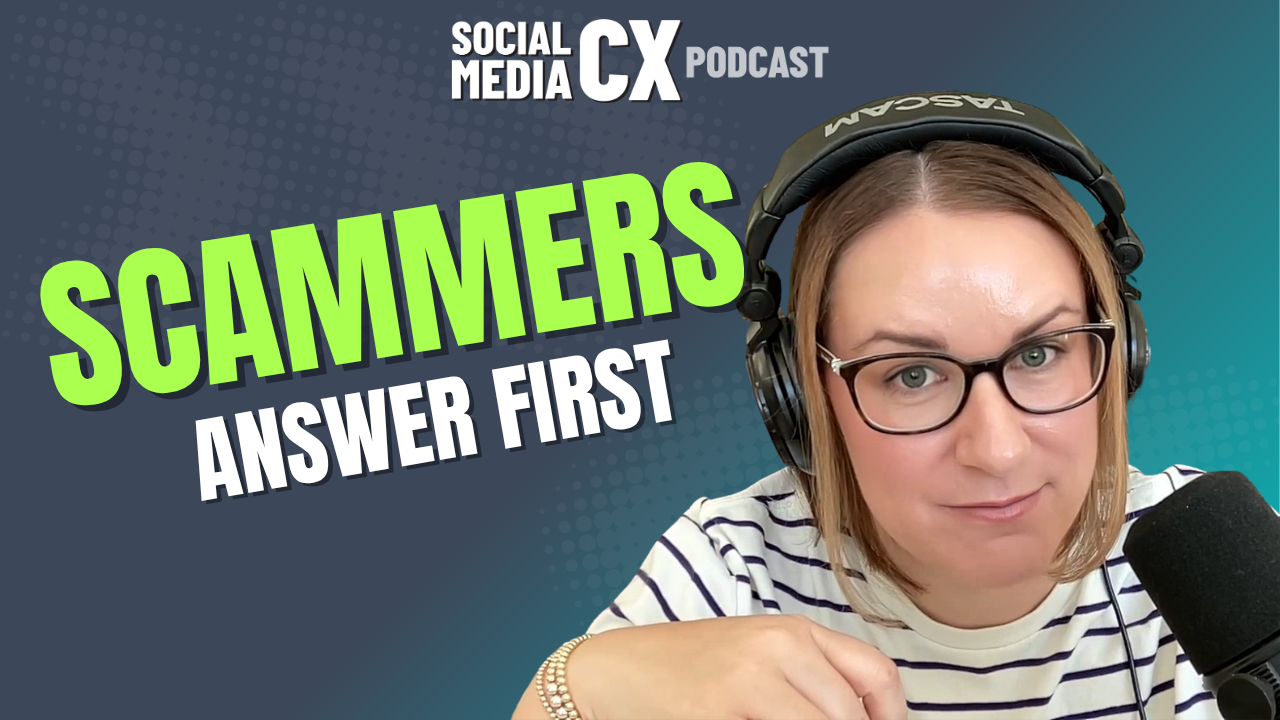
Table of Contents
Social media impersonator scams use fake brand accounts to target customers, steal information, and exploit unanswered complaints. For financial services brands, the danger increases when scammers respond to customers before legitimate social care teams do. Protecting customers requires more than monitoring for fake accounts. It means prioritizing high-risk complaints, communicating through verified channels, and having a clear process for reporting impersonators.
What Can Brands Learn From the Eli Lilly Impersonation Incident?
The 2022 Eli Lilly Twitter impersonation showed how quickly a fake social media account could create a crisis for a legitimate brand.
An impersonator purchased a verified checkmark and falsely announced that Eli Lilly was making insulin free. The post spread widely, and the company’s stock fell approximately 4% the following day. However, the extent to which the fake announcement contributed to the decline is unclear.
The real social media team was left responding to an announcement the company never made.
As Brooke Sellas puts it:
“Someone else lit that match, and the real brand’s social media and social care team was the one holding the fire extinguisher.”
The incident illustrates a larger problem. Brands can be forced to manage the consequences of conversations they didn’t start.
For financial services organizations, the threat can be even more personal. Instead of spreading a false announcement, an impersonator may approach an individual customer and pretend to offer help.
Source: Pharmaceutical Processing World.
Why Are Slow Social Media Responses a Security Risk?
Slow social media responses give scammers more time to approach frustrated customers before the legitimate brand responds.
Imagine a customer publicly complaining about an unauthorized charge. A fake account with the bank’s logo replies first and offers to resolve the problem through a private message.
The customer may assume the response is legitimate because it appears directly beneath their complaint.
Brooke explains the risk:
“Your angriest customers are also your most targeted customers.”
This is why response time deserves different treatment depending on the nature of the complaint.
“For most inquiries, a slower reply is a customer experience problem. For money, accounts, and billing complaints, a slower reply is a risk exposure problem.”
A question about business hours doesn’t carry the same urgency as a suspected fraudulent transaction.
Financial brands need response-time priorities that reflect those differences, rather than treating every social media inquiry as equally urgent.
How Can Social Care Teams Protect Customers From Impersonator Scams?
Social care teams can reduce impersonation risks through four practical changes.
1. Prioritize Money and Account Access Complaints
Move complaints involving billing, fraud, and account access into a higher-priority response queue.
These customers may be particularly vulnerable to scammers offering immediate assistance.
2. Include Safety Warnings in Public Replies
Remind customers that your organization will never ask for passwords, PINs, or sensitive account information in social media conversations.
Public warnings also help other customers recognize suspicious requests.
3. Direct Customers to Verified Support Channels
Don’t simply tell someone to “send us a DM.”
Identify your official account by name and direct customers to an approved, secure channel for sensitive account issues.
4. Give Impersonation Incidents a Clear Owner
Your social care team should know exactly what to do when it discovers a suspicious account.
That includes reporting the account, warning affected customers, and escalating the incident to fraud or security teams.
As Brooke says:
“If the answer to who owns this is a shrug, that is absolutely the first thing you need to fix.”
How Can You Check for Social Media Impersonators in 15 Minutes?
Start by reviewing the last 20 public complaints on your busiest social media channels.
Look for suspicious replies from accounts that resemble your brand. Then search your brand name alongside words such as “support” or “help” to identify potential lookalike profiles.
This simple exercise can reveal whether someone is attempting to intercept your customer conversations.
It also raises an important question: Would your team know what to do if it found one?
Is Your Social Care Program Leaving Customers Vulnerable?
Social media impersonator scams expose gaps that traditional engagement reports may never reveal.
Your team may be meeting its average response-time goals while still leaving high-risk customers waiting too long. Or it may be excellent at answering complaints but lack a clear process for identifying and escalating impersonation attempts.
Brooke’s 15-minute check is a useful starting point. But understanding the broader operational risks requires looking at how your social care program actually works.
The B Squared Media Social Care Audit can help identify response-time gaps, coverage issues, and escalation weaknesses before scammers take advantage of them.
Quick Recap
What happened with the fake Eli Lilly Twitter account? In November 2022, a social media impersonator paid $8 for a verified checkmark, posed as Eli Lilly on Twitter, and announced that insulin was free. The post spread widely before it was removed, Lilly’s stock fell about 4% the next day, and the real brand’s social media team was left fielding questions about something it never said.
What is a social media impersonator scam? A fake social media account that copies a brand’s name and logo, replies to customer complaints in public comments, and tries to move the customer to a DM, link, or outside app to steal account details or money.
Why are financial services brands especially at risk from social media impersonation? Customers complaining on social media about billing, fraud, or account access are eager for fast help, which makes them prime targets for anyone who looks official and replies first.
How does social media response time affect impersonator scams? The first reply a frustrated customer sees on social media often gets treated as the brand. Slow social media response times give scammers time to get there first.
How can social care teams stop social media impersonator scams? Prioritize money and account access complaints in the social media queue, add “we’ll never ask for your password or PIN” language to public replies, direct customers to the verified account by name, and give social media impersonation a clear owner and escalation path.
What’s a quick first step for financial brands? Review the replies under your last 20 public social media complaints and search your brand name plus “support” to look for fake impersonator accounts.

Read the Transcript
[00:00:00] A Social Care Horror Story
If your social media response time on public complaints is measured in hours, you’re leaving that window wide open, and the scammers are happy to walk right through it. This changes how financial service brands should think about social media response time goals.
Hey, hey, and welcome back to the Social Media CX Podcast. I’m your host, Brooke Sellas, CEO of B Squared Media, author of Conversations That Connect, and since it’s Halloween week, I’m bringing you a social care horror story. Fair warning, this one has no masked villain hiding in your basement. The villain is a social media impersonator hiding in your comments section, and it’s wearing your logo.
Sound scary? Let’s get into it.
[00:00:57] The $8 Eli Lilly Twitter Impersonation
Let me tell you about one of my favorite, and by favorite, I mean most terrifying, social media impersonation stories. You might have heard this one. But in November of 2022, someone paid $8 for a verified check mark on Twitter. Remember those? They set up, using this verified check mark, a fake account using Eli Lilly’s name and logo, and then announced that insulin was now free.
I don’t know if you remember this or not. It’s been a while, but it’s a crazy story. That post that this impersonator account put out picked up more than 1,500 retweets, more than 10,000 likes before it was taken down. The next day, the very next day, Eli Lilly’s stock dropped by about 4%. Now, nobody can say exactly how much of that dip came from this fake post, but look at what happened on social media.
Lilly’s official account got flooded with questions about insulin pricing, and the team running it was suddenly answering for something that they never even said, that just wasn’t true. Someone else lit that match, and the real brand’s social media and social care team was the one holding the fire extinguisher.
Y’all, that is a loud version of this horror story. For financial service brands, I see this quiet version of this social media impersonator scams happening constantly, and honestly, it scares me more because nobody’s really talking about it or addressing it. If a customer comments under let’s just say, a bank’s post, “I’ve been charged twice and no one is helping me,” minutes later, a reply could show up from a fake social media account with the bank’s logo and handle that’s almost right.
It looks almost exactly the same, and they could offer to fix it if they just DM them the account details. The real bank probably hasn’t seen that. They’re replying hours later. But by then, the scammer has already got what they came for.
Most brands file social media impersonation under security or fraud, and those teams absolutely need to be involved. But whether it’s a fake press announcement or a fake customer support reply, the damage is showing up on those public comment threads.
That is, that should be the social care team’s turf. Because if your social media customer service team isn’t trained to spot impersonators, nobody’s watching your front door or your front door on social.
[00:04:10] How to Spot Social Media Impersonators
Let’s make this concrete, because fake social media accounts are getting better. I hate to say it, but with the rise in AI, I think we’re going to continue to see stuff like this happen.
You’ll usually see a lookalike handle with one extra word, maybe it’s an underscore or a swapped letter, along with a copied profile photo and sometimes a copied bio. The scam reply almost always tries to move the conversation somewhere that isn’t public, somewhere where people can’t see, like a DM, or a link to a fake verification form, or an invitation to continue on WhatsApp or Telegram, whatever it may be.
And here’s the part that should make every head of customer care sit up. Social media scammers target the people who complain publicly. Because a public complaint is a signal. It tells the fraudster exactly who is upset, who wants help fast, and who might skip a step or forgo security and fraud thinking to get help.
So your angriest customers are also your most targeted customers. Fun. Not fun.
[00:05:31] When Slow Response Times Become a Security Risk
I talk a lot on this podcast about how speed builds trust. Social media impersonator scams are the clearest proof of it that I know about. When a customer posts a complaint, there’s a window where they’re waiting to hear from someone, and whoever fills that window gets treated as the brand, most likely.
I’m not making fun of any consumers here. Like I would probably make that mistake too in the heat of the moment. But if your social media response time on public complaints is measured in hours, you’re leaving that window wide open, and the scammers are happy to walk right through it. This changes how financial service brands should think about social media response time goals.
For most inquiries, a slower reply is a customer experience problem. For money accounts and billing complaints, a slower reply is a risk exposure problem, because those inquiries deserve their own lane and their own clock because of this potential signal to the fraudsters.
So what should you do about this?
[00:06:49] 4 Ways to Protect Your Customers
There are four moves that I want everyone, including financial brands, especially financial brands, running social care teams to think about. First, prioritize money and account access complaints in your social media queue. So if there’s a billing dispute, somebody’s locked out of their account, if there’s any sort of suspected fraud or I can’t log in, those things should jump the line, jump the queue.
If your social customer care tool lets you tag, label, or route by keyword, they have like AI workflows, a lot of them instead of, use it. Because, again, speed here is very important.
The second thing is I want you to put language in your public replies. So every public reply to a money or access issue should include some version of, “We’ll never ask for your password, PIN, or full account number.
Please only message us through our verified account,” and then give that handle. That one sentence protects the customer you’re replying to and everyone reading the thread after them.
Third, never verify customers in public and name the safe channel. So move a verification and resolution to DM to a secure channel and be specific about which one.
“Send as a DM” is vague. “Send a DM to this account, the one with the verified badge” is a lot harder for a scammer to hijack. Fourth and finally, give social media impersonation clear ownership and a clear escalation path. So if somebody on your social media or social care team spots that fake account, they should know exactly who to tell, how quickly to get that over to them, and what happens next.
That usually means reporting the impersonator account to the platform where it’s happening, hiding or flagging the scam reply where the platform allows it, warning the customer, and looping in fraud or security. If the answer to who owns this is a shrug, that is absolutely the first thing you need to fix.
[00:09:18] 15-Minute Social Media Impersonation Check
One thing for you to try this week is a 15-minute social media impersonation check that you can do without asking anyone for permission. Pull up the last 20 public complaints on your busiest social media channels and look at every reply underneath them that didn’t come from your team. Then search your brand name plus support in quotations or help in quotations on that platform, like an advanced search, and see what comes up.
You’ll either find nothing, which is fabulous news, or you may find a fake account working your comment section. Either way, you’ll know, and knowing is the whole first step.
If this exercise makes you a little nervous about what else you’re not seeing, that’s exactly what our social care audit is built for.
We look at your social media response times, coverage gaps, escalation paths, and risk exposure so that you can find your gaps before the scammers do. You can learn more at bsquared.media/social-care-audit with dashes in between, so that’d be social-care-audit, and the link will also be in the show notes, which wherever you’re listening or watching, is in the transcript.
If this episode hit close to home, make sure you stick around. Happy Halloween, friends.
Check your comment section before you check your candy stash, okay? Until next time, think conversation, not campaign.
Want to hear the full conversation? Listen to the Social Media CX Podcast on YouTube. And if your team is thinking about what responsible social listening in banking or financial services actually looks like at scale, check out the State of Social Care Report 2026.
Finally, as always, Think conversation, not campaign.™
The following two tabs change content below.

Brooke B. Sellas is an award-winning Customer Marketing Strategist and the CEO & Founder of B Squared Media. Her book, Conversations That Connect has been recognized nationally and is required reading for a Customer Experience class at NSU.
Brooke's influence in digital marketing is not just about her accomplishments but also about her unwavering commitment to elevating the industry standard of digital customer experience and customer marketing.
Latest posts by Brooke B. Sellas (See All)
- Social Media Impersonator Scams: A Social Care Horror Story for Financial Brands - October 28, 2026
- The Social Trust Loop: How Every Social Media Interaction Shapes Customer Trust - October 21, 2026
- Brands Are Watching You: What Creators Don’t Know About Social Listening with Danny Gardner - October 14, 2026


Written by award-winning strategist Brooke Sellas, this weekly 5-minute power-up will help you turn social interactions into loyalty, retention, and revenue.
Category: Social Care
Written by award-winning strategist Brooke Sellas, this weekly 5-minute power-up will help you turn social interactions into loyalty, retention, and revenue.
Share this article: