Blog » Uncategorized »
The ROI of “Thank You”: Why Gratitude Is Your Cheapest Retention Strategy
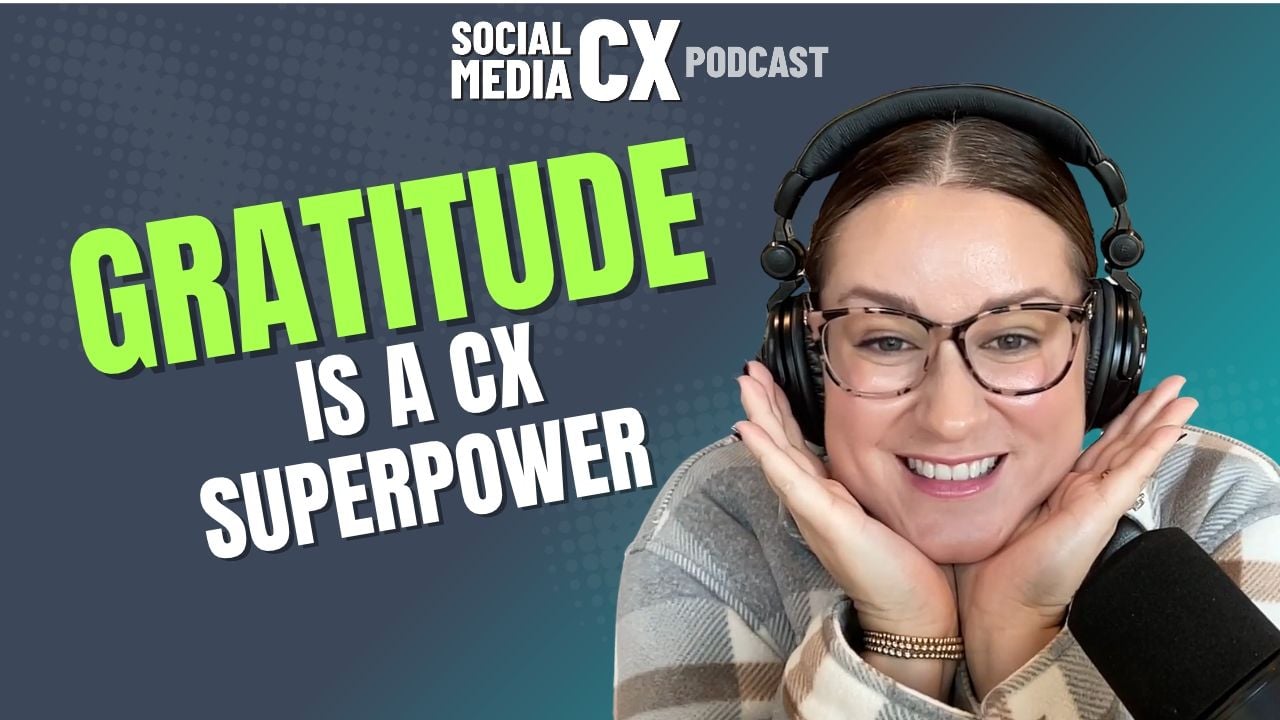
Table of Contents
It’s almost Thanksgiving, which means social media feeds are probably full of brands sharing what they’re thankful for.
Customers, employees, communities. You know the drill. And there’s nothing wrong with a little seasonal appreciation. But here’s something worth considering.
How often are those same brands showing gratitude in their everyday customer interactions?
Because gratitude isn’t just a nice thing to do around the holidays. It’s also an overlooked customer retention strategy.
And the best part is you don’t need a massive budget to get started.
Why Gratitude Belongs in Your Customer Retention Strategy
According to Convince and Convert, 62% of millennials say they’re more likely to buy from a brand that engages with them on social media.
That’s a pretty compelling reason to pay attention to your customer conversations.
People want to know they’re being heard. And how your brand acknowledges them can influence the relationship long after the interaction ends.
Look at brands like Zappos, Chewy, and JetBlue.
Zappos is known for making customer conversations feel personal. Chewy has sent handwritten condolence cards to customers who’ve lost their pets. And JetBlue has used social media to recognize and thank loyal travelers.
Different approaches, same underlying principle: Make people feel valued.
Of course, a thoughtful reply or thank-you note doesn’t guarantee a repeat purchase.
But these experiences can give customers another reason to stick around. And when you’re thinking about retention, that’s worth paying attention to.
Three Ways to Build Gratitude Into Your Social Care Program
Here’s the good news. You don’t need a budget like Hallmark’s to make customer appreciation part of your strategy.
You can start with three changes to how your team handles everyday social interactions.
1. Make Responsiveness a Priority
Speed matters in social care.
When someone takes the time to reach out, a timely response shows that their message is worth your attention.
And while a quick reply doesn’t automatically mean a great customer experience, leaving people waiting can make a frustrating situation even worse.
Take a look at your current response times. Are there channels where customers are waiting longer than they should? Are certain types of inquiries consistently falling through the cracks?
These are opportunities to improve the experience before you even think about launching a formal customer appreciation initiative.
2. Train Your Team to Recognize Emotion
Imagine a customer messages your brand after trying to get help three times. Technically, they might be asking about an order, a refund, or a service issue.
But there’s another layer to that conversation:
They’re frustrated.
If your team jumps straight into troubleshooting without acknowledging that frustration, you’re missing an opportunity to rebuild trust. This is where emotional awareness comes into play.
Teach your agents to recognize what customers are feeling, acknowledge those emotions, and then work toward a resolution.
It’s a small adjustment that can change the tone of an entire conversation.
3. Make Room for Surprise and Delight
When was the last time your brand celebrated a loyal customer?
Maybe someone consistently shares your content. Maybe they’ve been recommending your business for years. Or maybe they simply took the time to leave a thoughtful compliment.
These are all opportunities to show appreciation.
A repost, personal acknowledgment, or small surprise can make someone feel recognized. And when those moments happen publicly, other customers get to see how your brand treats the people who support it.
That’s a pretty powerful form of social proof.
How Do You Measure the ROI of Gratitude?
Now for the part that tends to get overlooked. If gratitude is going to be part of your customer retention strategy, you need a way to track it.
Most social care programs already measure response times, inquiry volume, and customer sentiment. But what about the positive interactions your team creates?
Think about how many compliments, thank-you messages, and loyal customer interactions come through your social channels each month. Are you tagging those conversations? Are you tracking your surprise-and-delight efforts? Do you know what happens after customers receive that extra acknowledgment?
One of our financial services clients tracks these efforts through a gratitude database. It’s a way to document those positive moments and begin understanding how customer appreciation contributes to the overall experience.
You can build something similar using the tagging capabilities already available in many social care platforms.
Start by identifying and categorizing positive interactions. Then look at how those customers engage with your brand over time.
- Do they continue the conversation?
- Share additional positive feedback?
- Engage with your content again?
These signals won’t give you an exact dollar value for every thank you, but they can help you understand whether your efforts are strengthening customer relationships.
And that’s a much better starting point than simply assuming your appreciation efforts are working.
Can AI Help You Scale Customer Appreciation?
Let’s talk about AI for a minute.
Most conversations about AI in customer service focus on efficiency. Faster responses, fewer manual tasks, and handling more inquiries without adding headcount.
Those are useful benefits. But AI can also help your team identify more opportunities to build relationships. For example, sentiment tagging can flag positive customer interactions that deserve attention.
AI-assisted response tools can also help your team recognize the emotional tone of a message instead of relying solely on keywords or inquiry categories.
And templates can help maintain a consistent brand voice across your customer care team. The catch? You still need humans involved. A perfectly worded automated response doesn’t necessarily make someone feel appreciated.
Your team needs to understand when to personalize a message, when to go beyond a template, and when a customer deserves a little extra attention.
Use technology to make those opportunities easier to identify and act on.
Then let your people do what they do best: Connect with other people.
Try the 3 Thank-Yous Challenge
Want a simple way to start putting gratitude into practice?
Here’s a challenge for this week.
Say thank you three times to:
- A customer who’s supported your business
- A colleague who’s made your job easier
- Someone in your community
Then pay attention to what happens next. Does it spark another conversation? Strengthen an existing relationship? Encourage someone to share their experience?
The goal is to become more intentional about recognizing the people who contribute to your business and community.
And if you can make that recognition part of your everyday routine, even better.
Because the relationships that keep customers coming back are built over time, through consistent, meaningful interactions.
Thanksgiving might be a good reminder to show appreciation, but your customer retention strategy should work all year long.
Make Every Customer Conversation Count
Gratitude is one part of building a stronger customer experience.
But if your team is struggling with slow responses, missed inquiries, or inconsistent workflows, even the most thoughtful thank-you message can only do so much.
That’s why it’s important to understand what’s actually happening across your social care channels.
The B Squared Media Social Care Audit evaluates your current program, including response times, coverage gaps, escalation paths, and other areas that influence your customer experience.
You’ll get a clear picture of what’s working, where opportunities exist, and what your team can do to improve.
Learn more at https://bsquared.media/social-care-audit.

Read the Transcript
[00:00:00] Why Gratitude Is Good for Business
Speaker 3: The key here is pairing AI’s speed with your human sincerity.
Because tech can certainly automate thanks, but only humans can make people feel thanked. Let that sink in.
[00:00:15]
Speaker 3: Hey there friends, and happy almost Thanksgiving to my American friends. Your feed’s also probably full of gratitude lists and thankful posts right now, but let’s dig into that a little deeper as it relates to social care.
Because gratitude isn’t just polite. It can also be profitable. When done right, saying thank you can actually be one of your most effective customer retention strategies. I am not even kidding. So grab a coffee because today’s care chat is all about how gratitude scales loyalty.
Gratitude is a CX superpower, y’all. And let’s start with some data, because you know, I love my receipts. According to Convince and Convert, 62% of millennials say they’re more likely to buy from a brand that engages with them on social media.
And honestly that tracks because gratitude and engagement are pretty much the same muscle. It’s about acknowledgement. When people feel seen, they stay.
It’s really that simple. Think about brands like Zappos who make their customer replies feel like a conversation every time. Or Chewy sending handwritten condolence cards when pets pass away. Or even JetBlue jumping into Twitter threads just to say thank you to a loyal traveler who tweets from their flight.
Gratitude scales when it’s sincere, not when it’s scripted.
[00:01:46] 3 Ways to Show Customers Appreciation
Speaker 3: Let’s get tactical. Here are three ways to operationalize gratitude without needing a budget like Hallmark’s. Respond fast because speed equals respect. Every minute you save in response time compounds trust. In social care, silence feels like indifference. It definitely doesn’t feel like gratitude.
Number two, acknowledge emotion, not just the inquiry itself. So if a customer is saying, I’ve tried to reach you three times, this isn’t a logistics issue, it’s a frustration cue. Start with empathy before you move into escalation.
[00:02:29] How to Track Gratitude in Social Care
Speaker 3: And finally, reward loyalty publicly. When you celebrate your biggest fans publicly, you create social proof that has heart. Reposts, surprise shout-outs, small thank you gifts. These all scale connection.
Pro tip. Tag these moments in your social care tool and over time you’ll see that you have a gratitude database you can actually measure.
One of our financial clients literally measures their gratitude database through their surprise and delight efforts.
[00:03:04] Using AI to Scale Gratitude
Speaker 3: Now, I know automation and thank you don’t usually belong in the same sentence, but hear me out. AI can make gratitude a little more consistent for you, not more robotic, if you use it the right way.
Here’s how: use sentiment tagging to flag positive interactions so you don’t miss moments worth celebrating. Train your AI responses to recognize tone and not just the topic. You can also create templates that sound like you. The key here is pairing AI’s speed with your human sincerity.
Because tech can certainly automate thanks, but only humans can make people feel thanked. Let that sink in.
Speaker: Hey, hey. Quick sidebar before we dive back in. If you love the CX convo here on the Social Media CX podcast, then you’ll definitely want to check out a book that totally changed the game for me. It’s my book and it’s called Conversations That Connect. And y’all, this isn’t your typical engagement metrics matter fluff.
It’s all about social listening and how the most impactful brands are using real conversations, not just content calendars, to build trust, spark loyalty, and drive revenue. So if you’ve ever found yourself asking, what do we say when we show up on social? This book is your answer. Grab it on Amazon or hit the link in the show notes.
Just search for Conversations that Connect by Brooke Sellas or find it on B Squared Media.
[00:04:46] The 3 Thank-Yous Challenge
Speaker 3: Here’s your challenge this week. Say thank you three times, once to a customer, once to a colleague, and once to someone in your community. And then track what happens next. Every thank you should create a micro moment of trust.
That trust, if you keep doing this, should compound faster way more than any ad spend.
Gratitude isn’t just for Thanksgiving, it’s a business strategy and a community superpower. So this week I’m thankful for you. Every listener, every client, every CX pro who believes in conversation over campaign.
I heart you.
Want to hear the full conversation? Listen to the Social Media CX Podcast on YouTube. And if your team is thinking about what responsible social listening in banking or financial services actually looks like at scale, check out the State of Social Care Report 2026.
Finally, as always, Think conversation, not campaign.™
The following two tabs change content below.

Brooke B. Sellas is an award-winning Customer Marketing Strategist and the CEO & Founder of B Squared Media. Her book, Conversations That Connect has been recognized nationally and is required reading for a Customer Experience class at NSU.
Brooke's influence in digital marketing is not just about her accomplishments but also about her unwavering commitment to elevating the industry standard of digital customer experience and customer marketing.
Latest posts by Brooke B. Sellas (See All)
- The ROI of “Thank You”: Why Gratitude Is Your Cheapest Retention Strategy - November 11, 2026
- The Social Trust Loop vs. 7 Million AI Citations: What Social Media Teaches AI - November 4, 2026
- Social Media Impersonator Scams: A Social Care Horror Story for Financial Brands - October 28, 2026


Written by award-winning strategist Brooke Sellas, this weekly 5-minute power-up will help you turn social interactions into loyalty, retention, and revenue.
Tags: customer experience
Written by award-winning strategist Brooke Sellas, this weekly 5-minute power-up will help you turn social interactions into loyalty, retention, and revenue.

Share this article: