Your NPS Score May Be Ignoring Your Most Important Customers
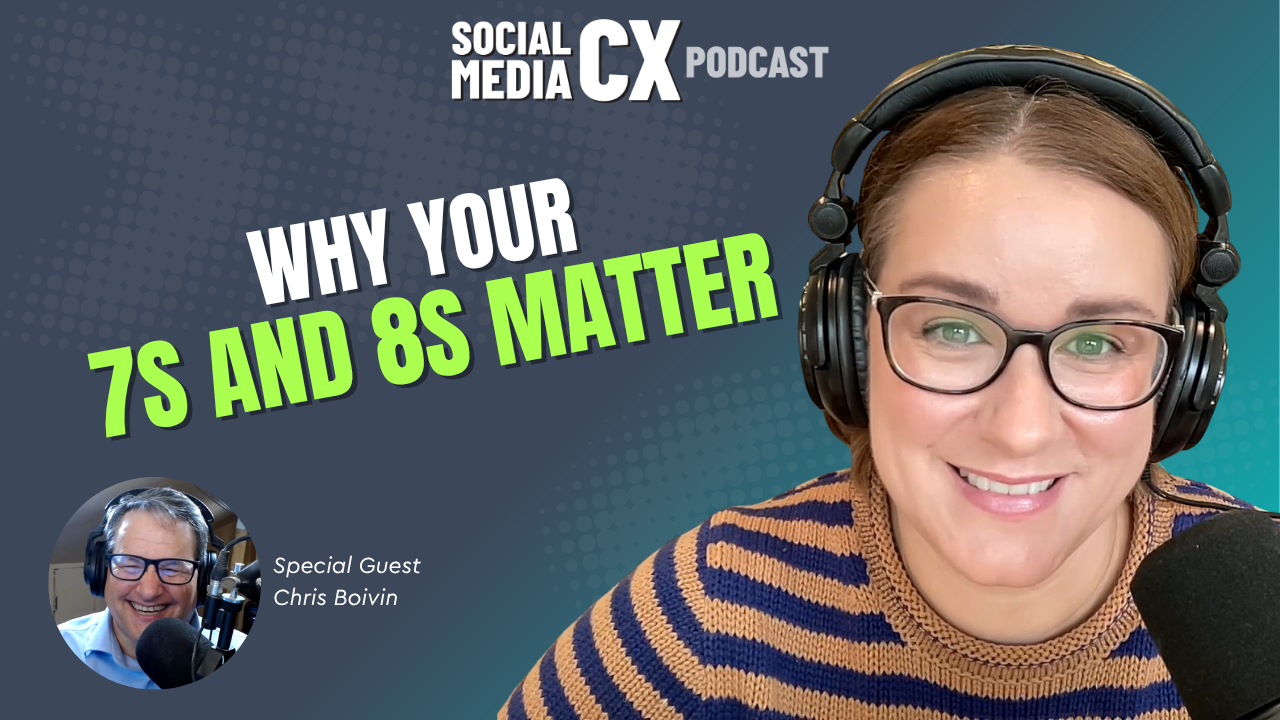
Table of Contents
Your NPS score may overlook valuable customer feedback because 7s and 8s are excluded from the final calculation. These customers may be satisfied with your brand but still have feedback that explains what is keeping them from becoming promoters.
That makes your NPS “neutrals” worth a closer look.
In Net Promoter Score (NPS), customers who give you a 9 or 10 are promoters, while those who give you a 0 through 6 are detractors. Customers who give you a 7 or 8 sit in the middle and do not factor into the final score.
But their feedback still matters.
The key is to look beyond the number and ask one more question:
Why did you choose that score?
The answer can reveal what the final NPS number cannot. And when teams compare those open-ended responses with customer conversations happening on social media, they can get a more frequent view of what customers are thinking between NPS surveys.
Your NPS 7s and 8s Deserve More Attention
NPS makes it easy to focus on the extremes.
Your 9s and 10s love you. Your detractors have problems your team needs to address.
Then there are the 7s and 8s.
Chris Boivin has hands-on experience using NPS and found significant value in looking at the written feedback from customers in the middle.
As he explains:
“I don’t love it. I don’t really hate it, but I like it, and maybe if this was a little better, I’d like it a little more.”
That’s an important distinction.
These customers aren’t necessarily unhappy. In fact, Chris describes them as mildly satisfied. But something may still be keeping them from becoming a promoter.
And because they aren’t complaining, their concerns can be easier to overlook.
Chris describes their attitude this way:
“I don’t wanna be a complainer, but this kinda bugs me, but I still like you.”
That is exactly why the follow-up question matters.
Instead of stopping at What score did they give us?, ask Why did they give us that score?
Stop Treating NPS Like a Math Exercise
NPS is simple by design.
Customers answer how likely they are to recommend a company on a scale of 0 to 10. The percentage of detractors is subtracted from the percentage of promoters to calculate the final score.
And one important clarification from Chris: NPS is a number, not a percentage.
The simplicity of the calculation is useful. But it can also lead teams to focus too heavily on the number.
“NPS can be a highly mechanical, mathematical exercise,” Chris says.
If the process ends with tracking whether the score moved up or down, teams can miss the customer language that explains what is actually happening.
Chris saw this firsthand while using NPS at a library.
The overall score stayed relatively consistent. But when he began analyzing the verbatim responses, he found recurring issues among customers who still wanted to use the library but weren’t at the promoter level.
Those comments helped reveal ways the library could better meet customers where they were.
The lesson wasn’t to ignore the NPS score.
It was to stop treating the score as the end of the analysis.
The Opportunity Between Like and Love
Brooke Sellas describes the opportunity with 7s and 8s as the difference between like and love.
Your promoters already love you. Your detractors have problems that need attention.
But your neutral customers may be telling you something more nuanced.
They like you. They just haven’t been given enough reason to love you yet.
Chris puts it another way:
“Neutral doesn’t mean negative. It doesn’t mean empty.”
These customers are mildly satisfied. But Chris also points out that it may be easier for another company to take them away.
That gives CX teams another reason to examine what these customers are saying.
Not every 7 or 8 will become a 9 or 10. Chris is clear about that.
But their feedback can help teams decide where it makes sense to invest time, energy, and money in improving the customer experience.
As Brooke summarizes it:
“Every one of those neutrals, or sevens and eights, is sitting on feedback that could turn them into a nine or 10, that could take them from like to love.”
NPS Is a Snapshot. Social Feedback Keeps Coming.
This conversation actually began with a different question about NPS.
In How Social Listening Is Replacing NPS in Banking, Brooke explored an organization that moved away from NPS in favor of real-time sentiment analysis.
Chris saw another side of the issue.
Before organizations give up on NPS, he argued, they should look more closely at the customer feedback already sitting behind the score.
But the two ideas don’t have to compete.
NPS captures how a customer feels at a particular moment. As Brooke points out, that can change after the customer’s next interaction with your brand.
Social media provides another source of customer feedback between those survey moments.
Customers comment. They send DMs. They ask questions. They share their experiences. And those conversations happen continuously.
Chris suggests using that social data to understand the direction customer attitudes may be moving between NPS surveys.
That can give teams a more frequent read on what customers are saying instead of waiting for the next survey cycle.
Connect NPS Feedback With Social Media Data
The next step is to stop treating NPS and social feedback as completely separate sources of customer intelligence.
Start with the language customers are using.
What themes appear in the verbatim responses behind your NPS scores?
Then look at what you’re seeing in day-to-day social data.
Chris suggests comparing the two to see whether your NPS data validates what you’re seeing on social.
Brooke also points to opportunities for matching words, phrases, themes, and topics across both sources.
That doesn’t mean the two data sets will always tell exactly the same story. Chris notes that social conversations can be influenced by outside events and other factors.
Instead, each source gives teams another way to examine what customers are saying.
Together, they can provide more context than simply watching an NPS number move from one survey to the next.
AI Can Help Find the Patterns in Customer Feedback
Analyzing open-ended customer feedback can become difficult when you’re working with large amounts of data.
This is one place AI can help.
Brooke suggests using AI to identify recurring words, phrases, topics, and themes across NPS verbatims and social media feedback.
Chris used Dovetail to analyze verbatim NPS responses, including separating feedback and identifying recurring sentiment. Today, he notes that AI can make that type of analysis easier.
The goal is to get more value from language customers have already given you.
Instead of looking at hundreds of individual comments as isolated responses, teams can begin looking for the themes appearing across them.
And that brings the analysis back to the question that matters most:
Why are customers feeling the way they do?
Look Beyond the NPS Score
Your promoters matter. Your detractors matter.
Chris isn’t suggesting that CX teams ignore either group.
But don’t let the NPS formula determine which customers are worth listening to.
People who give you a 7 or 8 still took the time to tell you how they feel, even though they weren’t angry enough to complain or enthusiastic enough to rave about you.
“I think we owe it to them to listen to what they’re saying,” Chris says.
So the next time you review your NPS results, don’t stop with the final number.
Look at your 7s and 8s.
Read what they wrote.
Ask why they chose that score.
Then compare what you’re learning with the customer conversations happening every day across social.
The opportunity may be sitting in the difference between customers who like you and customers who love you.
Keep Looking Beyond the Dashboard
NPS gives you one snapshot of what customers are thinking. Your social care conversations give you signals every day.
If this has you wondering what other customer insights may be hiding inside the data your team already has, Social Care Weekly is the natural next step.
Each week, Brooke shares one social care story, one tactic you can use in 15 minutes, one piece of data to back it up, and one move to bring to your leadership team.
Subscribe to Social Care Weekly
Quick Answers
What is NPS (Net Promoter Score) and how is it calculated?
NPS is measured with one question: how likely are you to recommend us to a friend or colleague, on a scale of 0 to 10? Respondents who answer 9 or 10 are promoters, 0 through 6 are detractors, and the score is the promoter percentage minus the detractor percentage.
Why are NPS “neutrals” (7s and 8s) important?
Neutrals sit outside the final NPS calculation, but their open-ended feedback can reveal what is keeping a mildly satisfied customer from becoming a promoter. Asking why someone chose a 7 or 8 can uncover useful context that the score itself does not provide.
How can sentiment analysis improve NPS survey results?
Sentiment analysis can help teams identify recurring themes in open-ended responses, including answers to questions such as “What made you select that number?” Looking for patterns in those responses can help teams better understand what customers are saying and what may be influencing their scores.
Is NPS still a reliable CX metric?
NPS can still provide useful customer insight, but it captures how customers feel at a particular point in time. Looking at the verbatim feedback behind the score and comparing it with more frequent customer feedback can give teams additional context between survey cycles.
How does social media data support NPS and CX measurement?
Social media conversations happen continuously, while an individual customer may only complete an NPS survey once or twice a year. Looking at themes and sentiment in social feedback can help CX and social care teams understand what customers are saying between NPS surveys and compare those insights with their NPS data.
Read the Transcript
Why NPS deserves a closer look
[00:00:00]
Brooke Sellas | B Squared Media: Every one of those neutrals, or sevens and eights, is sitting on feedback that could turn them into a nine or 10, that could take them from like to love.
Hey, hey. Welcome back to the Social Media CX podcast. I’m your host, Brooke Sellas, CEO of B Squared Media, author of Conversations That Connect, and today we’re doing something a little different. We’re talking about the metric everyone loves to put on a dashboard, but nobody loves to actually dig into, which is, you guessed it, Net Promoter Score, or NPS.
My guest today found me through our newsletter, the Social Care Weekly, and it might be my favorite way to book a podcast guest Essentially, I wrote about a credit union in our Social Care Weekly newsletter that ditched NPS for real-time sentiment instead, and [00:01:00] Chris wrote back with an idea so good, I basically said, “You need to say that on the show.”
Let’s get into it.
Today I am joined by Chris Boivin, who is a brand and community partnership specialist currently working in brand amplification and client engagement in the financial services space. But his real NPS experience comes from his time at the library, our favorite place, where he got his hands-on with measuring loyalty and satisfaction.
His take is that the real insight inside of your NPS score is the neutrals, those sevens and eights that we tend to rush past. Chris, welcome to the show.
Chris: Thanks so much, Brooke. It’s really great to talk with you. Yeah, I love
Brooke Sellas | B Squared Media: NPS. I
Chris: think it’s a great way to measure things. I know a lot of people have different [00:02:00] opinions about it, but, yeah, I found a lot of value in that in looking at what’s going on in those sevens and eights.
Brooke Sellas | B Squared Media: Yeah, so we gotta start with the story. So I wrote a newsletter, our Social Care weekly newsletter, and I wrote about this, this credit union who decided that they were done with NPS scores, and Chris responded. So I have to know, just for curiosity, what is it about that story that made you wanna jump into my inbox and reply?
Chris: Yeah. No, that’s good. Well, I am a big fan of credit unions. Several years ago, before I worked at the library, I actually worked at another credit union, at a small, regional credit union that mostly served state employees in like the education department. And so that really jumped out at me.
I wanted to know what was going on and why they decided to drop it. and in that industry and you know, especially in the library, I think a lot of people were ready to drop NPS [00:03:00] because in some industries the NPS is so high that people just kinda dismiss it, and they think, “Well, it’s not really worth anything.
It’s always 80, 85, 90. You know, what is it really telling us?” Because in some industries it does fluctuate, and you can track a lot, but in some industries like you know, in some, some places like that. So I had the experience where people wanted to drop it and didn’t really know what the value was in it.
So when you wrote that, I was like, “Oh, let me see what’s going on here. Let me see why they dropped it. Let me see what they were thinking of.” And, you know, having had some conversations with you before,
I knew you’d be accepting if I had jumped back and said, “Wait, wait, wait.” But there’s still value in it. So, and that’s where I wrote, like, you know, what i- in some places people do, they get anxious about it. They feel like it’s not really providing a lot of value. And so what is the value? And you know, let’s just [00:04:00] dump it, and we’ll move on to something like a satisfaction survey, which, as you well know, has its pluses and minuses as well.
Brooke Sellas | B Squared Media: Yes.
Why 7s and 8s are easy to overlook
Chris: But I thought that it would be great to talk about, like, you know, yeah, I know what they’re saying. You know, all the nines and tens, it’s great. Everybody’s, “I love you, I love you, I love you.”
And, you know, you get those fives and sixes and sometimes the ones and but it, I think the sevens and eights get dismissed a lot when you’re talking about NPS because they’re not even part of the score, like, they remove them from the score.
But I’ve always found, and I really at the library found tons of value when you look at those fives and sixes, not just at the number level, but I always added that other question of, “Why did you pick the number that you picked?”
And that’s where I think you can find a lot of value in those sevens and eights, because when you get the verbatims, that’s where you really find out what, you know, what made people, “I don’t love it. [00:05:00] I don’t really hate it, but I like it, and maybe if this was a little better, I’d like it a little more.”
Brooke Sellas | B Squared Media: Yeah, you’re getting to the why behind the what, which we’re totally going to get into, y’all, and talk about a whole bunch. But quick refresher, if you are listening or watching and you don’t know what NPS is, it’s net promoter score.
No, that’s okay. It comes from one question that brands send out, like as a survey after, you know, supporting a, a customer or client, and the question is, ” How likely are you to recommend us?”
And it’s scored zero to 10, and there are promoters and detractors. And so I think it’s nines and 10s they look at as promoters. Zero to six they look at as the detractors, and as Chris is telling you, those sevens and eights typically get ignored.
Chris: Right.
Brooke Sellas | B Squared Media: Chris, where did you first get hands-on experience with NPS? I know [00:06:00] you said it was at the library, but can you tell us a little bit more about that experience, and how did it teach you about these limits that you’re finding out about and telling us about?
Chris: I read the books about the ultimate question and the follow-up one to the ultimate question, and was really excited At the library, we did do some kind of satisfaction surveying every once in a while, and we’d look at things like our Google reviews and look at that.
We had the opportunity, where in the library, we have a lot of transactions. So we have the opportunity at transactions to ask what people are doing. Also, we had a lot of email going out, so we had a lot of opportunity. So once we started adding those questions to our email exchanges, then I really got to get into what the data was, what we were doing, and, you know, set that up.
We were looking for ways to measure marketing. And since we’re in an industry, since it, when you’re in the library, you’re not, you don’t have a lot of paid, we didn’t have paid [00:07:00] advertising, so we didn’t get some of those stats that others get.
So looking at a way of how can we measure the effectiveness of our marketing and the effectiveness of our service, that’s where I wanted to implement NPS. So you know, like kind of I was saying in the beginning, it’s, you know, it was great.
It was real exciting. Oh my gosh, everybody loves us. You know, all these nines and tens, and everybody’s saying, “I love the library. I love the library,” which is great. I love the library, and I know a lot of people do too. I know, Brooke, you are a big library lover. As it progressed over a few months, and it was really didn’t change a lot, and just trying to find out in the numbers how much things changed, we really weren’t finding a lot.
The other thing that we were looking for with NPS initially was we wanted to make sure we were catching those detractors, those zero to sixes, so we could take action on them, so we could do something.
Whether it’s directly with the person that was, responding that way, or just in general like, oh, we’re seeing a [00:08:00] few people that are saying, you know, this and this and this.
So I wanted to find a way to get a little more value out of it, and that’s where I really started looking at the verbatims. And look at what were some of the themes that were coming out of that. So what I was able to figure out was that a lot of people, you know, had the same issues, and they weren’t issues that were making it big enough for them not to want to use the library, but they weren’t in that total promoter level.
And so we could find ways that if we looked at how we were using our library collections and we looked at how we were giving people maybe a little bit more information, that we might be able to affect it.
So it was just some of these little things that people mentioned that we were able to find by kinda sorting, analyzing those sevens and eights. That was really you know, a real wake-up for, you know, what our [00:09:00] customers wanted and how we could meet them where they are.
Where CX teams should focus their attention
Brooke Sellas | B Squared Media: Yeah. I don’t know if you’ve ever read the book, I think it’s called ABC Players, and it talks about how … I’ll get the name, y’all. The next time Chris is talking, I’ll quickly go and research the name, ’cause I don’t remember if it’s called actually ABC Players. But the premise of the book was, you know, in a corporation, we rate our customers or our team members, and we rate them, you know, A players, B players, C players, et cetera.
And the book was saying that most people spend time on the As. But the As are the As. They don’t need you to spend the time on them, and that’s kind of what you’re, what I’m hearing you say. The people who are nines and tens, they’re telling you, “Great job.” We wanna say thanks for the compliment, but that’s not where we should spend our time and energy.
The book says you should be really spending your time on the B’s and moving them up to A’s And so what I hear you say is focus on the sevens and the eights, and [00:10:00] get them to the nines and the tens. That’s where the energy should be spent. am I making that assessment correctly?
Chris: Yeah, absolutely. No, it’s right. I mean, that is, you know. And, you know, you understand that not every seven and eight is gonna move to a nine or a 10, but still, I think there’s a lot, there is a lot of opportunity there.
And a lot of times, I think those seven and eights don’t feel heard all the time because they’re kind of like, their whole attitude is usually more like a, you know, “Well, I don’t wanna be a complainer, but this kinda bugs me, but I still like you. I still like you,” you know? And I think, you know, that, that’s kind of the sentiment you get from those neutrals.
You know, it’s so easy to ignore them because even the formula itself for calculating NPS is take the percent of positives, subtract the percent of negatives, ignore those sevens and eights.
Brooke Sellas | B Squared Media: Yeah.
Chris: and by the way, if I can just say, Brooke, while I have this platform, let’s make sure that everybody remembers that [00:11:00] NPS is not a percentage.
It’s not a percentage. It’s not a percentage. It’s a number. It’s not a percentage.
Brooke Sellas | B Squared Media: No, I love that call-out.
Chris: It can go from negative to 100, yeah.
Brooke Sellas | B Squared Media: Yes, thank you.
Why neutral feedback still matters
Chris: Taking those, right? So yeah. So you know but I think that’s important to you know to keep in mind you know, but still, yeah, like back to the sevens and eights. So yeah, it just, you know, they’re people that have this attitude that, they’re still positive because that’s the thing.
And, you know, this is another thing, Brooke, that you talk about all the time, is people took the time to respond even though they weren’t, you know, glowing response, you know. I mean, they’re pretty glowing, but they weren’t like super glowing responses where they wanted to tell you, “God, I just love, I love everything you do.” They weren’t complaints. They weren’t, you know, “Man, I’m so mad because this happened.” But they took the time to go say “This, here’s how I feel about it” I think we owe it to them to listen to what they’re saying and it’s gonna make us, you know, it’s gonna really give our [00:12:00] customers that really good feeling.
Brooke Sellas | B Squared Media: Yeah. You had mentioned also when we were talking previously about using sentiment analysis on some of these open-ended, like what made you pick that number type responses. Is that the Dovetail? I wanna make sure I get the tool for the right for the show notes. Dovetail is the tool. What did that process look like for you?
Was it using that tool or, or did you use AI, or what did that look like?
Chris: So this was a little before, I mean, obviously AI has been around for a long time, but this was before like, these last few years, AI. There was a little bit to it, though. There was a little bit that did help you. So yeah, it was taking that, it was taking all that verbatim data and when you loaded it into the software, into the NPS portion of the software, it did try and, pick up what was you know good.
What was what sounded good, what sounded like a bad comment, what sounded like a neutral comment. So you did get this nice, like, red, green, yellow [00:13:00] from what kind of things you were getting. And then it just, it makes it really easy. There’s a really good visual interface in it, so it makes it very easy, and it actually does, you know, get it in a pretty good place so that you can move things around.
And it would categorize it by, if you wanted it categorized by, you know, that zeros to sixes and what all was going on there and the, you know, the nines and tens and the sevens and eights.
So it did a lot, it does a lot of that separation for you, and I think they’ve added I can see now that they’ve added a lot more AI to it, obviously. And yeah, so there was a little bit of that and then just a little bit of moving around, and then it would help you kinda put out reports that would summarize, you know, what were the sentiments that you were seeing over and over again, what were the things that people were saying. So yeah, that’s the kind of tool and it, and like I said, it had a pretty good free tier, and even at the paid it was not very expensive.
It was really valuable.
Brooke Sellas | B Squared Media: Awesome. So we will make sure to link that [00:14:00] tool in the show notes, which is the transcript, wherever you’re watching or listening. We’ll also have that book, which by the way I did look up. It’s called The A Player by Rick Crossland. Now this is 100 years old. I read this book, I think, when I was in real estate, like literally a million years ago, but it’s a really good book.
I still pick it up from time to time ’cause it makes a lot of sense. So let me ask you this, because you mentioned earlier, and I think this is so true, NPS is a, a snapshot in time, a moment in time, right? It doesn’t exist forever. How I feel about you today might be different to how I feel about you the next time I, you know, have an interaction with you or buy something from you.
How social data fills the gaps
Brooke Sellas | B Squared Media: NPS compared to social care, right, your surveys are usually quarterly with NPS, well- where social is happening every day. So for you and your thinking around NPS and being very involved in social, for brands who are sitting on social and some of maybe, some of that [00:15:00] social care data, how does that help fill the gap between those NPS survey cycles?
Chris: Oh yeah. No, that’s a good point. You know, when you’re looking at some of that social data, I think it can still to what those same perceptions and attitudes are, because you can still tell in the social, both at the individual comment level and over time, you can still kind of tell, like, where are the ones that are more, you know, falling on the lower end of the scale?
Where are the ones that are falling, you know, coming up to the higher end of the scale? I think it’s still easy to spot the people that are kind of in the middle and have a little bit of something to say, but don’t really, aren’t panning you or aren’t, you know, blowing you up. So I think that, you know, I think that the, when you’re following what’s going on with your social data, I think that can be a really nice way to connect [00:16:00] between periods of NPS and see what’s going on.
You can get a sense of what is the direction that things are going? What are people trying to say? And that way, your NPS won’t be probably such a surprise when you get to your next, quarterly NPS time.
And I actually would love to take a look at some of that data and compare things like engagement data and you know, impressions and some of that other data, and then look at NPS surveys and see what kind of, you know, is one reflecting the other? Is one changing with the other?
‘Cause you’re right, NPS is usually something that, you know, on the individual customer level, you’re probably only answering once, maybe twice a year.
Brooke Sellas | B Squared Media: Real quick, because I don’t want you to leave this episode and forget where to find more of this kind of thing. Every week I send out the Social Care Weekly. It’s one story, one tactic you can [00:17:00] use in 15 minutes, one piece of data to back it up, and one move to bring to your leadership team. That’s it.
There’s no fluff, no best practices with zero content behind them. That’s it. It’s no fluff, no best practices that are blanket statements with zero context behind them. Fair warning though, once you start reading it, you’ll start noticing the gaps in your own dashboard. Sorry, not sorry. Occupational hazard.
So if today’s conversation about NPS and sentiment got you thinking, that’s basically our Social Care Weekly newsletter in podcast form. Come chat with me weekly on all things social and CX, customer experience, at bsquared.media/newsletter. Okay, now back to Chris.
Connecting social data and NPS
Brooke Sellas | B Squared Media: And what would you say if a customer experience, like a CX team or even a social team, wanted to start pairing [00:18:00] that NPS score with some of that, let’s call it live, right, in real time sentiment feedback, right?
‘Cause on social we can also see the sentiment of those conversations. If people paired that together, what do you think the first move is there for them?
Like, if you were in charge of this project, how would you handle it?
Chris: It would go back to really those verbatim comments and seeing what kind of things are going into, the NPS scores. I think, you know, I think that’s going to be a that probably gonna be like primary foreign key that’s gonna connect the two things together. You know, I think that it would be really valuable for a CX team to get very familiar, if they’re not already, with what’s going on with NPS.
Because often it’s not in that area where they might be doing the NPS sureys and getting that NPS data. So, you know, even in some of the, even in the organization that I’m in now, I don’t [00:19:00] interact heavily with the research department that does the NPS surveys all the time, but it’s really helped me answer some questions.
And I think that’d be a great way for a CX team to look at things is, look at what you’re seeing in your social data, look at what you’re seeing, you know, kinda on that day-to-day level and the trends and the engagement and what’s going on, and then see if you can look back at NPS data and see if that validates the things that you’re seeing.
See if that validates what kind of things you’re seeing in your social. That’s, to me, another thing, is that sometimes one or the other of those can be a little bit maybe more, I don’t know, more, I wanna say honest, like honest feedback.
Not that NPS or social is necessarily honest feedback, but social can have, both of them can, but social can have over time, it can, as you know, it can be like affected by what’s going on in the news and what kind of things are happening.
And so there [00:20:00] can be some other factors that can influence maybe some of your social data, that has its own influences, but it might not be influenced the same way. So I think you might have a really good way of looking at that same data and making those comparisons.
Using AI to identify themes in feedback
Brooke Sellas | B Squared Media: Yeah, I think to your point, it would be an excellent way to bridge that gap between what’s happening kind of IRL, in real life, all the time and that, that quarterly survey. But you could also do things like theme matching, so if you see themes in the verbatim feedback and themes on social, you could do word and phrase matching, you know?
And if you don’t know how to do this, guess what? AI, literally a free AI tool like Claude could help you do that word match, right? What is it AI built on? Natural language processing. We’re talking about language. So they would, you could use AI to very help you very easily bridge some of those gaps between like with words, phrases, themes, topic themes, you know, stuff [00:21:00] like that.
I love the feedback there. So what I’m hearing you say, I feel like, is number one, the neutrals, not the extremes, might hold the most valuable fixable insight inside of NPS data. Number two, I am hearing you say sentiment analysis on those open-ended responses, so getting that feedback on the, the what is the number, but asking why.
Why did you choose a seven? Why did you choose an eight? That verbatim and, you know, words, that analysis, can help you understand sentiment of the conversation, but also topic themes, you know? Like a, a refund topic theme is going to require a different level of support than a fraud, let’s say, feedback, right?
Fraud and a defect are totally different things. And then I think I heard you say that social and frontline sentiment can help give teams [00:22:00] who do the NPS research more of a daily read or, you know, maybe it’s not daily, but it’s weekly. It’s more often than the quarterly that those surveys really can’t match.
Chris: I think that’s very true. Yeah, and I think you captured it well. I think you have a lot of opportunity with some of this data, and like you said, these days AI can be extremely helpful in picking that out because, yeah I mean, back when I was doing it, it wasn’t that long ago, but it was still a lot of like picking out the words and saying, “Oh, okay, this word is more of a happy word, and this word is more of a grumbly word.”
Brooke Sellas | B Squared Media: Grumbly.
Chris: Took a little bit more, but I think now, yeah.
Brooke Sellas | B Squared Media: Yeah, no, I love it.
I know. We get a lot of, we get a lot of grumbly people on social. I know y’all, I know I don’t have to tell y’all this.
Chris: true.
Brooke Sellas | B Squared Media: Oh. So Chris,
Chris: Very true.
Brooke Sellas | B Squared Media: you, If you, had to give CX teams or social media teams or anybody who’s running NPS [00:23:00] and maybe handling some of these social conversations that are happening around social support, social care, what would you tell them is the one thing they should think about if they want to get more out of NPS?
Why neutral doesn’t mean negative
Chris: The most important thing is, in my opinion, is to find what’s the value in that verbatim data. NPS can be a highly mechanical, mathematical exercise, and it’s easy to kind of get into it that way and look for, you know, the micro changes and what’s going on. But I think, the real value before you, you know, give it up or before you kind of dismiss it or move it to a lower tier, find a way to grab, just like you would in social, find a way to grab that verbatim data.
And take a look at what those people in the middle are saying. Again, don’t discount the tops [00:24:00] and the bottoms. They’re very valuable. Obviously, the tops are gonna give you your great testimonials.
And those kind of statements that you can certainly use. The bottoms are problems that you definitely wanna fix, you don’t want to ignore. But take a look at what’s going on in the middle and, you know, and see what people are saying. See what the people who are mildly
Brooke Sellas | B Squared Media: satisfied
Chris: or, you know, mildly plus satisfied are saying, and that is where I think you’re gonna find an awful, awful lot of value in what’s going on, in what kind of things you look at.
Where are you going to invest your
time, energy, and money in making changes? And you don’t wanna what kind of things could you look at? Where are you going to invest your time and your money where you get the strongest? You don’t want to necessarily always want to be
be making changes for the, you know, for the bottom levels. You, you know… And while you want to keep
If you look at customers, the nines the nines and are tens are there. Probably there,
There’s not a lot to do
to keep them there. I mean, yes, you wanna [00:25:00] keep them there. You don’t want to totally fall apart but, you know, just like anything, look at what’s going on with those people who, you know, otherwise you might consider neutral because neutral.
Because neutral doesn’t mean negative.
It doesn’t mean empty. It means that they’re
mildly satisfied. They’re kind of right in the middle, but it’ll be easy for somebody else to take them away So those are the people I think you can spend a lot of time on and wanna keep. So look to your sevens and eights, look to those middle ground, and see what saying and, really dive in and I think you’re gonna find a lot of value .
Brooke Sellas | B Squared Media: I couldn’t agree more. Chris, this has been awesome. I so appreciate you jumping into my inbox and having this conversation with me, and then saying yes that you would have it with me for the show. If people want to talk to you more, connect with you, talk to you about NPS, about the library, about whatever, [00:26:00] where can they find you?
How can they connect with you? All those things.
Chris: Yeah. Yeah, I think the best place, Brooke, would be on I spend a good amount of time there, so LinkedIn. ChrisBoivin, my name, C-H-R-I-S B as in boy, O-I, V as in Victor, I-N as in Nancy. And so find me on, LinkedIn and I would love to have more conversations
Brooke Sellas | B Squared Media: Awesome. I will make sure also, Chris, that your link and the link to Chris’s LinkedIn page for you watching or listening is also in the show notes, which is the transcript, wherever you’re watching or listening. Chris, thank you so much.
Chris: Thank you, Brooke. This has been wonderful. Thank you so much for inviting me.
Moving customers from like to love
Here’s what I keep coming back to after listening to Chris talk about net promoter score or NPS. A seven or an eight isn’t a passive score. Technically, it’s a good score, just not according to the way NPS does things. But these [00:27:00] probably are people who liked you just fine, but haven’t been given enough reason to love you yet.
So it’s a difference between like and love.
Brooke Sellas | B Squared Media: Every one of those neutrals, or sevens and eights, is sitting on feedback that could turn them into a nine or 10, that could take them from like to love.
But most teams never go looking for this. They focus on detractors, which I completely understand, but that’s not what today’s conversation is about.
So next time you’re performing NPS, think about not just the detractors, but how can you work on your sevens and eights, or your neutrals, and move them from like to love. Until next time, think conversation, not campaign.
Want to hear the full conversation? Listen to the Social Media CX Podcast on YouTube. And if your team is thinking about what responsible social listening in banking or financial services actually looks like at scale, check out the State of Social Care Report 2026.
Finally, as always, Think conversation, not campaign.™

Latest posts by Brooke B. Sellas (See All)
- Your NPS Score May Be Ignoring Your Most Important Customers - September 30, 2026
- Customer Warning Signs: What Happens Before Chargebacks and Churn - September 23, 2026
- Is AI Making “Friendly Fraud” Easier? - September 16, 2026


Written by award-winning strategist Brooke Sellas, this weekly 5-minute power-up will help you turn social interactions into loyalty, retention, and revenue.
Written by award-winning strategist Brooke Sellas, this weekly 5-minute power-up will help you turn social interactions into loyalty, retention, and revenue.

Share this article: