Your Competitors Can Copy Your Content. They Can’t Copy This.
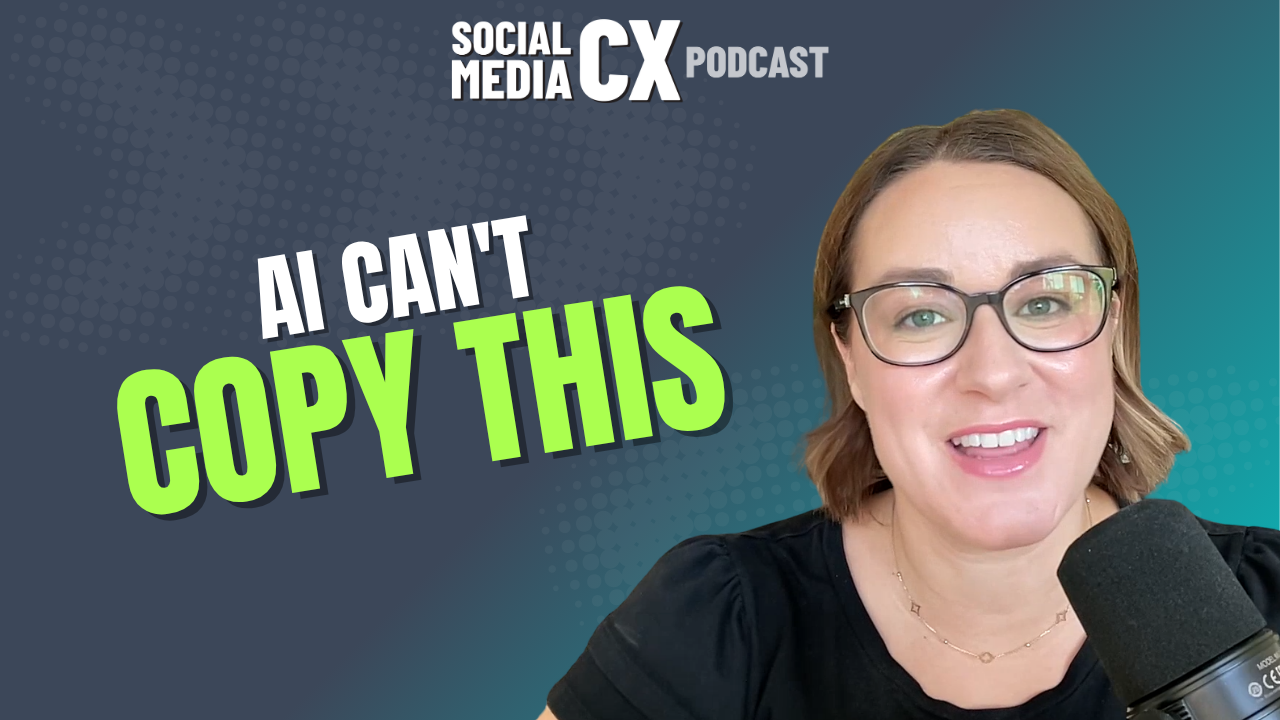
Table of Contents
Creating consistent social media content has never been the same as creating conversation. And as AI makes content easier to produce and replicate, that distinction matters even more.
Your competitors can see what’s working for your brand. They can copy your content calendar. They can take successful ideas, put them into AI, and create their own versions.
What they can’t copy is how your brand shows up.
That became especially clear in Planable’s recent experiment comparing human-run and AI-run Instagram accounts. Both groups started with the same design system, content brief, boosted budget, and zero followers.
The AI accounts stayed on brand and posted consistently. Yet the human-run accounts received 88 comments. Across all four AI-run accounts, there were just two.
As Brooke Sellas explains:
“Engagement is not a content problem. It is a presence problem.”
For leaders, that raises an important question: Is your social media engagement strategy built around publishing content, or around what happens once people respond?
Content Strategy vs. Conversation Strategy
A content strategy helps your team determine what to publish, when to publish it, and how that content should look.
But the work doesn’t end when a post goes live.
Brooke describes the difference this way:
“A content strategy asks things like, ‘Did we post? Are we checking the content box?’ Where a conversational strategy asks, ‘Did we show up for the people who responded?’”
Those people could be potential customers asking questions. They could be customers sharing positive experiences, raising concerns, or dealing with friction after a purchase.
Publishing gives them an opportunity to respond. A conversation strategy determines what your brand does next.
And you don’t need another complicated dashboard to see whether that’s happening.
3 Ways to Find the Presence Gaps in Your Social Media Engagement Strategy
Start by looking at what your brand is already doing.
1. Is Your Brand Responding?
Pull your last 10 social media posts and look at the comments.
Did your team respond?
Go beyond the easy comments that can be answered with a quick “Thanks.” Look at the questions, mild complaints, product questions, and other comments that require more effort.
If your last 10 posts don’t have comments at all, that tells you something too. Meaningful engagement includes comments, conversations, shares, and saves. Consistently publishing content doesn’t guarantee that people will interact with it.
2. How Long Are People Waiting?
Next, look at how quickly your team responds.
If a comment sits untouched for two days, Brooke calls that a “presence gap.”
For B Squared Media clients, the best-in-class social media response time is 30 minutes. Brooke also points to research showing that consumers expect brands to respond within 60 minutes or less on social media.
Two days is well beyond that expectation.
Response time helps reveal whether your brand is truly present when customers are trying to interact with you.
3. Who Is Starting the Conversation?
Finally, look at who initiates your social interactions.
Does your team only respond when someone comments first? Or are they proactively continuing conversations?
That could mean tagging someone back into a conversation, following up on an earlier comment, or checking in about something a customer mentioned previously.
It can be as simple as turning “Thanks” into “Thanks. Which part did you like best?”
The point is to continue the conversation rather than treating every response as something to close out.
A Full Content Calendar Can Still Be Quiet
This is what makes the Planable experiment so useful.
The AI accounts weren’t producing obviously bad social media content. They followed the brief. They had good captions and visuals. They posted consistently.
AI also knows that meaningful engagement matters to social media algorithms.
But in this experiment, AI didn’t independently treat engagement as part of the strategy. The humans did.
That difference matters for leaders evaluating their own social media programs.
A full content calendar can make a social media account look active. But if your team is measured primarily on whether content gets created and published, you may be missing what happens on the other side of those posts.
Social media isn’t only a publishing channel. It’s also a place where customers are trying to interact with your brand.
Your Competitors Can Copy Your Content. They Can’t Copy How You Show Up.
AI has made it easier for competitors to take what’s working for your brand and create something similar.
That makes presence increasingly important.
As Brooke puts it:
“Your competitors can 1,000% copy your content calendar… But they cannot copy how you show up.”
Presence isn’t another item to add to the content calendar.
It’s a habit your brand builds by consistently participating in the conversations happening around your content.
So look at your last 10 posts.
Are people commenting? Is your team responding? How long are customers waiting? And is your brand helping conversations continue?
If you discover that there aren’t many conversations for your team to join in the first place, that gives you your next step.
Create Content That Gives People a Reason to Respond
Showing up matters. But first, your content has to create an opportunity for conversation.
Brooke’s free Talk-Worthy Content course walks you through how to design social content that gets a response and creates the kind of meaningful engagement social media algorithms reward.
Take the free Talk-Worthy Content course →
https://bsquared.media/courses/talk-worthy-content/
Read the Transcript
[00:00:00] Posting vs. showing up
Brooke Sellas: Your competitors can 1,000% copy your content calendar.
And they do. I see it every time. “Somebody copied my stuff verbatim,” and everybody’s mad, and I get it. You should be mad, but that’s what people can do, especially now with AI. They’ll take what’s working for you, and they’ll slap it into AI and make it theirs. But they cannot copy how you show up.
Brooke Sellas: Hey, hey, and welcome back to the Social Media CX Podcast. I’m your host, Brooke Sellas, CEO of B Squared Media, author of Conversations That Connect, and today I want to build on something my guest last week showed me in her data, which is the difference between a brand that posts and a brand that shows up.
Let’s get into it.
[00:00:55] The engagement gap between humans and AI
Brooke Sellas: Last week you heard Miruna Dragomir, who is the CMO of Planable, walk through a study that their team ran. They set up seven Instagram accounts for one fictional brand. Three of them were run by humans, and four were run by AI. Same design system, same content brief, same boosted budget, same starting point of zero followers.
The AI accounts were definitely not sloppy. They posted on schedule, they stayed on brand, and they looked competent doing it. But here’s the number I just cannot get past, which is 88 comments received on the human side, and only two comments on all four AI accounts. Y’all, I need to drop this truth bomb, I feel like, because engagement is not a content problem.
It is a presence problem. And presence is a choice that you and your brand make every single day, even if no one told you that you had that choice to make. So here’s what I want you to think about or to sit with or to noodle on, as I like to say. The humans in that study weren’t given engagement instructions.
The AI wasn’t, but neither were the humans. No one told them to reply with comments. No one told them to run a giveaway which boosts engagement and comments. They just did it because showing up is baked into how they thought about social media and that account.
AI knows what the social media algorithms are. You can ask it right now. It’s gonna tell you, “Meaningful engagement, comments, comment threads, shares, saves.” So it knows how important engagement is to the social media algorithms, but it still didn’t think about engagement as a strategy. That is the whole difference between a content strategy and a conversation strategy, and why you constantly hear me harping on return on conversation.
Go listen to that episode if you haven’t.
[00:03:14] Is your brand actually responding?
Brooke Sellas: A content strategy asks things like, “Did we post? Are we checking the content box?” Where a conversational strategy asks, “Did we show up for the people who responded, for the people who are reaching out, for the people who want to share brand love moments with us, for the people who want us to solve their friction points on the path to purchase, for the people who have purchased and are having a bad experience?”
Here’s how I want you to check whether your brand is actually showing up and not just posting.
Number one, pull your last 10 social media posts. For each one, I want you to look at the comments. Did your brand reply to any of them? Not just the ones that are easy like, “Thanks,” right? But the confused questions, the mild complaints, the “Does this come in another color?”
The comments that nobody typically wants to answer. And if you’re saying, “Oh, well, our past in comments, easy, don’t have any comments,” that’s your first problem. The algorithms want to see meaningful engagement, meaning your posts need to be garnering comments, back-and-forth conversation, saves, shares.
[00:04:33] The problem with slow replies
Brooke Sellas: Number two, I want you to time your replies.
So if a comment from someone sat for two days before anyone on your team touches it, that’s a presence gap. That’s what we’re talking about, right? It’s not a workflow or a content anything, it’s a presence gap.
Two days is too long. The best-in-class social media response time for our clients is 30 minutes. Research shows that consumers expect a response within 60 minutes or less on social. So two days is far beyond 60 minutes.
[00:05:12] Reactive vs. proactive engagement
Brooke Sellas: The final thing, or the third thing I want you to do, is count who initiates. Meaning, are you only replying when someone forces the issue, or does your team show up proactively, tagging people back into a conversation, following up on an old comment, checking in on something a customer mentioned last week?
Going beyond saying, “Thanks,” and saying, “Thanks. Which part did you like best?” Continuing that conversation. Just like the AI accounts in the Planable study, a brand can look complete on paper; good captions, good visuals, consistent posting, following the brief to a T, and still be quiet in the one place it actually matters.
Because presence isn’t a line item that you can just check off. It’s a habit that you either build on or you lose on.
I’d love to hear from you. Where has your brand been posting but not showing up? DM me your story on LinkedIn, drop it on the comments wherever you’re seeing this, but reach out. I’d love to know and maybe even have you on the podcast to talk about it.
If this episode has you rethinking whether your content is actually starting conversations or just filling a calendar, I built a free course that is literally built for exactly this.
[00:06:44] Creating content that starts conversations
Brooke Sellas: So if you’re the brand who says, “Oh, I looked at our past 10 comments, and we have no comments on any of our posts,” you got to take this course. It’s called Talk-Worthy Content. It walks you through how to design content that gets a response, that gets you that meaningful engagement that the algorithms love, and you can grab it for free.
No monies. No monies at all, just your email. Head on over to bsquared.media/courses and then go to Talk-Worthy Content, and wherever you’re watching or listening, we will also put this in the transcript or the show notes.
[00:07:20] The one thing your competitors can’t copy
Brooke Sellas: Y’all, last thing I want to leave you with is that your competitors can 1,000% copy your content calendar.
And they do. I see it every time. “Somebody copied my stuff verbatim,” and everybody’s mad, and I get it. You should be mad, but that’s what people can do, especially now with AI. They’ll take what’s working for you, and they’ll slap it into AI and make it theirs. But they cannot copy how you show up.
Until next time, think conversation, not campaign.
Want to hear the full conversation? Listen to the Social Media CX Podcast on YouTube. And if your team is thinking about what responsible social listening in banking or financial services actually looks like at scale, check out the State of Social Care Report 2026.
Finally, as always, Think conversation, not campaign.™

Latest posts by Brooke B. Sellas (See All)
- Your Competitors Can Copy Your Content. They Can’t Copy This. - September 9, 2026
- AI Social Media Management: What Humans Did Better - September 2, 2026
- Your Brand Mentions Are Down. That’s Not Always Good News - August 26, 2026

Written by award-winning strategist Brooke Sellas, this weekly 5-minute power-up will help you turn social interactions into loyalty, retention, and revenue.
Written by award-winning strategist Brooke Sellas, this weekly 5-minute power-up will help you turn social interactions into loyalty, retention, and revenue.
Share this article: