Your Customer Complaints Are Shaping What AI Says About Your Brand
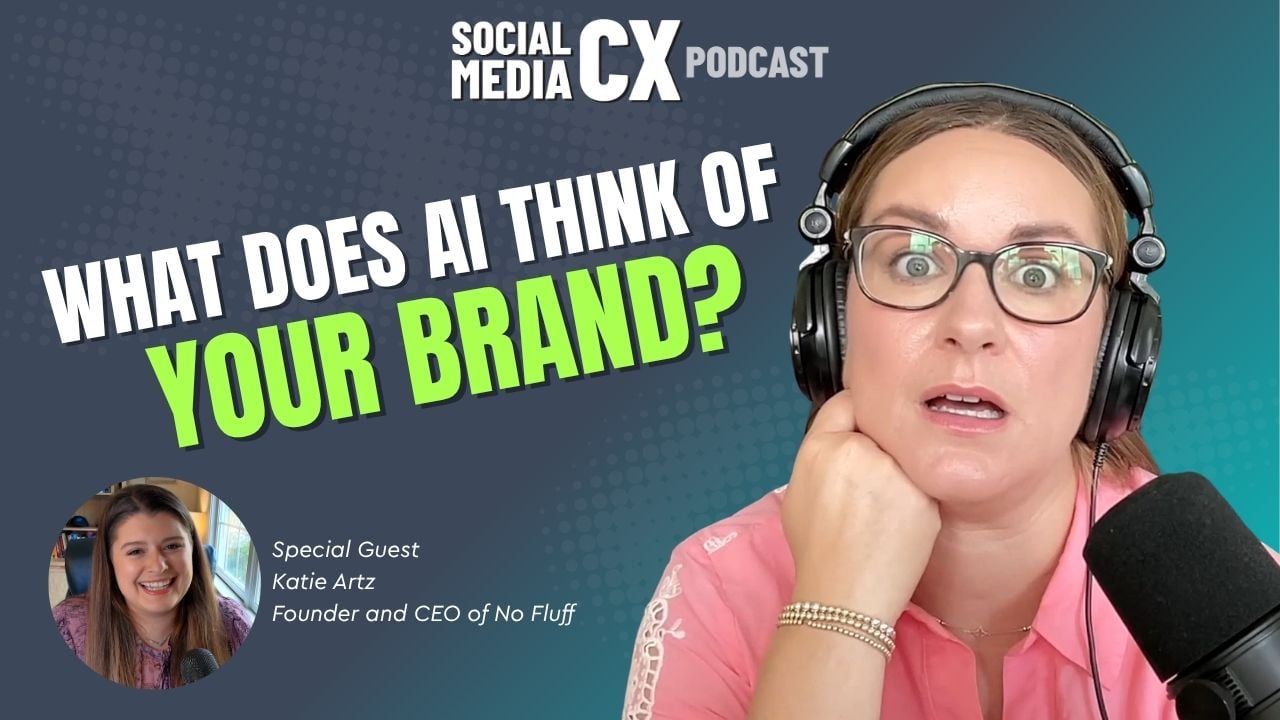
Table of Contents
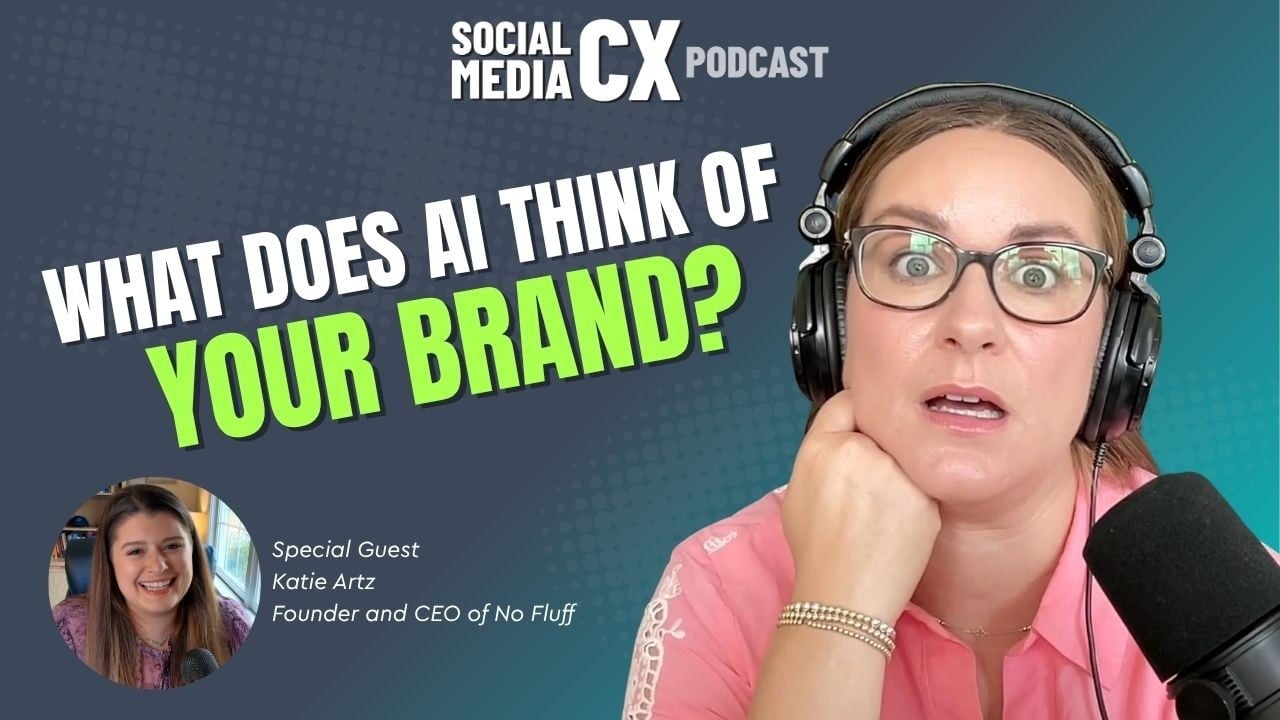
AI is forming an opinion of your brand from more than your website. Reviews, public complaints, social conversations, and third-party sources can all influence your AI visibility. AI visibility expert Katie Artz explains why social care data matters, how to use the three-link rule, and how to find out what AI is already saying about your brand.
Somewhere right now, an AI tool could be answering a question about your company.
The answer isn’t necessarily coming from your homepage.
AI can synthesize information across a much larger digital footprint, including your website, third-party coverage, reviews, and public social conversations.
That changes the way brands need to think about AI visibility.
Katie Artz, founder and CEO of No Fluff, has spent more than 15 years in B2B marketing strategy, including helping scale one company from $8 million to $70 million in revenue. Today, her work focuses on AI visibility and a question more companies need to be asking:
How is AI deciding which brands to recommend?
The answer has significant implications for customer experience and social care leaders.
Because the conversations your team handles every day may be helping shape the answer.
AI Visibility Is Different From Traditional SEO
Traditional SEO has relied heavily on keyword-to-page optimization. AI visibility works differently because AI can synthesize information from multiple sources before generating an answer.
There are three concepts that help explain what’s happening:
- Training data: The information AI was originally trained on.
- Grounding data: Information an AI system may retrieve to help support or verify an answer.
- The trust graph: The broader collection of signals AI can use to determine whether a source or brand is trustworthy enough to recommend.
Think about what happens when you need a plumber.
You probably don’t type a company’s URL directly into your browser. You don’t know which company you want yet.
Instead, you might check Yelp, Facebook, Nextdoor, reviews, or recommendations from people in your community.
You’re looking for evidence that the company can be trusted.
AI is attempting to do something similar at scale.
As Artz puts it, “Anyone can put up a website.”
That’s why the website alone isn’t enough. AI can look for supporting evidence across a much broader digital footprint before determining whether a brand is trustworthy enough to recommend.
That means a company can claim on its website that it provides “24/7 world-class support.” However, if public conversations tell a different story, that discrepancy matters.
Unanswered complaints, negative reviews, and other public customer experiences can become part of the evidence available about the brand.
And that can affect more than what AI says when someone searches for the company by name.
It can affect whether that company becomes the answer when someone asks AI which provider they should choose.
AI Search Is More Contextual Than Traditional Search
The way people ask AI for information is also changing what brands need to make visible.
Artz points to a comparison of roughly 3.4 words in a traditional Google search versus about 23 words in prompts to GPTs.
Instead of searching:
best plumber Easton Maryland
Someone can describe their actual situation, needs, preferences, and constraints.
That gives AI significantly more context to work with when determining which answer or recommendation fits.
For brands, simply appearing in search results isn’t necessarily enough anymore.
The bigger opportunity is becoming the best answer for a specific customer need.
Artz experienced this firsthand while building No Fluff.
Before selling a single client on the company’s AI visibility methodology, her team spent 90 days testing it on themselves. They optimized their website, social channels, and other parts of their digital presence.
But when No Fluff first appeared as a citation in AI answers, the website wasn’t what surfaced.
Artz’s LinkedIn did.
Reddit surfaced as another source, despite not being a major channel for the company. A Search Engine Journal article added another third-party authority signal.
Reddit deserves particular attention here. As we’ve explored before, the conversations happening there can influence how AI understands and recommends your brand, even when your company isn’t participating in them.
As those sources accumulated, the visibility compounded.
The lesson isn’t that every company should abandon its website and start posting on LinkedIn or Reddit.
It’s that AI visibility is an ecosystem.
Your brand needs consistent, credible evidence in the places AI repeatedly looks for answers.
Your Social Care Team May See Customer Questions First
Social care teams see customer questions, concerns, objections, and complaints in real time.
That means they may recognize an emerging customer concern before the content, SEO, or marketing team has identified it.
Artz’s advice to CX and social care teams is simple:
“Don’t treat support or public complaints as, like, a task to close.”
Yet that’s exactly how many organizations still operate.
Customer asks question.
Team responds.
Ticket closes.
Move on.
That’s a missed opportunity.
The information coming through social care isn’t only operational. It can be strategic and competitive intelligence.
If customers repeatedly ask the same question, that tells the organization something about what people need to know before they’re willing to trust or choose the brand.
Increasingly, those may be the same kinds of questions they’re asking AI.
As Artz says, “It’s actually strategic. It’s competitive.”
That’s the shift CX leaders need to recognize.
Customer conversations aren’t simply interactions to resolve. They’re intelligence the rest of the organization can use.
Use the Three-Link Rule to Improve AI Visibility
One practical way to act on this intelligence is what Artz calls the three-link rule.
When an important or recurring customer question appears on social, don’t let the answer exist only inside that interaction.
Take the answer and address it in two additional places.
Depending on where AI is consistently finding information in your category, that could include:
- An FAQ on your website
- A blog post
- A Medium article
- Another relevant public channel
The goal isn’t to copy and paste the same response everywhere.
It’s to create consistent evidence around an important customer question.
If customers repeatedly raise a concern and your social team has developed a clear, factual response, other parts of the organization should know about it.
That answer can inform content, SEO, AEO, customer experience, and brand strategy.
Instead of customer intelligence staying trapped inside the social team, it becomes part of the company’s broader digital footprint and can support its AI visibility.
Check Your Brand’s AI Visibility in Five Minutes
You don’t need a sophisticated AI visibility platform to get an initial sense of how AI understands your brand.
Start with a simple five-minute check.
Open several AI tools without your normal account personalization and ask questions such as:
Who is [company name]?
What do customers say about [company/product]?
Then look at what comes back.
What information gets elevated?
Is it accurate?
Are old issues appearing?
Are customer complaints dominating the answer?
Is AI confusing your company with another business?
Are important strengths missing entirely?
This isn’t a complete AI visibility analysis.
AI is probabilistic. Two people can ask the same question and receive different answers. A handful of searches also won’t tell you how consistently your company appears against competitors or across the broader range of questions buyers might ask.
However, this test gives you a useful first look at the mental model AI may be forming around your brand.
Brand Reputation Is Only Half of AI Visibility
Knowing what AI says when someone asks about your company is important.
The bigger question is what happens when the customer doesn’t already know your name.
Imagine someone asks:
What is the best company for [specific problem]?
Does AI recommend you?
Does it recommend a competitor?
And perhaps most importantly: Why?
Answering those questions requires moving beyond a handful of brand searches.
First, organizations need to identify the specific questions they want to become the answer for.
Those questions shouldn’t be overly broad.
Being the “top agency in the U.S.” isn’t particularly useful if the buyer is actually looking for the best agency for a SaaS company trying to improve AI search visibility.
From there, those questions need to be tested across multiple AI engines and over time.
No Fluff’s benchmarking process, for example, can test approximately 150 questions across seven engines. With multiple sources informing each answer, that can produce thousands of data points showing which sources AI repeatedly relies upon, where competitors are winning, and where opportunities exist.
That is a fundamentally different question from:
Does ChatGPT know who we are?
It’s:
Are we becoming the recommendation for the questions that matter to our business?
Give AI a Reason to Recommend Your Brand
The goal isn’t simply to appear somewhere in an AI-generated list.
It’s to give AI enough credible, differentiated information to understand why your company may be the better answer for a particular customer.
Artz frames the challenge more directly:
“How do I make myself no contest against any competitor?”
Broad marketing claims don’t provide much evidence.
Specifics do.
That specificity matters because AI can’t recommend what it can’t understand. If your digital footprint doesn’t clearly communicate what makes your brand different, AI has little evidence to use when comparing you with competitors.
Consider an apartment company trying to become the recommendation for someone searching for a three-bedroom apartment that works well for dog owners.
“Pet-friendly three-bedroom apartments” isn’t particularly differentiated.
Specific evidence might include:
- Three-bedroom apartments with 20% more square footage
- Dedicated dog-walking paths
- A high percentage of leases with pets
- Residents who renew their leases for multiple years
Now AI has context.
More importantly, it has information that can help distinguish one recommendation from another.
The question for leaders becomes:
What makes us the best answer, and have we made that evidence clear enough for both customers and AI to find?
The Customer Questions Leadership Needs to See
There’s one immediate step CX and social care leaders can take.
Identify the 10 most uncomfortable questions your team answers repeatedly.
Don’t sanitize the list.
These should be the questions customers are actually asking, in the language customers actually use.
Then bring those questions to senior leadership.
For each one, ask:
- How are we answering this today?
- Is that answer clear and factual?
- Does the rest of the organization know customers are asking this?
- Where else should the answer exist?
- Do we have enough evidence to make our answer credible?
- Could a competitor currently provide a better answer?
That turns social care from the team that closes customer complaints into a source of intelligence that can influence content, search, brand reputation, and AI visibility.
It’s another example of why AI strategy and customer experience can’t be separated. The workflows and customer data surrounding AI can expose CX gaps that might otherwise remain hidden inside individual teams.
As AI becomes a larger part of customer discovery, that role only becomes more important.
Brooke Sellas summed up the shift at the end of the episode:
“Social care was always about protecting trust in the moment, but now it’s also protecting trust in the answer.”
Once you understand that, the next question becomes much more important:
What is AI actually saying about your brand?
Find Out Where Your Brand Actually Stands
The five-minute test can show you something important: what AI might already be surfacing about your company.
But it can’t tell you the whole story.
It won’t reliably show you how often competitors are being recommended instead of you, which questions you’re absent from, which sources are influencing those answers, or where you should focus first to improve your AI visibility.
That’s the next question once you understand why AI visibility matters:
Where does your brand actually stand?
Artz and the team at No Fluff created the AI Visibility Benchmark™ to answer that question.
The Benchmark looks beyond a single AI search to evaluate the questions buyers actually ask, how your brand appears across the AI landscape, where competitors are winning, and what may be preventing your company from becoming the recommendation.
From there, No Fluff provides a roadmap for what to address next, whether that work ultimately sits with your internal team, existing agency, or another partner.
If your five-minute test leaves you wondering what AI is saying when customers aren’t searching for you by name, that’s the gap worth investigating.
See where your brand stands with the AI Visibility Benchmark™:
https://nofluffmktg.com/ai-visibility-benchmark/
Read the Transcript
[00:00:00] What AI is learning about your brand
Brooke Sellas | B Squared Media: Every public complaint, every slow response, every moment where one of your customers feels heard or ignored on social is evidence for AI now.
Speaker: Hey, hey. Welcome back to the Social Media CX podcast. I’m your host, Brooke Sellas, CEO of B Squared Media, author of Conversations That Connect, and today we’re talking about something most social and CX teams haven’t even started thinking about yet. Which is how AI is quietly forming an opinion of your brand before a customer ever reaches out based on the very complaints and conversations that your social media team handles every day.
Let’s get into it
Brooke Sellas | B Squared Media: Want to give today’s guest a real introduction because her work is reframing something that most of us haven’t thought about yet. Katie Artz is here to talk to us about AI visibility.
Katie is the founder and CEO of No Fluff, which is a B2B AI visibility firm that helps companies with things like benchmarking, analytics, competitive assessments, and really understanding how they may be recommended inside of AI search tools like ChatGPT, Gemini, Claude, Perplexity, you name it. She has spent over 15 years leading B2B marketing strategy, including, this is a really great story by the way, Katie, scaling one company from 8 million to 70 million in revenue.
Katie, welcome to the show.
Katie Artz: Thank you. I’m excited to be here.
Brooke Sellas | B Squared Media: I am so excited to chat with you. I think what you’re doing is just really interesting and cool because we’re all talking about AI visibility, AEO, GEO, whatever you wanna call it, wherever you are in your corner of the world. But none of us really know how, how it works, so I love that you’re going in and, and doing all this, and we’re gonna get all of it, into all of it today.
So to start out, I wanna start with something that you said that I think our audience needs to hear and sit with.
[00:02:23] Why AI visibility is different from SEO
Brooke Sellas | B Squared Media: And what you told me was that AI doesn’t just crawl a website and then forms an opinion about your brand, right? It’s not just going to the website and then going, “Oh, talk to Katie’s brand about this,” blah, blah, blah.
It actually synthesizes the whole digital footprint that your brand has. So it’s looking not just at the website, it’s looking at reviews, it’s looking at your third-party coverage or, like, PR, media, comms. It’s looking at your social. It’s looking at everything scattered across the internet that has your name on it, essentia- essentially.
So for a show about social care and customer experience, that means, specifically how I’m thinking of it, is the DMs on social, the public replies, those public, you know, Facebook reviews, Google reviews, all that stuff, the way a brand handles those conversations and reviews. Do they respond? Do they not respond?
All of that is also quietly becoming part of the evidence that AI is using to decide whether or not your brand is trustworthy. So before we go anywhere else, walk us through what you mean by AI visibility and where, and why, it’s fundamentally different than traditional SEO.
Katie Artz: Yeah. So I think it’s helpful to know how AI works. and I’ll use three different terms. One, there’s training data, so it’s the amount of information that AI was trained on originally. And that may come from big publications, et cetera, and it’s moved a lot since that, I would say 2020, mainly training data. Then there’s grounding data, and that’s the information it goes at to make sure that if it gives you an answer, it’s trustworthy. And you have to think about how much scrutiny these companies are under, from ChatGPT to Gemini, if they give a wrong answer. of scrutiny. And so they have taught AI engines to think kind of like humans.
I’m gonna give you the easiest example. If you’re looking for a plumber, your toilet just broke. You aren’t gonna go into a website and type in their URL. you don’t know it yet right? So you’re gonna go to Yelp, you’re gonna go to Facebook, you may go to Nextdoor and figure out, okay, what are the plumbers near me, et cetera. So AI is trying to take that same approach. It’s trying to build a trust graph. It’s trying to look at your digital presence, but in the way that communities are, to make sure that it’s safe to recommend you as the answer. Anyone can put up a website. About a month ago, I saw a Anthropologie website, Anthropologie website that looked like it was fifty percent off, looked just exactly like Anthropologie, and of course it was trying to scam me for my money.
And I think that’s the important thing that AI is trying to do, is making sure it gives you a solid answer. Now, does it? That’s a different, that’s a different topic.
Brooke Sellas | B Squared Media: Yeah.
Katie Artz: For today. But that’s why it’s so different than traditional SEO that a page is, you know, with keywords, keyword-to-page optimization is no longer enough.
Google itself is no longer working like it used to. It has AI in the background to synthesize answers across multiple sources to then show you that traditional Google page, and that’s changed in the last month.
[00:05:39] Google search vs. AI search queries
Brooke Sellas | B Squared Media: Yeah. Well, and the way we talk to AI is so different than how we talk to search. Like with search, it’s like best, best plumber Easton, Maryland, right? But we might go to our bot, and, and by the way, the semantic search, like using like the words that you would use, like your vernacular, your conversational tone, how I would talk to my bot is so different how you would talk to your bot, and so different than how everybody else talks to their bot.
So it is a big difference from keywords, ’cause keywords are so easy.
Katie Artz: Yeah, the stat’s like 3.4 words in the traditional Google to like 23 words in GPTs.
Brooke Sellas | B Squared Media: Yes, that’s what I’m saying. Yeah.
Katie Artz: Different level of information that it needs to understand how it works, how it fans out all that information to get you the answer. It’s so cool, it’s so interesting, and yeah, that’s why I’m here and why I’m obsessed.
Yeah. So you spent a lot of time inside of B2B marketing operations, and you ran dozens of campaigns at once before you made the leap to, to build No Fluff. What moment, what was the moment, the aha moment that you had that told you like, ” Hey, something’s changing here around traffic and SEO and AI and AI discovery”?
And how did you take the leap essentially to say like, “Hey, this is an actual problem we’re solving, and I’m gonna come over here and, and do that”? I would say I was a closet AI user early on, and I say closet AI user because a lot of people were like kind of secretly like not saying they wanted to use it. We all know it puts out junk information, and it’s like trying to preserve our, our human knowledge and intelligence. But early on, I remember thinking, “This is amazing. This is going to change the way that people… Are they gonna come to our websites anymore?”
And at the time, I was putting out nearly twenty-plus campaigns maybe a month. We had merged seven businesses into one. We had events, which I still believe really highly in the power of positive human in-person experiences.
So that’s a separate segment. But we had so much going on. I would say ten-plus main leaders under each P&L that were like, “Let’s do this. Let’s run this campaign. Let’s create this piece of content.” And I started thinking, well, I mean, AI give us that exact answer. Is this really valuable? Is this information valuable?
So, I spent late nights, my poor children, doing every Nvidia course, anything I could. I already knew enough about SEO, but I wanted to know: how is this different? how is AI synthesizing information? And what I found is it’s foundational marketing at its core. It is having the right authority.
It’s convincing people that you’re the better option. And ultimately, it’s looking at your digital infrastructure, like I just said, to make sure it can answer appropriately, which equals what are you doing for digital marketing to make yourself be the best answer? so yeah, I left. I knew I wanted to start a company at some point, and left, started the company without selling one thing.
[00:08:48] What actually got Katie cited by AI chatbots (it wasn’t the website)
Katie Artz: We tested our methodology and all the best practices on ourselves, for ninety days. We had some amazing results, including inbound inquiries from zero sales at all, just from us saying we’re gonna optimize our website, optimize our social channels, everything, and digging deep into data, lots of data points where AI was pulling for the categories we wanted to be in.
But I think how this relates to you, Brooke, is what we found is even though we spent a team of three or four, including an analyst, a coordinator, all of this time on ourselves optimizing our website, time that we actually showed up as a citation or an AI answers was from my LinkedIn, my founder LinkedIn. And we also saw Reddit. There was someone on Reddit. We weren’t doing too much on Reddit. That was a whole beast on, on its own. But someone that it thought was no fluff, good or bad. I don’t know how that’s good for us, but yes, I mean, we’ll say it’s positive, from there, and then also we got a Search Engine Journal article.
And when that came up, everything started compounding. and then inbound inquiries, my LinkedIn reach was higher, but what we were doing was essentially answering answering the questions that we wanted to show up for on every channel. We didn’t have as much social conversation as I’m sure you’re deal, we were a new business starting from zero.
Brooke Sellas | B Squared Media: Yeah.
Katie Artz: But I was posing questions and answering them, and I was commenting things on LinkedIn, and it caused that visibility that I thought would have come from all of metadata, schema, all the SEO stuff, and that wasn’t it. So that was very interesting to me.
Brooke Sellas | B Squared Media: That is interesting.
[00:10:26] What happens to brands that ignore social and reviews
Brooke Sellas | B Squared Media: Yeah, well, it connects your world to ours, and that, you know, for the people who are listening and watching here, they’re probably, you know, they run social media teams. They run social care teams or customer experience teams. They’re the people who are probably writing those replies or working on those complaints or handling those public crises, maybe.
Maybe you’re lucky it’s not a crisis. Maybe it’s a brand’s love virality moment, right? But those are the peoples that’s doing that. So if AI is synthesizing a brand’s entire footprint, including reviews and those public conversations, what does social media, the posting of content, and what does social care, the managing of those conversations and interactions, so they’re already playing a role in how brands get described instead of an AI answer is what you’re telling me.
So like, what happens? Like you’re doing the answering, you’re doing the work. Great. Love it. Obviously, that’s what we do. But like, what happens for a brand, say, who doesn’t care? Maybe they care, they just don’t have the resources. Whatever their situation is, they’re not responding to those comments. They’re not responding, reaching out to people who leave negative and positive reviews.
They’re not focused on the social side of all of this. Do you think that’s gonna be a detriment? Do you think it’s gonna be no big deal? Like, what do you? I know it’s a gut feeling here, but, like, what do you think about people who aren’t doing it?
Katie Artz: It’s gonna be a problem. So the way I think it’s still whether you’re posting or you’re commenting and you’re engaging, all of that is somewhat of a social media interaction. And the way that AI wants to be answering questions. So if you’re doing a post that’s answering a question, or you have a question that someone asked and the social care team is responding to it, there are two different ways that AI can find that information, right?
You’re posing it in the way that it can extract. It sees the question, it sees an answer, or it’s phrased as an answer. So, if your website, I’ll give you an example about kind of building the trust graph. If it says, you know, you offer 24/7 world-class support, but all of a sudden all there are tons of complaints on Reddit or on X.
And people are tagging you, and they’re missing DMs, they’re missing other things, AI is first going to say, okay, you know, if someone asked about that brand, if you ask a question, “Hey, I want to know about XYZ brand,” you’re probably gonna see that information, show up that, hey, there might be some credibility, reputation issues.
But that’s going to go then downstream because when someone asks, “I’m looking for the top in this industry,” it’s probably gonna find someone else in that case. So always say there’s two levels. There’s a brand reputation level of AI search, just knowing what AI thinks about you, how you’re positioned, correcting inconsistencies, making sure it doesn’t confuse you with someone else.
Good example is we were a new company called No Fluff. A lot of people use that word. We’re not a stuffed animal. We had to correct that information first. And then after that, once you’re correcting that information, getting we are the ultimate, the no fluff, the AI you need to know, it’s then putting it, us in the answer, top B2B, et cetera.
But we have to have good reputation. We have to have, you know, positive responses. We have to have the Q&A answers so it can see that information. So it is absolutely essential. It’s the mismatch in brand reputation in order to be in category questions, and all of it matters.
Brooke Sellas | B Squared Media: Follow up there because it sounds to me like if we, like in that little like hypothetical comparison that you gave, it sounds to me like sentiment, which is, so when we talk about sentiment in social care or social listening, we’re talking about the tone of the conversation. Was it positive, was it negative, or was it neutral?
So like positive would be like, “Oh my God, I love your new coffee beans.” Right? Like positive sentiment. Negative sentiment would be like, “Katie, you said you were gonna deliver my shoes on Monday, and they, it’s Friday and they’re still not here.” Right? Negative sentiment. Neutral is just like, “Hey Katie, what do you do?
What does No Fluff do?” Right? There’s no positive, negative. It’s a question.
There’s
Katie Artz: no positive or negative, yeah.
Brooke Sellas | B Squared Media: So it sounds like part of what AI is looking at to, to decide between the two companies who have a presence, one has a good social presence, one has maybe not one, they both have great websites. It’s gonna look at the sentiment and say, “Okay, company B that has all of this social love, and they’re responding to people, and the sentiment is more positive, I’m going to recommend as a positive.”
Whereas company A that might not have those things could get recommended, but the AI might say, “But, you know, here are two brands, but this one seems to have more positive conversation or reviews.” Am I right?
Katie Artz: Yes. And actually, I think that’s really important. So we’re doing benchmark and analysis for brand reputation even. So while I’m talking about what would buyers be asking an AI to then get information, you think that someone you might hire is gonna ask, “Is this a good company?” Yes. And so we are working with a company
that, you know, had positive and negative, some negative reviews, and when you ask AI, “Hey, I might be considering a job with this company, should I?”
It’s pulling from Glassdoor. It’s pulling those negative responses, and if you don’t address those, you’re gonna have a hard time with recruitment.
Brooke Sellas | B Squared Media: Yeah.
Katie Artz: So there are so many use cases in actually analyzing AI data, whether it’s for specific, you know, per buyers or specific, you know, employer use case instances. That’s what’s really neat. And even when you get deeper, so it’s not just sentiment across the board, when you get deeper and someone says, “I’m comparing this computer to another one,” and AI already knows what I do, it knows I work in AI, it knows I use Claude, it knows I do data analytics, it’s going to then recommend and look at like, hey, based on my use case, who has the most positive responses or who has that, you know, who fits that the best?
Brooke Sellas | B Squared Media: Yes.
Katie Artz: I think it’s digging deeper a little bit than, you know, than just the high level, are we positive or negative?
But those specific use cases for which people are going to ask or find you, and how do you elevate the positive sides?
[00:16:50] The 5-minute test to see what AI thinks about you
Brooke Sellas | B Squared Media: Yes. Literally that’s what we, what we do, try to get that positive side going. Let’s get tactical for a second. If a social care or, or customer experience social, if any leader is listening to this and wants to understand where they actually stand in AI search today, what’s the first thing they should check?
Katie Artz: I mentioned the two sides of the coin. There is who you are and what you, and then how do you fit in the category. So the first thing I might do is just a brand sentiment, what it knows about you question. So go incognito. I recommend doing this across a few, this is just a quick five-minute check.
It is not going to tell you how you fit in the landscape, how to improve, but it’s helpful. So who is, enter your company name, and what do customers say about your product, whatever. And get that information back and see what’s elevated to the surface. Is it right? Is it wrong? This is a little bit of a mental model of your brand.
Fine. That’s fast and easy. And the problem is AI is probabilistic. So companion sitting next to you, Brooke, you and I did the same thing today, we would get totally different answers.
Brooke Sellas | B Squared Media: Yeah.
Katie Artz: You have to take that for face value, and I always tell people, please take it for face value. Unfortunately, the other side is how do you go against competition?
How do you show up for category questions? How do you be the number one provider for XYZ? And that takes a lot more. You can go ahead and buy all the software tools you want, but ultimately it comes down to what are the questions you need or want to be the answer for. And the way I explain it is they shouldn’t be broad.
You don’t want to be the top agency in the US, you want to be the top agency for SaaS companies looking to improve AI search, right? You want to get. Because it could be someone looking to invest.
Brooke Sellas | B Squared Media: Yes.
Katie Artz: In the US, it could be anybody. So once you understand what is the category, so we talked about reputation, just checking yourself really quick.
But then the category, that is where we build out a much broader set of questions and test those in multiple engines across multiple days to be able to look at all the data and say, “This is the ecosystem that you need to be in. This is where AI is pulling repeatedly, not just once,” because every answer is different, this is where your social care team needs to focus, actually.”
And I think there’s so much noise about like, oh, LinkedIn and Reddit and all this stuff, but when you actually look at all of the data and how many sources AI pulls from, for us, a hundred and fifty questions times seven engines, and then say like three or four sources for every one, that’s four thousand sources of information on just a hundred and fifty questions.
There’s so much more than those initial channels. There’s all these channels that could be important to you if they’re consistent, and it’s looking at them and understanding how you can use them and how your social care team, “Oh, we didn’t think about that channel. We don’t really want to be on it frequently, but maybe we need to have a homepage and see, monitor commentary there,” right?
So, easy one was the five-minute test on your brand. It’s much harder to get that bigger landscape, and that’s where I always say, go either use the technology or map out your own questions or find a provider to help you give a true benchmark of what the landscape is and where your social, content, SEO teams.
I mean, it’s really a bunch of teams working together to improve how you show up in that landscape.
Brooke Sellas | B Squared Media: need to. But yeah, anyways, is there a specific habit or workflow change that you would tell your clients to start this week? Something small, right? Nothing crazy, but something small that would actually help move the needle on how AI represents them.
Katie Artz: Yes. Don’t treat support or public complaints as, like, a task to close. You guys are holding the information that is absolutely incredible. You’re way ahead of what your SEO team is working on. They may have come up with keywords, they may have thought through, like, “Okay, these are the questions,” or what, you know, whatever team is working on your AI search.
You are seeing firsthand new concerns that are popping up. And so if you can think of yourself as the source of that information, and then what I like to say is the three-link rule. So if there’s a common customer complaint, how do you build two other pieces? If you’re addressing that on social, great. How do you address it in two other places? So if you see that AI, looks at Medium, which I know a lot of people aren’t on Medium. We used Medium when we got cited for, for it. We took our blogs, we also put those on Medium. Address that question on Medium. Use it as a content piece. Address that on your site in your FAQs.
Brooke Sellas | B Squared Media: Yes.
Katie Artz: Take that and you say, “How do I put that in three other places?” Take it up to a strategic level to your other teams, that’s really gonna help.
Brooke Sellas | B Squared Media: So smart. I love that. That’s link one. So take the response to the negative comment, create more content. Create two more pieces of content from that.
Katie Artz: Two pieces. Yep
Brooke Sellas | B Squared Media: And that’s it. That’s it? That’s it? That’s so easy. That’s so easy.
Katie Artz: I mean, you asked for one.
Brooke Sellas | B Squared Media: I did, but I’m like, “Oh my God, that’s so easy.” But yeah, like see how easy that sounds?
And I thought this was gonna be hard. I mean, it is hard, but that’s an easy part.
Katie Artz: It can be a lot, there could be a lot of questions, right?
Brooke Sellas | B Squared Media: Yeah.
Katie Artz: if there are ones that are absolutely repeated frequently, that is like a number one flag, do it. But you’re holding the data that people aren’t seeing, that is coming in real time.
Brooke Sellas | B Squared Media: Yes.
Katie Artz: It’s so hard that it’s stuck within a social team, which is great, you guys are addressing it, but it’s actually strategic. It’s competitive.
Brooke Sellas | B Squared Media: It is.
Katie Artz: You’re answering something to differentiate yourself against a competitor. They could move to someone else. And so if you lift that up and put that on other channels, AI will see the consistency yeah.
Brooke Sellas | B Squared Media: Hello.
Katie Artz: ‘ I’m excited cause I actually used to work in social media, so I feel like this has come full circle.
My first two roles were all social media for a tech company and then a healthcare company, and I love social media and, but like now I feel like it’s more than ever so important.
Brooke Sellas | B Squared Media: And so important to think of it in this way. I mean, like this is an aside, but I was so giddy when, ’cause at first when AI came out, I’m like, “Oh, no,” right? Kinda like everybody else, like, “Oh, no.” But now I think more than ever our tagline, which is 15 years old, is “Think conversation, not campaign.”
But now with AI, I think that’s even more true. So in a way.
Katie Artz: Much more.
Brooke Sellas | B Squared Media: I was scared, and now I’m like, no, no, no, no, no. AI is actually making what we do more important. Yeah.
Katie Artz: Yeah.
[00:23:27] Katie’s AI Visibility Benchmark and where to start
Brooke Sellas | B Squared Media: I love it. I love it. Before I let you go, I want you to tell everybody who’s watching or listening about your AI visibility framework.
Katie Artz: AI Visibility Benchmark.
Brooke Sellas | B Squared Media: Benchmark. Yes. I’m like snapshot, benchmark, framework. Okay, benchmark.
Brooke Sellas | B Squared Media: And where they can find it. So if someone listening wants to see where they actually stand right now, you have a place for them to start. I will put the link, by the way, if y’all are watching or listening to this, into the show notes, which are the transcript, wherever you’re watching or listening.
But Katie, tell everybody about it.
Katie Artz: Yeah, and I’ll make it easy. So nofluffmktg.com. We also have No Fluff Marketing, and we haven’t redirected it yet. We will. But just go there first. I don’t wanna try and say /aivisibilitybenchmark. That’s really long. What it is is we simply give you an idea of where you stand in the AI landscape, so both from the brand reputation standpoint, like I mentioned, how AI is surfacing your company, where it may be confusing you with other people, to the competitive landscape.
And we actually do something that kind of looks like a matrix from you-know-who.
Brooke Sellas | B Squared Media: Uh-huh.
Katie Artz: That shows, hey, here’s your competitor, here’s where you are. And then we actually give you a roadmap to fix those things, and you are welcome to hand those off to an existing agency team, an existing consultant that you have on board or internally.
But the goal is to, to say, “Hey, these are the questions.” So we work with your executive team one meeting to understand what is the specific highest margin, most important revenue-driving, product solution industry.
We build out the questions that people might ask an AI and then give you what I just said. What, what is your brand reputation for that? Where are competitors standing, and then how do you fix that? How do you improve it? How do you become the absolute recommendation?
Brooke Sellas | B Squared Media: Yes.
Katie Artz: And Brooke, I think the only thing that we didn’t talk about here that I think people need to realize is really different than just AEO, and this is an SEO activity is, and I’ll use an explanation. You don’t wanna just be a top, when someone asks, “Hey, I’m looking for a top apartment complex, or the best apartment complex for three bedrooms for dogs in California.” Fine. You’re part of that list. Great. You want to be the top recommendation. So an example would be, they have twenty percent more square footage for their three-bedroom apartments.
They have specific dog walking pathways. Fifty percent of the leases there have pets, and oh, they also have more than three-plus years, they renew their lease long-term.
Brooke Sellas | B Squared Media: Yes. Yeah, context and clarity, right? That’s just, it’s just the God, I feel like this is what AI is when you boil it down. It’s just all the context and all the clarity.
Katie Artz: Yes. And the more that you can say, “How do I make myself no contest against any competitor?” The best option out there, whether, whether it’s data, whether it’s something you guys do that no one else does, help you be the answer, the surfaced answer in any question.
While we do test 150, the goal is to become the recommendation in any of those use cases that you wanna capture, whether the question is varied or written in a different way, right?
You are the best possible answer. so yeah, that’s I think the most important thing that people need to think of. It’s not just like, how do I pull the data and be that specific answer? It’s how do I be the best?
Brooke Sellas | B Squared Media: Last question. What’s the one thing that you wish every social media practitioner, you know, anybody who’s working in social media, understood about AI visibility that almost no one is getting right just yet?
Katie Artz: So first, their role is going to be way more important than anyone knows, especially as AI gets more sophisticated and anyone can make up any information about yourself and just put it online. Second is how do you, like, let’s get tactical here. the top 10 most uncomfortable questions that you address frequently and send those up to senior leadership.
Do you say, “These are frequent. Yes, I’m addressing them. We’re addressing them in this way.” But how else do we address them on our website? How do we address them in a way that we have the best answer for them?
Brooke Sellas | B Squared Media: The most context with the most clarity. No, you’re saying it. Like, like you, you gave the example. You gave the example of the apartment, right? It’s our three bedrooms have 20% more square footage. We have actual dog paths for walking or a dog run or whatever it is.
You know, our tenants usually stay for an average of five years or longer.
Katie Artz: Exactly. Yeah.
Brooke Sellas | B Squared Media: And clarity and taking those complaints, creating the two more pieces of context and doing it with context and clarity. I love it. I really do.
Katie Artz: Always the three-link rule, factual answer, answer first. I mean, there’s so many, like, tips here and there. But really, I think it goes back to looking at the data, looking at what people ask first. Are they asking? You don’t want to show up for random things. What are buyers actually asking?
Brooke Sellas | B Squared Media: Yes.
Katie Artz: Important out of the context of your own business, out of your own lingo. A lot of people try to lean into their own lingo that only they know internally.
Brooke Sellas | B Squared Media: Yes.
Katie Artz: So you guys see it, like, firsthand, so I think that’s what’s really exciting. And so if there’s more of a connection between social, SEO, AEO, like how do we build pods, teams that talk about this and figure out how to disseminate those questions and answers across multiple channels, the more efficient you’ll be in showing up as an AI recommendation.
Brooke Sellas | B Squared Media: Love it. Thank you so much, Katie, for sharing your AI visibility knowledge with us, because I know it’s such an area that we’re all trying to wrap our arms around and not be confused about, and I think your answers were super clear and contextual and helpful. So thanks.
All right, y’all. You heard it here straight from Katie. AI isn’t just looking at your website or your homepage, it’s reading your history, your entire digital footprint, and it doesn’t matter if people are talking about you and you’re not a part of that conversation. You should be, social care, social listening, hello.
But it doesn’t matter if you’re not a part of it, it’s still being used to train AI on what people think about your brand. Every public complaint, every slow response, every moment where one of your customers feels heard or ignored on social is evidence for AI now. It is quietly shaping what AI tells the next buyer about who you are before they ever pick up the phone or click a link or fill out a form.
Social care was always about protecting trust in the moment, but now it’s also protecting trust in the answer. As always, if this show is helping you think differently about customer experience, social care, return on investment on social, AI, AI answers, AEO, please give us a little rate and review. It helps us bring on more brilliant voices like Katie’s and keeps our community growing with intention.
Until next time, everybody, think conversation, not campaign.
Want to hear the full conversation? Listen to the Social Media CX Podcast on YouTube. And if your team is thinking about what responsible social listening in banking or financial services actually looks like at scale, check out the State of Social Care Report 2026.
Finally, as always, Think conversation, not campaign.™

Latest posts by Brooke B. Sellas (See All)
- Your Customer Complaints Are Shaping What AI Says About Your Brand - August 12, 2026
- The Customer Signals Hidden Inside Your Social Care Data - August 5, 2026
- AI Doesn’t Know What Makes Your Brand Different - July 29, 2026

Written by award-winning strategist Brooke Sellas, this weekly 5-minute power-up will help you turn social interactions into loyalty, retention, and revenue.
Written by award-winning strategist Brooke Sellas, this weekly 5-minute power-up will help you turn social interactions into loyalty, retention, and revenue.
Share this article: