Here’s something I see brands get wrong every single day.
They treat Facebook like LinkedIn. Or respond to TikTok comments like they’re answering emails. Sometimes they use the same canned responses across Instagram DMs and LinkedIn messages.
And then they wonder why their social care efforts feel… off. The truth is, without platform-specific social care, your customer service strategy is destined to fall flat.
Your customers can tell when you don’t understand the platform they’re on. And sense that you’re copy-pasting responses without considering the context of the conversation in progress.
And it’s costing you more than you think.
Why Platform-Specific Social Care Matters
Each social media platform has its own unique culture, communication style, and user expectations. A strategy that works wonders on LinkedIn may fall flat on TikTok.
To truly connect with your audience and provide exceptional social care, you need to tailor your approach to each platform.
This is the heart of platform-specific social care.
Are you ready to deliver trust-building customer service on Facebook, Instagram, LinkedIn, and TikTok? Each platform provides an opportunity to turn a simple interaction into lasting loyalty.
Today’s customers want personalized, empathetic, and effective solutions. And they want them on the platform of their choice. A generic, one-size-fits-all approach to social care simply won’t cut it anymore.
Here’s why a platform-specific social care strategy is so important:
Meeting Customer Expectations
Your customers are already on these platforms, and they expect you to be there too.
When you support them on their preferred channels, you’re meeting them where they are. You’re making it easy for them to get the help they need.
Building Stronger Relationships
When you take the time to understand the nuances of each platform, you show your customers that you care about their experience.
This helps you build stronger, more meaningful relationships with your audience.
Improving Customer Satisfaction
A tailored approach to social care can lead to faster response times, more effective resolutions, and a better overall customer experience.
This, in turn, can lead to higher customer satisfaction and loyalty.
Gaining a Competitive Advantage
Many brands are still struggling with social care.
By developing a sophisticated, platform-specific social care strategy, you can differentiate yourself from the competition and gain a significant competitive advantage.
[Source: Sprout Social]
The Core Four: Tailoring Your Social Care Strategy
Are you ready to tailor your social care strategy for the four key platforms: Facebook, Instagram, LinkedIn, and TikTok?
Each of these platforms has its own unique characteristics. And each requires a different approach to social care.
Facebook: The Community Hub
Facebook is often the first place customers go when they have a problem or question.
With its massive user base and diverse features, it serves as a critical channel for social care. Here’s how to get it right.
- Be Responsive: Facebook users expect a quick response. Aim to respond to all inquiries within an hour, if possible. If you can’t provide a full resolution right away, at least acknowledge the customer’s message. Let them know you’re working on it.
- Use a Mix of Public and Private Responses: For general questions, a public response can be helpful for other customers who may have the same issue. For more sensitive or personal issues, it’s best to move the conversation to a private channel like Messenger.
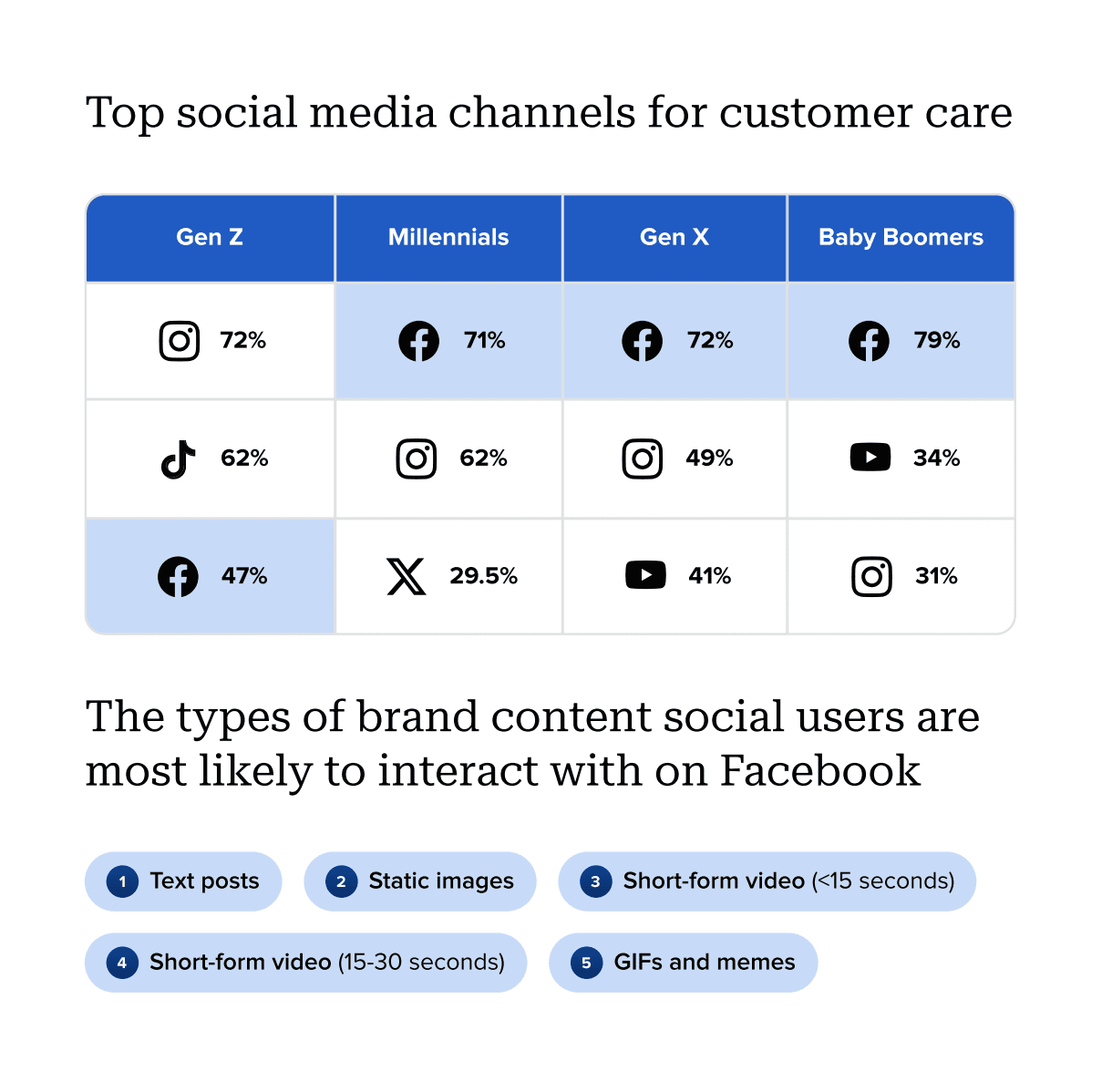
- Add a GIF or Meme Where Applicable: Customer care can be playful, in the right circumstances. Knowing when a little levity or fun can defuse tension is a soft skill the best care reps embrace and own.
Instagram: The Visual Storyteller
Instagram is a highly visual platform. And your social care strategy should reflect that.
Here’s how to provide exceptional social care on Instagram.
- Monitor Your Comments and DMs: Customers often leave comments or send DMs with questions or concerns. Respond in a timely manner.
- Use Visuals to Your Advantage: When possible, use visuals to help you resolve customer issues. For example, you could create a short video tutorial to show a customer how to use a product. Or send them a photo to illustrate a solution. Note: You can’t leave an image or video in the comments. You’ll have to take these conversations to DM.
- Use Story Highlights: Use Instagram Story Highlights to create a dedicated FAQ section. Or to showcase positive customer experiences. This can be a great way to provide proactive support and build social proof.
LinkedIn: The Professional Network
LinkedIn is the go-to platform for B2B professionals. And your social care strategy should be tailored to this audience. Here’s how to provide effective social care on LinkedIn.
- Engage in Industry Conversations: Use social listening to monitor conversations about your industry and your brand. This helps you identify potential customer issues. And to proactively provide support.
- Build Relationships: LinkedIn is all about building relationships. Take the time to connect with your customers on a personal level. Show them that you value their business.
- Showcase Your Expertise: Use your LinkedIn profile to showcase your expertise. Provide valuable content for your audience. This can help you build trust and credibility with your customers.
TikTok: The Trendsetter
Out of the core four, TikTok is the newest player on the block. It’s quickly become a major force for social media brand building. Here’s how to provide social care on TikTok.
- Respond to Comments with Videos: TikTok lets you reply to individual comments with custom videos. These videos appear as new content with the original comment attached as a sticker overlay. You can use these video replies to share step-by-step instructions, send personalized apologies or thank-you messages, or to visually resolve frequently asked questions.
- Make Your Comments Match TikTok Culture: TikTok comment sections are more public and playful than the threaded exchanges on LinkedIn, or the more private tone often seen on Facebook. Keep responses quick and informal. Embrace TikTok lingo and emojis. And let your support team sign off with a fun nickname or creative closing. Comments can boost your visibility on TikTok’s For You page, meaning every interaction is an opportunity to build trust and understanding.
- Tap Interactive Features For Deeper Connection: Use tools like Q&A to flag common questions and reply with text or video. Use Duet or Stitch features to share and highlight helpful user content or collaboratively solve customer issues. Use the platform’s unique tools to keep customers engaged while you solve their problems.
Building Your Platform-Specific Social Care Strategy
Now that you understand the importance of platform-specific social care and the nuances of each platform, it’s time to start building your strategy. Follow these key steps to get you started.
- Define Your Goals: What do you want to achieve with your social care strategy? Do you want to improve customer satisfaction? Reduce response times? Increase customer loyalty? Once you know what you want to achieve, you can start to develop a plan to get there.
- Know Your Audience: Who are your customers and what are their expectations? What platforms are they using? How do they prefer to communicate? The more you know about your audience, the better you can tailor your strategy to their needs.
- Choose the Right Tools: There are a number of great tools available to help you manage your social care strategy. As shared in our article on the top tools for social care in 2025, platforms like Sprout Social and Zendesk can help you streamline your workflow. They can also help you provide a better customer experience.
- Train Your Team: Your social care team is the front line of your customer service efforts. Be sure to provide them with the training and resources they need to be successful. Check out our guide on creating a social care strategy for B2B brands.
By the way, we offer …

[Source: B Squared Media’s Care Squared Training]
The Future of Social Care is Platform-Specific
The world of social media is constantly changing. But one thing’s for sure: platform-specific social care is here to stay.
By taking the time to understand the unique characteristics of each platform and to tailor your strategy accordingly, you can provide a better customer experience. You can build stronger relationships with your audience. And you can gain a significant competitive advantage.
And if you’re not sure how to get started, our team of Social Care Customer Service experts is here to help.
Frequently Asked Questions About Platform-Specific Social Care
- Why can’t I just use the same social care strategy for all platforms? Each social media platform has its own unique culture, communication style, and user expectations. A one-size-fits-all approach is likely to fall flat. Tailoring your strategy to each platform shows your customers that you understand and respect the nuances of their preferred channels.
- What are the most important metrics to track for platform-specific social care? Key metrics to track include response time, resolution time, customer satisfaction (CSAT), and Net Promoter Score (NPS). You should also track platform-specific metrics. Things like engagement rate, reach, and sentiment.
- What are some common mistakes to avoid with platform-specific social care? Common mistakes include using a one-size-fits-all approach, failing to respond in a timely manner, and using a response style or tone that is not appropriate for the platform.
- How do I get started with platform-specific social care if I have limited resources? Start small. Focus on one or two platforms where your customers are most active. As you build your strategy and see results, you can expand to other platforms. Or partner with a social care expert, like us, to help you get started.

Latest posts by Brooke B. Sellas (See All)
- Customer Experience Truths Happen In Real Time - February 4, 2026
- Social Listening: The Problem Isn’t Your Tools! - January 28, 2026
- Predictive Social Care: The Mindset Shift Most Teams Need! - January 21, 2026