Blog » Social Strategy »
Content Isn’t The Real Problem With Your Social Strategy
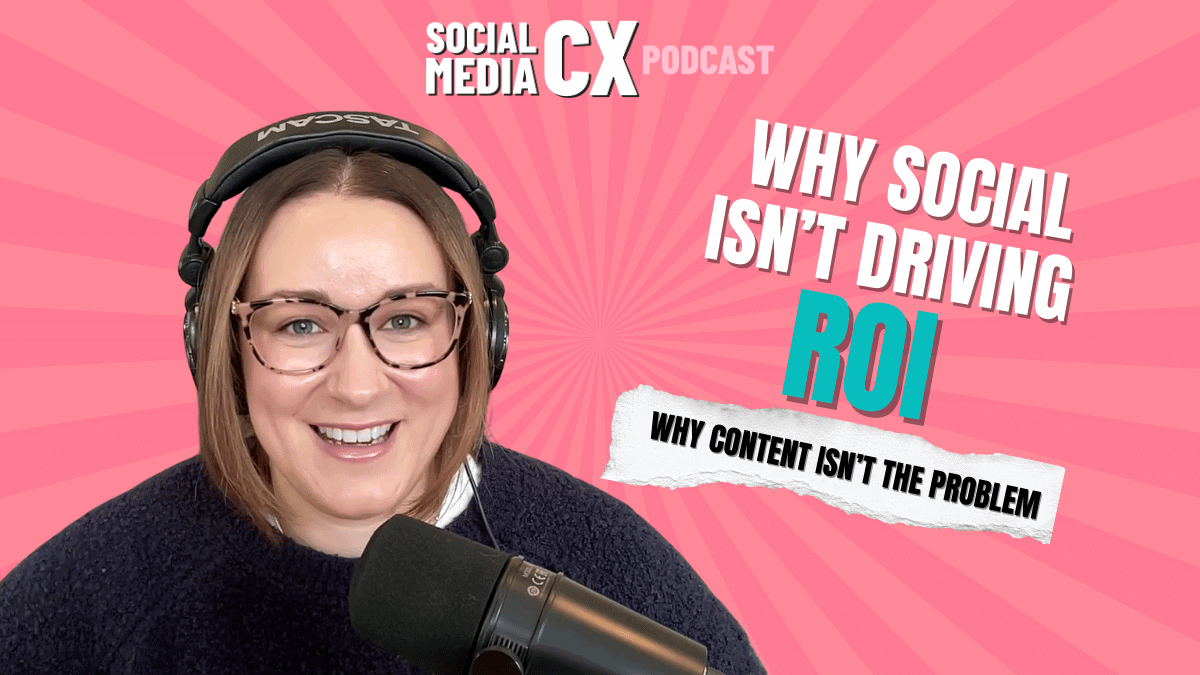
Table of Contents
If your social strategy feels stuck, your content probably isn’t the reason why.
If your team is posting consistently, following best practices, and still not seeing meaningful results, content isn’t the issue. The real problem is that most brands are still using social media like a broadcast channel, while customers are using it for sales, service, and trust-building moments.
That disconnect is costing brands loyalty, revenue, and relevance.
The Social Media Strategy Mistake Most Brands Still Make
One of the most common questions social teams ask is, “What should we be posting right now?” Closely followed by, “How often?” and “What does the algorithm want this week?”
Those questions assume content is the main lever for success.
But customers don’t experience brands through posting calendars. They experience them through interactions.
When brands treat social as a one-way publishing channel, they miss what customers are actually using it for: asking questions, expressing frustration, seeking reassurance, and making buying decisions in real time.
Why Conversations Matter More Than Content
In today’s experience economy, content alone doesn’t build loyalty. Conversations do.
Social media has become the front door to brand experience. Long before someone clicks “buy,” they’re testing trust in comments, replies, and DMs.
With a quick sizing question, a shipping concern, or even confused or frustrated replies. These moments shape perception far more than a polished post ever could.
Customers Don’t Experience Campaigns. They Experience Moments.
Customers don’t think in terms of campaigns. They remember moments.
- How fast you respond.
- How human your reply feels.
- Whether you actually listen.
Every interaction is a micro-experience, and those experiences stack up quickly.
Why We Skipped the 2025 State of Social Care Report
Social care didn’t evolve slowly in 2025. It shifted rapidly.
By the time a traditional “look back” report would’ve been released, the insights were already outdated. Instead of documenting the past, we choose to focus on what’s happening now and where social care is headed next.
This decision reflects the reality brands are facing: customer expectations are changing faster than most organizations can keep up.
The Experience Gap Brands Can’t Ignore
Despite years of data showing the impact of customer experience, many brands still under-resource social care.
- They post.
- They monitor mentions.
- They respond occasionally.
But intentional, structured social care, actually delivering real customer experience through social conversations, is still treated as optional. This creates what we call the experience gap: the widening distance between what customers expect and what brands consistently deliver.
Customer Experience Is at an All-Time Low
According to Forrester’s CX Index, customer experience quality has declined for four consecutive years and is now at an all-time low.
That doesn’t mean brands don’t care. It means they’re still operating with models built for tickets, not conversations. Efficiency, not emotion. Publishing, not presence.
The Cost of Ignored Conversations
Every ignored comment, canned response, or delayed reply creates a small fracture in trust.
Trust rarely breaks in one dramatic moment. It erodes quietly, one interaction at a time. These micro-fractures do hurt sentiment. They also impact retention, loyalty, and long-term revenue.
This is why social care isn’t a support function or a cost center. When done well, it becomes a growth engine.
What the Data Says About Growth
Research from Forrester shows that companies excelling in both brand experience and customer experience grow revenue up to 3.5 times faster than those that don’t.
That’s not a vanity metric. That’s real business impact.
When teams say they “can’t prove social ROI,” what they often mean is they’re measuring social like a publishing channel instead of an experience channel.
The Key Mindset Shifts for Social Strategy in 2026
As social care continues to evolve, several mindset shifts are becoming unavoidable.
From Content to Conversations
Content used to be the currency of social media. Now, conversations are.
- Reach doesn’t equal trust.
- Virality doesn’t equal loyalty.
- The real value is created in replies, not impressions.
From Support to Experience
Social conversations aren’t just about resolving issues. They’re about shaping how customers feel.
When teams treat social interactions as experiences rather than as tickets to close, they unlock growth AND efficiency.
From Automation to Augmentation
Automation has its place, but it can’t replace human connection.
The goal isn’t to automate experience out of social spaces. It’s to augment teams so they can show up faster, smarter, and more human when it matters most.
From Metrics to Meaning
Metrics still matter, but meaning matters more.
- Intent.
- Context.
- Emotion.
Loyalty forms in the conversation, not the dashboard.
Where Real Social ROI Comes From
When social care is done well, brands see measurable impact:
- Faster response times
- Increased retention
- Reduced churn
- Earlier visibility into pre-purchase intent
Those “quick questions” customers ask on social are often buying signals. Showing up in those moments influences revenue long before a transaction occurs.
This is how social becomes a revenue-influencing channel, not just a content one.
What Comes Next
Over the coming weeks, we’ll continue breaking down insights from the State of Social Care Report 2026, including:
- Why AI without empathy creates risk
- Why social listening deserves a seat at the leadership table
- Why doing social care right is hard, but unavoidable
Conversation Is the New CX
If content defined the campaign era, conversation defines the connection era.
Social care is where that connection is either built or broken.
How is your brand showing up in the moments that matter most? Let us know in the comments section below!
Listen to the episode, now:
FAQs About Content And Your Social Strategy
1. Is my social strategy failing because of bad content? No, if you are posting consistently and following best practices, weak content usually is not the core problem in your social strategy. The bigger issue is treating social media like a one-way broadcast channel while customers are trying to use it for sales questions, support, and trust-building conversations.
2. How can I make my social strategy more conversation-first? Shift your social strategy from “What should we post?” to “How can we show up in comments, replies, and DMs when it matters most?”. Prioritize fast, human, and helpful responses to questions, concerns, and buying signals so that every interaction becomes a small but meaningful customer experience moment. Check out our Talkworthy Content course to build a bulletproof strategy!
3. What does a good social strategy for customer experience look like? A strong social strategy for customer experience treats every interaction as a micro-experience that either builds or breaks trust. That means structured social care, clear ownership for responding, and workflows that support ongoing conversations instead of just closing tickets.
4. How do I measure ROI from a conversation-led social strategy? Instead of only tracking impressions and reach, a conversation-led social strategy measures things like response time, resolved issues, repeat purchases, retention, and reduced churn. As social care improves, brands typically see earlier visibility into purchase intent and faster revenue growth compared with companies that only optimize for publishing metrics.
5. What mindset shifts are essential for a modern social strategy? Modern social strategy requires shifting from content to conversations, from support to full experience, and from pure automation to human-augmented interactions. Teams that focus on intent, context, and emotion in social conversations build more loyalty than those who only chase algorithms and viral reach.
Read the Transcript
[00:00:00] Content isn’t the real problem with your social strategy
If you are a digital marketer who’s felt the frustration of doing all the right things on social, yet still struggling to improve impact, this series is for you.
Brooke Sellas: Welcome to the Social Media CX podcast. I’m Brooke Sellas, CEO of B Squared Media. And each week we’ll tackle the challenges of social care head on with candidate interviews, real world case studies and actionable advice to turn your social channels into loyalty building revenue driving, dopamine machines.
[00:00:45] Treating social like a broadcast
Let me start with something I hear all the time. What should we be posting right now? How often do we need to be posting? What’s the algorithm rewarding this week? Everyone wants to talk about content when it comes to social media, but here’s the uncomfortable truth, the real problem with social media today, right now, isn’t content. It’s that most companies are still treating social like a broadcast channel while their customers are using it as a sales and support channel. So when brands finally acknowledge that conversations matter on social, oftentimes they try to automate their way through them, or they rely too heavily on AI to replace the “human work.”
That disconnect between how brands use social and how customers actually experience it is what this episode is all about.
[00:01:47] Why we skipped the 2025 State of Social Care Report
And it’s also why we’ve been working on something really big behind the scenes, which is our State of Social Care Report 2026. Which we’ll be publishing later this month.
Over the next few weeks, I’m gonna walk you through what we’re seeing and why it changes how we think and how you should think too about social media ROI entirely.
If you followed our report series before, you might notice something a little bit unusual with the upcoming report, which is that we skipped 2025 and that was intentional.
Normally, we produce the report at the beginning of the year, and we name it for last year. So the report will be coming out this month, January of 2026, and we would call it the State of Social 2025. But as I explain in the executive summary of the report, social care changed so fast in 2025 that by the time we would’ve released the report, the insights would’ve already been outdated. So instead of looking backwards, we decided to jump forward.
[00:02:49] Conversations > content
In 2026, one thing has become very clear in all of our research and client work, and that is content is no longer the digital currency that builds loyalty through social media. Conversations are. We’re operating in what we now call the experience economy, where people don’t judge brands by what they post, but how they show up when it matters. This is the shift that most organizations haven’t quite fully made yet.
[00:03:23] The shift in customer social media expectations
Customers don’t experience your brand in campaigns anymore. They experience you in moments. That could be a comment, a dm, a confused question, a frustrated reply, a pre-purchase question that sounds like: hey, quick question. Do you have this in my size? Or, do you ship to Canada? Whatever that looks like.
According to our report and research, social platforms have become the front door to brand experience, a place where customers test trust long before they ever click buy. You’ll find this clearly outlined in chapter one of the report, which is called the Evolution of Social Care. And our data, and outside data, supports this.
[00:04:12] What the data says about revenue growth
Forrester found that companies who excel across both brand experience and customer experience grow revenue up to 3.5 times faster than those who don’t. That is a lot of revenue to be had. There’s a big opportunity there. So when I hear teams say things like, we can’t prove social media ROI, what they often mean is we’re still measuring social like a publishing channel, not like an experience channel.
[00:04:43] Why most brands still miss the mark on social care
Here’s one of the most surprising things we uncovered while working on this report. Despite all this evidence, most brands still aren’t doing true social care. They’re posting, they’re monitoring mentions, they’re responding occasionally. But intentional, structured social care, the practice of delivering customer experience through social media conversations, is still undervalued and under-resourced. In chapter one, we also talk about what we call The Experience Gap, which is the widening distance between what your customers expect and what brands consistently deliver.
Forrester’s CX Index shows CX quality–and CX stands for customer experience– so customer experience quality has declined for four consecutive years, and it’s now sitting at an all time low.
Let that sink in if you work brand side, all time low customer experience has gone down for four consecutive years and it’s at an all time low.
Here’s the important nuance. It’s not that brands don’t care, it’s because they’re still operating with models that are built for tickets and not conversations. Efficiency and not emotion. Publishing and not actual presence.
[00:06:08] Micro-fractures of trust and missed conversations
Every ignored comment, every canned response, every delayed reply creates what we describe in the report as a micro fracture of trust.
You see, like any relationship, trust doesn’t usually break in one dramatic moment. Sometimes, but most of the time it erodes quietly, one interaction at a time. This is where I want you to pause and rethink how you’ve been taught to evaluate social media success. Social care isn’t support. It’s not a cost center.
When done the right way, it is a growth engine. Think back to that Forrester stat we just shared: 3.5 x faster growth for experience.
[00:06:59] Key mindset shifts for social in 2026
So in the 2026 at a glance section, you’ll find that we outline the biggest shifts that are happening right now. I’m gonna give those to you as well.
Number one is that it used to be about content, content, content, content.
We think of that synonymously when we think about social media. Now it’s about conversations.
We used to think about those conversations as support, right? We’re helping solve problems. Somebody’s angry about something, but we need to shift that mindset from support to experience. This is all about experience, and we know if we treat it like it’s an experience, we could have growth. Big growth. 3.5 x more growth.
We also tend to think about automating as much as we can when it comes to social media because there’s not enough time in the day, and we have all these other things to do, but we need to stop thinking about automating our way into these experience spaces and start thinking about how we can augment these spaces.
And finally, yes, metrics are important. I’m not saying that, so don’t come for me, but instead of solely being focused on metrics, we need to start thinking about meaning; the meaning behind these conversations. The intent behind these conversations. In plain language, the loyalty of your customers forms in the replies on social media, not through reach, not through viral content.
It’s literally happening in the experience. And when social care is done well, your response times improve. We’ve seen retention increase. We’ve seen churn decrease.
We’ve seen pre-purchase intent surfacing earlier and earlier. Pre-purchase intent just means they’re asking questions in that buying moment. They’re in that moment of zero truth that we used to call it forever ago when Google coined the term, but they’re in that moment If we can help them in that moment the research shows that that person’s more likely to buy from us.
[00:08:59] The real ROI of social media
And when you think about all this, social becomes a revenue influencing channel, not just a channel for content. That is how you get to return investment or ROI on social media. And this is how, hopefully you will do this in 2026.
If you are a digital marketer who’s felt the frustration of doing all the right things on social, yet still struggling to improve impact, this series is for you.
Over the next few weeks, I’ll be breaking down the report and we’ll be talking about things like why AI without empathy creates risk. Why social listening deserves a seat at the leadership table. And why doing social care right is hard, but unavoidable. All of it’s drawn from the state of Social Care Report 2026, which again, we’ll be publishing later this month, and by the time it’s released, you’ll already understand why we wrote it, what’s inside, and how to use it to rethink your social strategy.
We also have some really cool playbooks within the pages of the report. So stick with me.
[00:10:12] Conversation as the new CX
Until then, remember if content was the campaign era, conversation is the connection era, and social care is where that connection is either built or broken.
As always, thank you so much for being here. If this show is helping you think differently about customer experience, I would absolutely love your support. Please take a minute to rate and review the review at ratethispodcast.com/smcx, that’s CX as in customer experience. When you do this, it helps us bring on more brilliant voices and keeps this community growing with intention.
Until next time, think conversation, not campaign.
Brooke Sellas: Thanks for tuning in to the Social Media CX podcast. If you loved today’s episode, don’t forget to subscribe, leave a review and share it with someone who needs to up their social care game.
Want to hear the full conversation? Listen to the Social Media CX Podcast on YouTube. And if your team is thinking about what responsible social listening in banking or financial services actually looks like at scale, check out the State of Social Care Report 2026.
Finally, as always, Think conversation, not campaign.™
The following two tabs change content below.

Brooke B. Sellas is an award-winning Customer Marketing Strategist and the CEO & Founder of B Squared Media. Her book, Conversations That Connect has been recognized nationally and is required reading for a Customer Experience class at NSU.
Brooke's influence in digital marketing is not just about her accomplishments but also about her unwavering commitment to elevating the industry standard of digital customer experience and customer marketing.
Latest posts by Brooke B. Sellas (See All)
- You’re Treating Business Intelligence Like Social Engagement - August 19, 2026
- Your Customer Complaints Are Shaping What AI Says About Your Brand - August 12, 2026
- The Customer Signals Hidden Inside Your Social Care Data - August 5, 2026

Written by award-winning strategist Brooke Sellas, this weekly 5-minute power-up will help you turn social interactions into loyalty, retention, and revenue.
Category: Social Strategy
Written by award-winning strategist Brooke Sellas, this weekly 5-minute power-up will help you turn social interactions into loyalty, retention, and revenue.
Share this article: