
Blog » Social Care »
Social Care: The Lie Brands Tell Themselves
Table of Contents
The fastest way brands lose revenue on social media isn’t bad content or low reach. It’s mislabeling intent.
When teams treat social care questions as support tickets, they quietly ignore some of the most valuable trust signals in the customer journey. That assumption is costing brands more than they realize.
Social care, done right, is the answer.
Why “That’s Just a Support Issue” Is So Expensive
There’s a phrase that sounds harmless inside many organizations: “That’s just a support issue.”
- It shows up when someone asks a question in the comments.
- When a DM arrives before a purchase.
- When a customer asks, “Is this right for me?”
On the surface, it seems logical. But labeling these moments as reactive support pushes them to the bottom of the priority list. And in doing so, brands miss what’s actually happening.
Most of these questions aren’t complaints. In fact, they’re trust checks.
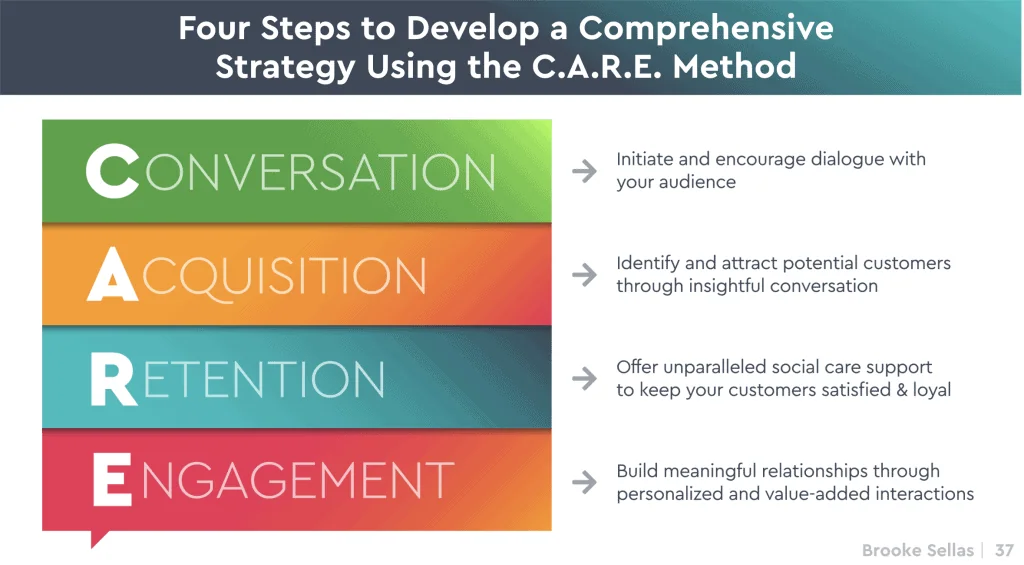
[Source: My LinkedIn Learning Course]
Social Care Happens Earlier Than You Think
For years, organizations have designed customer journeys as neat, linear paths.
Awareness → Consideration → Purchase → Support
Social care was slotted firmly at the end. After the sale. After any concerns or “damage control.” But customer journeys don’t work like that anymore.
Today, customers ask questions publicly. They validate decisions socially. Human beings look for reassurance before they ever convert. They don’t separate sales from support. They’re simply asking to be acknowledged and helped.
Customers have one burning question when it comes to choosing a brand. That question? Can I trust you?
Sprout Social digs even deeper into how social conversations influence business outcomes, in their article, The Impact of Social Media Across Every Part of Your Business.
Conversation Is the New Front Door
In our 2026 State of Social Care Report (available soon), this shift shows up again and again.
Journeys are moving upstream into conversation. Comments, replies, and DMs are no longer post-purchase cleanup. They’re pre-purchase decision moments. Social media is much more than a conversation channel, it plays a key role in the customer journey.
When brands miss that, they don’t lose revenue loudly. They lose it silently.
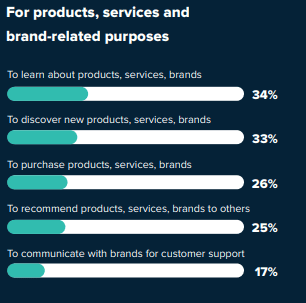
[Image Source: Porch Group Media]
A Social Care Case Study That Changed Everything
To understand how often this happens, we conducted a 90-day intent tagging analysis for Brother International.
Across four product divisions, every inbound social conversation was manually tagged using intent-based categories, including:
- Feature and specification questions
- Pricing inquiries
- Product comparisons
- “Where to buy” questions
- Explicit purchase intent
What we found surprised everyone.
What Intent Tagging Revealed
Between 50% and nearly 80% of all inbound social conversations were revenue-adjacent.
Let that sink in. Most of what had been treated as support was actually pre-purchase trust-building. In one division alone, nearly 80% of conversations signaled active consideration.
These weren’t broken products or frustrated customers. They were shoppers standing in the digital aisle asking: “Is this the right one?”
These Questions Were Always There
Nothing new suddenly appeared in the comments. The conversations didn’t change. What did change? Visibility.
Without intent tagging, these moments blended into general support. Once tagged, the pattern became impossible to ignore.
Revenue opportunities weren’t missing. They weren’t being recognized or followed up.
What Pre-Purchase Intent Actually Sounds Like
Pre-purchase questions don’t announce themselves as sales leads.
They sound like:
- “Does this work wirelessly with my Mac?”
- “Is this better for a small business or home use?”
- “Where can I buy this today?”
- “I had issues with my last printer. Will this fix that?”
When these questions are routed like tickets or measured only on speed, opportunity slips away quietly. You won’t see complaints. There are no escalations.
Instead, that prospect, that potential customer, moves down their list looking for the next brand who will respond correctly.
The Real Cost of Mislabeling Intent
When teams treat social care purely as a cost center, success is measured by speed, volume, and resolution. What’s missing is influence, trust, and revenue protection.
Your customer care and support teams are already doing this work. But, they’re just not being credited for the outcome.
Want to learn more about using social listening as a revenue-driving signal? Check out these 2025 social media trends from Hootsuite.
Social Care Is a Trust Engine
Social care is NOT post-purchase cleanup. It’s pre-purchase trust. And trust is what converts prospects into customers, and customers into repeat customers.
When brands adopt this mindset, several things change almost immediately.
- Pre-Purchase Questions Get Priority: Questions that signal consideration are no longer buried. They’re recognized as decision moments.
- Teams Collaborate Instead of Competing: Care, marketing, and sales stop operating in silos. They support the same outcome.
- Social Becomes Revenue-Influencing Infrastructure: Not a reactive channel. Not an afterthought. An asset!
Try This 7-Day Social Intent Experiment
For the next seven days, tag every social question that sounds like:
- “Does this…”
- “Can I…”
- “Is this right for…”
Then ask yourself two questions. Were these treated like support tickets? Or recognized as revenue opportunities?
You don’t need new dashboards. And you don’t need to invest in new software. You do need to train your team to recognize what’s sitting right in front of them, going untagged and lacking response.
Most teams are shocked by how much acquisition intent they’ve been sitting on without realizing it.
Social Care Repair: What To Do Next
If this reframing feels uncomfortable, that’s a good sign. It’s time to take the next steps.
It all starts with the same shift. Conversation and trust must be the primary focus. Only then can revenue, and possibly repeat revenue, follow.
What signals are you currently labeling as “just support,” and what might change if you looked at them differently? Let us know in the comments!
Listen to the episode, now:
FAQ’s About Social Care Lies Brands Tell Themselves
1. Isn’t that just a support issue? Many brands tell themselves that social care is “just support,” so it gets pushed to the bottom of the priority list instead of treated as part of the revenue engine. In reality, a huge share of comments and DMs are not complaints at all, but pre-purchase trust checks that influence whether someone buys or quietly walks away.
2. If it’s in the DMs, it can’t be real revenue intent… right? Another lie is assuming that if a question shows up in DMs or comments, it is purely troubleshooting and not a buying signal. Questions like “Does this work with X?”, “Is this right for Y?”, or “Where can I buy this?” are classic examples of revenue-adjacent intent hiding inside social care queues.
3. Doesn’t social care only start AFTER the sale? Many teams still map social care to the end of the funnel, as if it only matters once something goes wrong post-purchase. Today, customers use social care upstream—to validate decisions, compare options, and test whether a brand will actually show up for them before they commit.
4. Isn’t a social care team a cost center, not a growth driver? Labeling social care as a pure cost center is another story brands tell themselves to justify under-resourcing it. When you properly tag intent, a large portion of “support” questions turn out to be revenue-adjacent conversations that protect pipeline, increase conversion, and prevent churn.
5. Won’t we need new tools to treat social care as revenue? Teams often insist they need new platforms and dashboards before they can treat social care as a revenue channel. In practice, even a simple 7-day experiment tagging “Does this…”, “Can I…”, and “Is this right for…?” questions will expose how much acquisition intent is already sitting in existing queues, unseen and uncredited.
Read the Transcript
[00:00:00] The Moment the Lie Collapsed
And this is the moment the lie collapsed for our client. Across four divisions, between 50 and nearly 80% of all inbound social conversations were revenue adjacent.
Brooke Sellas: Welcome to the Social Media CX podcast. I’m Brooke Sellas, CEO of B Squared Media. And each week we’ll tackle the challenges of social care head on with candidate interviews, real world case studies and actionable advice to turn your social channels into loyalty building revenue driving, dopamine machines.
[00:00:50] Why This Phrase Is a Costly Lie
I wanna start this episode with a sentence that sounds harmless, but quietly limits social media growth in a lot of organizations. Here it is. You ready? "That’s just a support issue."
We say it when a question shows up in the comments. We say it when someone dms before buying. We say it when a confused customer on social asks, is this right for me?
And on the surface it sounds reasonable, but here’s the lie we tell ourselves about social media customer care. That it’s reactive, that it’s downstream, that it’s something you deal with after the sale. When in reality, social care is often the earliest trust signal in the entire customer journey.
As we’ve been working on the State of Social Care Report for 2026, which we’ll be publishing later this month, this pattern kept showing up again and again.
Brands aren’t losing revenue because they don’t care. They’re losing revenue because they’re misclassifying intent.
[00:02:01] Customer Journeys Are No Longer Linear
Let’s talk about why this lie sticks. Most organizations are built around linear customer journeys: awareness, consideration, purchase, then support. Social care got slotted neatly at the end after the purchase, right?
But customer journeys don’t look like that anymore, y’all. In chapter one of the State of Social Care Report, we explain how journeys have moved upstream into conversation. Because today your customers ask questions publicly on social media. They validate their decisions socially based on the conversations and peer-to-peer recommendations that are happening there.
They look for reassurance before they convert. And they don’t label any of these moments as sales or support. They just wanna know, can I trust you? Are you going to help me?
[00:03:07] Brother International Case Study Breakdown
Let me show you what this looks like when a brand actually stops guessing and starts looking.
Recently we ran a 90 day intent tagging analysis for our client, Brother International. We looked at inbound social conversations across four of their product divisions. Over a 90 day period, we manually tagged every inbound social conversation using intent based categories.
These are things like: features and spec questions, price inquiries, product comparisons, where to buy questions and explicit purchase intent. You can see the full methodology in our state of social care report, by the way, but what we’ve found, surprised everyone.
[00:03:56] What Intent Tagging Revealed
And this is the moment the lie collapsed for our client. Across four divisions, between 50 and nearly 80% of all inbound social conversations were revenue adjacent.
Let me say that again. Most of what was being treated as support was actually pre-purchase trust building. In their SEWS division alone, nearly 80% of conversations signaled purchase consideration, price questions, comparisons, compatibility checks, and ready to buy statements.
Y’all, this is not troubleshooting for support. This is shoppers standing in the aisle, the digital aisle, if you were, asking, is this the right one? Is this right for me? And here’s the critical insight I want you to hear. Those conversations have always been there. They’re just not being recognized as sales intent.
[00:05:04] Real Examples of Missed Pre-Purchase Questions
This is what pre-purchase intent looks like in practice: "does this printer work wirelessly with my Mac?" "Is this better for a small business or home use?" "Where can I buy this today?" "I had issues with my last printer, will this one fix that?" Now, here’s where the lie becomes expensive. Because when those conversations are routed like tickets, measured on speed alone, or deprioritized because they’re not sales, quote unquote, revenue doesn’t disappear dramatically, it disappears silently.
You didn’t even know it was there. In the Brother analysis we showed that features and specs and price questions were confirmation before people were ready to buy. We also saw that where to buy questions were conversion moments. I mean, it sounds pretty obvious, right? And set up and usage barriers revealed both friction and opportunity to give our customers more content or more conversation, depending on their need.
[00:06:13] Why Most Teams Are Mislabeling Sales Signals
And yet without this intent tagging. Those signals would have remained invisible. Not because teams aren’t doing the work, by the way. It’s because the work is being mislabeled. What we’re calling support is sometimes actually, and many times actually in this case study, sales. That’s the lie in action.
When we treat social care just as support, "just support," we stop seeing intent even when it’s right in front of our faces. This is where the cost shows up. When a question goes unanswered on social, the customer doesn’t escalate. They don’t complain. They just disappear. They go ask your next competitor that same question, and then probably end up buying from them if they’re super helpful and valuable in their responses.
In our intent tagging and reporting, we show how this creates invisible revenue loss. Not because the product was wrong for them, not because the price was too expensive or not right. But because the moment of reassurance, that moment for connection and trust never came.
Here’s the part that really matters.
Care teams are already doing this work. They’re just not being credited for the outcome. When social care is framed as a cost center, teams are measured on things like speed, volume, rate of resolution. They’re not being measured on things like influence, trust, or revenue protection.
[00:07:59] Reframing Social Crare as a Trust Engine
Here’s the reframe we propose in the report. Social care isn’t just post-purchase cleanup, it’s pre-purchase trust. And trust is what converts. When brands reframe social care as a trust engine, a few things change near immediately. Pre-purchase questions are often prioritized. Let’s hope. Care teams collaborate with marketing and sales and support.
Social becomes a revenue influencing channel, not just a reactive one. And this, my friends, is how social care becomes an infrastructure and not just an output.
[00:08:43] 7-Day Tagging Challenge
I wanna give you something practical to try. Before you download anything, before you change tools, before you go pitch leadership. For the next seven days, tag every social question that sounds like, does this, can I, is this right for, and then ask yourself a couple of questions. Number one, were those people treated or those questions treated like support tickets? Or, were they routed to someone like a revenue opportunity? And yeah, you could route them or maybe your frontline team, social care, social media could answer them directly, whatever that looks like for you.
And that’s it. No dashboards, no new software, just visibility into what’s going on. Because most teams are shocked by how much acquisition intent they’ve been sitting on without realizing it.
If this episode made you uncomfortable in a good way, you’re not alone. This is one of the most common blind spots we uncovered while working on the State of Social Care report.
Again, publishing later this month. And if you want help making sense of what you find during your seven day experiment, you have two options. Number one, you can wait a little bit and download our state of social 2026 report.
Or number two, you can request a 30 minute free consultation with me, which you can find on our website at B Squared Media. Or you can find these links in the show notes, which are live on YouTube under the episode. So if you’re listening to this on your favorite platform, head on over to YouTube B Squared Media.
And under this episode, you’ll have the transcript. That’s where all the links and the show notes are. You can also head over to the B Squared media blog, where all of our episodes will now be published on the blog. I’ll put those links in the show notes as well.
As always, folks, if this show is helping you think differently about social media marketing, please rate and review us.
Just head on over to ratethispodcast.com/smcx. That’s social media, the letter C, and the letter X as an x-ray.
When you do this, it helps bring these ideas to more social media pros across the globe and helps our community grow with intention. Until next time, think conversation, not campaign.
Brooke Sellas: Thanks for tuning in to the Social Media CX podcast. If you loved today’s episode, don’t forget to subscribe, leave a review and share it with someone who needs to up their social care game.