Most social care teams are not failing.
They react as fast as they can inside systems that do not help them win.
That distinction matters because the future of social care is not about responding faster; it is about seeing issues earlier and preventing the most damaging moments before they spiral.
The Real Problem With Reactive Social Care
Reactive social care looks productive on the surface:
- Messages answered.
- Tickets closed.
- Response times tracked.
But underneath that activity is a pattern that quietly erodes trust, team morale, and long-term impact.
Customers often reach out on social only after frustration has already built. By the time they post publicly, the emotional moment has already peaked. Teams respond quickly, but they still arrive late in the cycle. Even quick replies feel misaligned when empathy arrives after patience has gone.
When teams capture insights at all, they usually log them long after the moment has passed. Monthly or quarterly reporting increases the distance between what customers experienced and when leadership hears about it. This disconnect carries real consequences. People inside the organization see social as helpful but not strategic, and valuable signals surface too late to change outcomes.
And the result is not just customer dissatisfaction. It shows up as churn risk, repeated escalations, and teams stuck in constant defense mode. This is not a people problem.
It is a timing problem.
Faster Responses Are Not the Future, Predictive Social Care Is!
When social care struggles, the instinctive solution is speed.
- More coverage.
- Higher headcount.
- Faster replies.
But faster reactions do not undo damage that is already in motion.
Once frustration becomes public, trust erosion has often already begun. Silence after engagement can signal a customer who has quietly churned. Escalations repeat because root causes were never addressed upstream.
The future of social care is not faster reactions. It is earlier awareness, driven by recognizing early signals of customer expectations on social.
It’s ready and full of social care insights. Download The State Of Social Care 2026 now!
What Predictive Social Care Actually Means
Predictive social care is often misunderstood. It is not about replacing humans with AI or guessing what customers want. It is not about futuristic command centers or complex dashboards designed to impress leadership.
Predictive care is about recognizing patterns early, while there is still time to act.
In practice, this means paying attention to repeated questions that point to confusion in the customer journey. It means noticing subtle language shifts that signal frustration before complaints are formally lodged. It also means recognizing when engagement drops off after an interaction, a common precursor to churn that is easy to miss if teams are only tracking volume and speed.
Predictive care is not about prediction in the abstract. It is about prevention rooted in real customer behavior.
The Early Warning Signals Most Teams Miss
High-performing social care teams learn to spot signals that others overlook.
- Product-related issues often surface on social days or even weeks before support tickets spike.
- Delivery questions cluster before broader dissatisfaction emerges.
- Policy confusion shows up in comments long before formal complaints arrive.
These moments are much more than anomalies. They are early warnings.
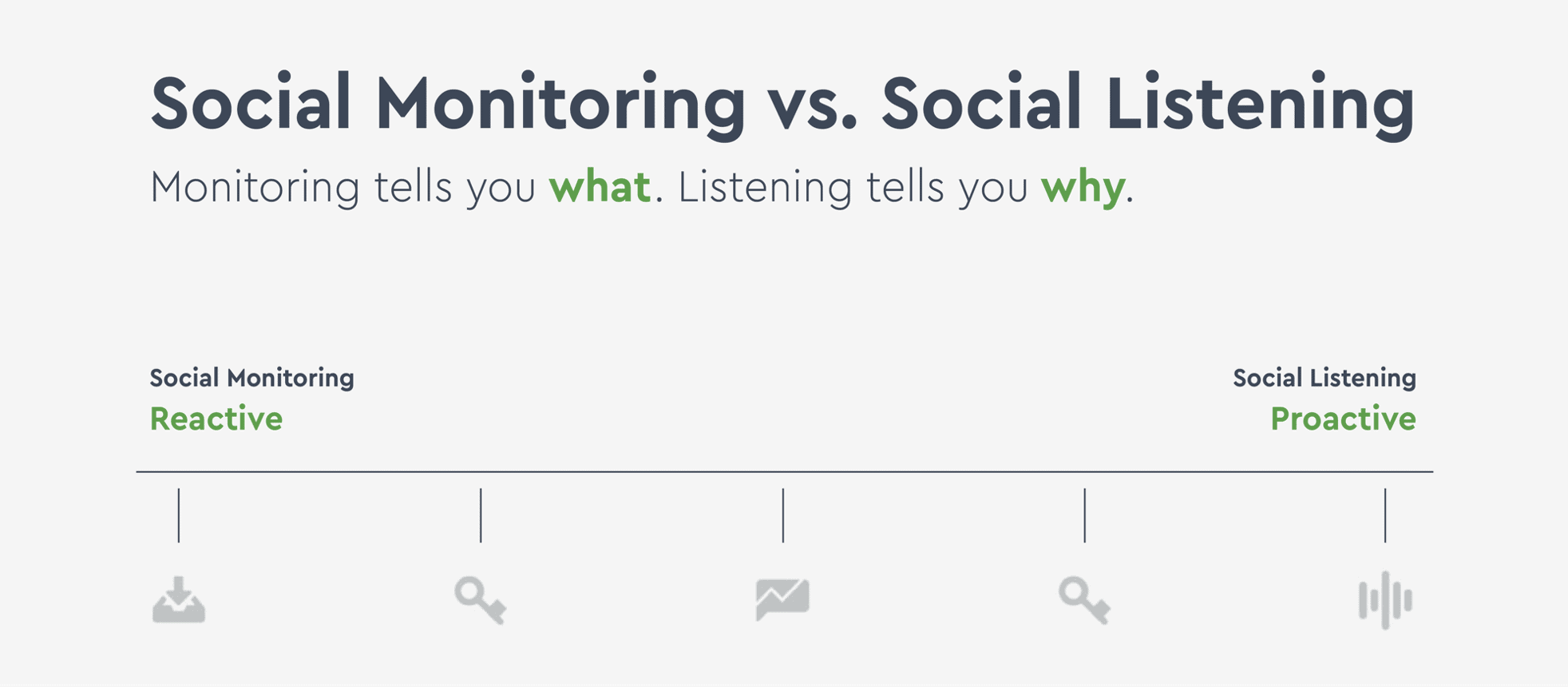
When teams are trained to identify and interpret these patterns with social listening, social care stops being a reactive cleanup and becomes an intelligence system. This shift does not require more tools. It does require a different way of listening.
From Reporting to Real-Time Insight Loops
Too many organizations treat social insights as reports. Data is gathered, summarized, and shared long after decisions have already been made.
High-performing teams do something much simpler and far more effective. They run weekly “what we heard” loops. These are not dashboards or slide decks.
They are focused conversations built around three questions:
What Are Customers Asking Repeatedly?
Repeated questions are rarely about convenience alone. They point to friction, confusion, or gaps in messaging.
What Are Customers Worried About?
Concerns often surface indirectly. Tone, phrasing, and hesitation matter just as much as explicit complaints.
What Are Customers Hinting At But Not Saying Out Loud?
The most important signals stay implied, and predictive care begins when teams learn to hear what customers leave unsaid.
Social teams share these insights with product, marketing, customer support, operations, and leadership, bringing everyone into the loop so social care becomes truly strategic.

Burnout Is About Ineffectiveness, Not Volume
Message volume is often blamed. But volume alone is rarely the root cause.
Exhaustion sets in when teams solve the same problems repeatedly. When issues escalate again and again. You share insights, but nothing changes.
That sense of ineffectiveness is what wears teams down.
Predictive systems change that dynamic as teams prevent issues instead of endlessly resolving them, act on insights, and actively acknowledge and address patterns.
Work becomes purposeful again. Not easier, but sustainable.
Scaling Without Adding More Headcount
One of the clearest findings from recent social care research is that teams are hitting a capacity ceiling.
Adding more people does not fix this long-term. Volume will always grow faster than headcount.
Predictive care shifts the question from “How do we respond to everything?” to “How do we prevent the most damaging moments from happening at all?”
By addressing issues upstream, teams reduce unnecessary volume downstream. Impact increases without requiring constant expansion.
This is how you scale social care with intelligence, not just output.
Try This Simple Four Week Shift Toward Predictive Care
Overhauling your entire system isn’t necessary. Instead, focus on consistency and visibility.
For four weeks, summarize what customers are asking, fearing, or hinting at on social. Share those insights weekly, outside your team. Then observe what happens.
- Do product teams adjust?
- Does marketing refine messaging?
- Does leadership ask follow up questions?
If nothing changes, you haven’t failed. You’ve gained clarity. And identified exactly where predictive social care breaks down in your organization.
Where to Go Next
If predictive care resonates, the next step is understanding your current maturity.
You can also explore broader industry benchmarks and frameworks that outline what proactive social care looks like in practice.
The choice is not whether social care will continue. It is whether it remains reactive or becomes one of the most intelligent systems your organization has. That decision changes everything.
What signals are you seeing on social right now that your organization may be reacting to too late? Let us know in the comments section below!
Listen to the episode, now:
FAQs About Predictive Social Care
1. What is predictive social care, and how is it different from reactive social care? Predictive social care is a social support model that focuses on spotting early warning signals in customer conversations so teams can prevent issues before they escalate into public frustration or churn. Reactive social care teams answer incoming messages quickly, close tickets, and track response times after customers are already upset. This often means trust has already started to erode.
2. Why are faster response times not enough without predictive social care? Faster responses still arrive late if the customer only reaches out after frustration has built, so even a rapid reply can feel misaligned once patience is gone. Without predictive social care to catch patterns and root causes earlier, teams stay stuck in a cycle of repeated escalations and constant defense, which increases churn risk and stress on the team.
3. What signals should teams track to make predictive social care work in practice? Teams practicing predictive social care watch for repeated questions, clustered delivery or product issues, policy confusion in comments, and subtle language shifts that show frustration before formal complaints appear. They also pay attention when engagement drops off after an interaction, since that often signals quiet churn that standard volume and speed reports miss.
4. How can we start moving from reactive support to predictive social care in just a few weeks? A simple starting point is to run a four-week “what we heard” loop where the social team summarizes what customers are asking, fearing, and hinting at each week, then shares those insights beyond social. This lightweight predictive social care practice helps product, marketing, operations, and leadership see early signals in time to adjust messaging, fix friction, and prevent repeat issues.
5. How does predictive social care reduce burnout and help us scale without endless headcount growth? Burnout often comes from feeling ineffective, solving the same problems over and over, while nothing changes. Predictive social care shifts the work toward preventing issues and seeing upstream fixes actually land. By addressing the most damaging patterns early, predictive social care reduces avoidable volume downstream, allowing social teams to scale their impact without having to endlessly add people.

Latest posts by Brooke B. Sellas (See All)
- Customer Experience Truths Happen In Real Time - February 4, 2026
- Social Listening: The Problem Isn’t Your Tools! - January 28, 2026
- Predictive Social Care: The Mindset Shift Most Teams Need! - January 21, 2026