What AI Search Is Learning From Your Angry Customers
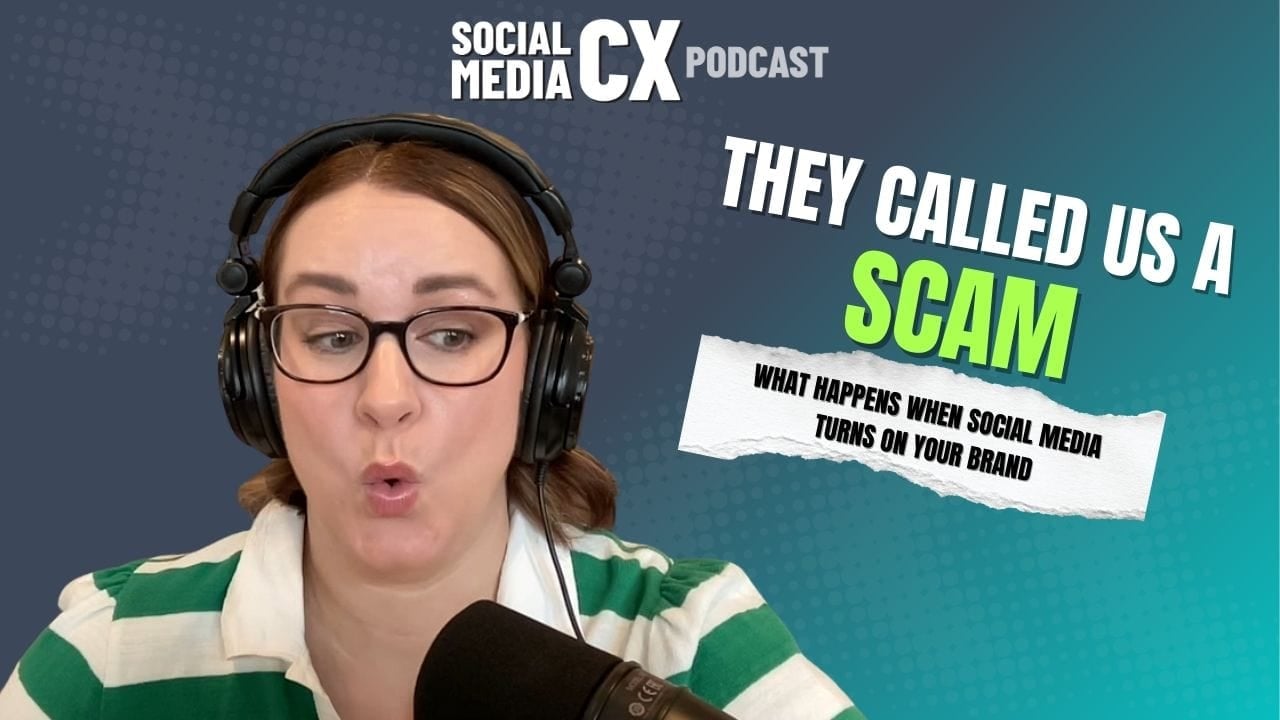
Table of Contents
One frustrated customer can now shape how AI talks about your brand.
That sounds dramatic, but it is already happening.
Every public complaint, unanswered review, Reddit thread, or social media accusation becomes part of your digital reputation footprint. Increasingly, AI search engines and large language models use that information to form responses about your company.
That means customer experience is no longer just a support issue. It is now a visibility issue, a trust issue, and a reputation management issue.
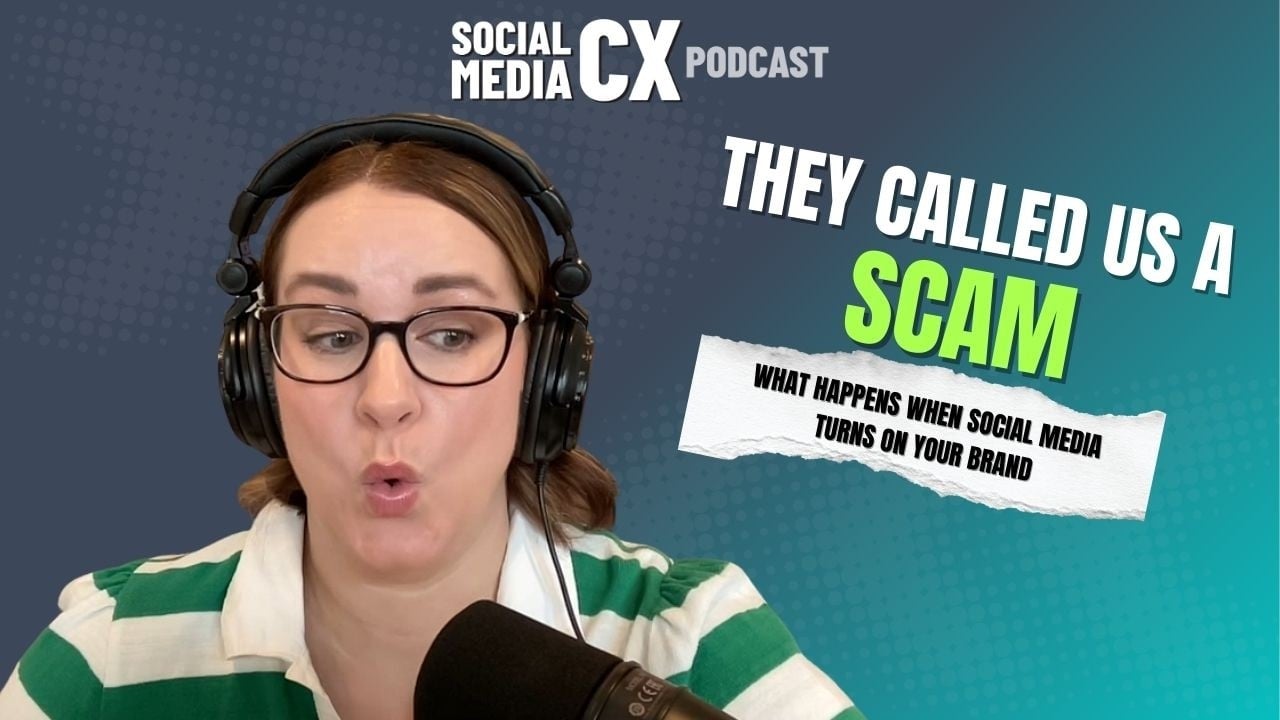
In a recent episode of the Social Media CX Podcast, Brooke Sellas spoke with Katie Robbert, CEO and co-founder of Trust Insights, about a real situation where someone publicly accused her company of being a scam across social media channels.
The catch?
The customer had the wrong company.
Still, the situation reveals something much bigger that enterprise leaders need to understand.
A Public Complaint Can Escalate Fast
The issue started when Trust Insights suddenly saw an unusual spike in social media notifications.
“One day all of a sudden our social media notifications started blowing up,” Katie explained. “That to me was already a red flag. It was an anomaly in our data.”
A frustrated customer began posting comments across multiple social media channels accusing Trust Insights of stealing money and ignoring cancellation requests.
At first, the team assumed the customer was confused. They started removing the comments because the accusations did not apply to their business.
Then the situation escalated.
The customer became even more frustrated and continued posting publicly.
This is where many brands make a critical mistake.
They assume that because a complaint is inaccurate, unfair, or directed at the wrong company, it can safely be ignored.
That assumption is dangerous.
Silence Still Communicates Something
The customer was not trying to destroy Trust Insights.
She was trying to get someone to respond.
As Brooke Sellas explained during the conversation:
“When people feel ignored, they escalate publicly.”
That is exactly what happened.
The customer had been trying to resolve an issue with another company called Trust Insights Overseas. She confused the businesses and directed her frustration toward the wrong brand.
Katie could have ignored the comments.
She could have blocked the user.
She could have focused only on protecting the company.
Instead, she chose to listen.
“I can totally understand your frustration,” Katie told the customer. “I’ve been in your shoes.”
That response changed everything.
The Human Response De-Escalated the Situation
Before contacting the customer, Katie’s team reviewed their CRM systems, subscriptions, and internal records to confirm the person was not actually a customer.
Then Katie personally stepped into the conversation.
She did not focus on proving the customer wrong.
She focused on making the customer feel heard.
That distinction matters.
Too many brands approach public complaints like courtroom arguments. The goal becomes defending the company instead of resolving the emotional tension behind the complaint.
Katie took the opposite approach.
“I wanted to build that trust with her so that I could really get to the root of what was going on,” she said.
Eventually, the customer realized she had confused the companies. She apologized, removed the negative social media comments, and even updated her one-star review to five stars.
But the bigger lesson was not about reviews.
It was about reputation.
AI Search Is Changing Reputation Management
This is where the conversation became especially important for enterprise leaders.
Today, AI search systems do not just read your website.
They read reviews.
They read public complaints.
They read forums and social conversations.
They read everything.
Katie explained it clearly:
“The machines are reading your reviews now.”
That single sentence changes how brands need to think about customer experience.
A negative review no longer stays isolated on Yelp or Google Reviews. It becomes part of the information ecosystem feeding AI-generated answers.
Imagine a potential customer asking ChatGPT:
“Tell me about this company.”
If unresolved complaints, accusations, or defensive responses dominate your digital footprint, AI systems can surface those signals immediately.
That creates a serious reputation management problem.
Why Defensive Responses Hurt Brand Trust
Many brands believe responding aggressively protects their reputation.
In reality, defensive responses often create more damage.
Katie compared it to reading restaurant reviews online.
Sometimes a business owner responds emotionally to criticism and attacks the customer directly.
That reaction changes how people perceive the brand.
“The second I see that defensive response, I don’t want to go there,” Katie said.
Customers are not only evaluating the complaint itself.
They are evaluating how your company behaves under pressure.
That is why public digital channels have become trust signals.
People are watching how brands respond in difficult moments.
AI systems are watching too.
AI Should Not Replace Human Judgment
Another major issue surfaced during the conversation.
Many organizations are rapidly automating customer service with AI chatbots and support systems. However, they fail to create escalation paths when frustration increases.
Katie warned that companies often treat AI as a complete replacement for customer support teams.
That creates blind spots.
“You need to be looking out for what those anomalies, those signals are in the data,” she explained.
For example:
- repeated support requests
- multiple unresolved tickets
- repeated chatbot interactions
- escalating sentiment on social media
Those are warning signs.
They signal that automation is failing to solve the real problem.
Without human intervention, frustration grows publicly.
Eventually, the brand pays the price.
Customer Experience Is Now a Visibility Strategy
This is the shift many organizations still underestimate.
Customer experience does not only affect retention anymore.
It affects discoverability.
It affects AI search visibility.
It affects trust before a buyer ever speaks to your team.
Every ignored complaint becomes a potential data point for AI systems.
Every thoughtful response becomes a trust-building moment.
As Brooke Sellas said during the episode:
“Silence is never neutral.”
That may be the most important takeaway for brands entering the AI search era.
What Enterprise Leaders Should Do Next
If your organization is investing heavily in AI, automation, or digital customer experience, this conversation raises an important question:
Are you creating systems that resolve frustration or simply hide it?
The companies that succeed in this next era will not be the brands with the most automation.
They will be the brands that combine automation with empathy, responsiveness, and human judgment.
Because in a world where AI summarizes your reputation instantly, trust becomes visible everywhere.
And once AI learns something negative about your brand, it becomes much harder to undo.
If your team is navigating social customer care, reputation management, or AI-driven customer experience challenges, schedule a free consultation with B Squared Media.
Read the Transcript
[00:00:00] Someone called our company a scam
Katie Robbert, CEO Trust Insights: One day all of a sudden our social media notifications started blowing up. So that to me was already, you know, a red flag. It was an anomaly in our data. A social media user took the opportunity to comment on every channel, on every one of those posts that Trust Insights was a scam. They steal money.
Brooke Sellas | @brookesellas: This March, we’re doing something a little different. We’re launching a special series called CX under Pressure. Four Conversations exploring what’s really shaping customer experience in 2026 from AI and automation to reputation risk. The human side of empathy.
We’re looking at what happens when trust is tested and what separates brands that react from brands that lead. have a brand that’s leading today, so let’s get into it. Before we get into the story, I want to set the stage for my friend Katie. I’m joined by Katie Robbert.
She is the co-founder and CEO of Trust Insights, which is a data science and analytics consultancy that helps organizations make smarter decisions with AI, marketing, analytics, and predictive modeling. Katie’s work sits at the intersection of data trust and strategy.
She spends her time helping brands understand that their data is actually telling them something, and more important. What it’s not telling them. And that’s exactly why I wanted to have this conversation with her. Katie, my friend Katie, welcome to the show.
Katie Robbert, CEO Trust Insights: Hey Brooke. Thank you for having me. I’m so excited.
Brooke Sellas | @brookesellas: I am so excited, and it just is fortuitous, I guess that this, this unfortunate thing happened to you, but let’s, let’s get into it a little bit. Can you kind of tell everybody of what happened in your words?
[00:01:55] The social media accusations begin
Katie Robbert, CEO Trust Insights: Yeah, absolutely. So for those who don’t know, Trust Insights is a rather small B2B consultancy, so we operate large, but internally we’re small. We’re only four people, but we use a lot of AI and automation and all of those are really grounded in strong process and governance and all that good stuff.
So you know, color me surprised when one day all of a sudden our social media notifications started blowing up. So most, oh, well, I shouldn’t say most. A lot of B2B companies struggle with, what do I post on social media? We’re not consumer brands. We don’t know. So you know, we post our information on our selective channels.
We have a good social following, but we never go like viral or we never get a lot of notifications for anything. And quite honestly, that’s fine. It’s not one of our stronger channels. So that to me was already, you know, a red flag. It was an anomaly in our data.
One of the things that is my core responsibility is keeping an eye on any data anomalies, you know, for the business. And that was a huge anomaly of like, why am I suddenly seeing all these notifications? So what it was was across our account manager, Kelsey had posted something. I don’t remember exactly what the context was. It was about like our newsletter or something.
And a social media user took the opportunity to comment on every channel, on every one of those posts that Trust Insights was a scam. They steal money. She’s been trying to cancel her subscription for months and nobody has reached out to her. I’m gonna leave you a one star review on Yelp, which she totally did.
That we were a scam company and you know, so our account manager, you know, sort of took it up, took the initiative, and she started deleting negative comments because she was like, well, these don’t apply to us. This woman has the wrong company. And so she started deleting the negative comments and the social media user got even more angry, started messaging us, stop deleting my comments.
How dare you ignore me. And so that’s when, you know, as the CEO, I was like, okay.
Brooke Sellas | @brookesellas: Okay.
[00:04:06] Why reputation matters so much
Katie Robbert, CEO Trust Insights: I’m gonna go ahead and step in and try to find out what the story is because this, even though we’re a small company, brand reputation is everything. It’s everything, you know. So if you’re a small company, large company, you take one misstep in public.
People remember it forever. Like they have the receipts, they take the screenshots. You can delete things, but it lives in perpetuity forever. And we are not immune to that at all. Not like, not even in the slightest, but it was the first time we’ve ever had an incident like that happened.
Like people don’t leave Yelp reviews for our business. But when they search for things like Trust Insights in a search engine, you’re gonna see Google reviews, Yelp reviews, and if it’s gonna show up as one star reviews, that’s damaging.
Brooke Sellas | @brookesellas: It’s gonna hurt your credibility, yeah. What’s the old adage? You gain trust in drops and you lose it in buckets.
Katie Robbert, CEO Trust Insights: Mm-hmm. Absolutely.
Brooke Sellas | @brookesellas: You could have lost trust in buckets for something that really wasn’t even that you did, but what strikes me about your story isn’t the mistake, right? Mistakes happened.
Katie Robbert, CEO Trust Insights: Sure.
[00:05:19] Responding to a complaint that wasn’t ours
Brooke Sellas | @brookesellas: We’ve gotten a funny, bad review one time for a juice company, but whatever. My biggest thing about your story is your response a lot of companies would’ve seen this review and said, not our problem.
Katie Robbert, CEO Trust Insights: Right.
Brooke Sellas | @brookesellas: They would’ve left it, but you didn’t leave it. You reached out, you spoke with her directly, you listened. You helped her untangle the confusion.
Katie Robbert, CEO Trust Insights: Yep.
Brooke Sellas | @brookesellas: Though it wasn’t your mess to clean up.
Katie Robbert, CEO Trust Insights: No.
Brooke Sellas | @brookesellas: Explain that. Give me the why behind that, because I think a lot of people listening, a lot of companies listening would do exactly the opposite of what you just did.
Katie Robbert, CEO Trust Insights: And I totally understand that because it’s very easy to default to to the, well, she’s just mistaken. That’s not our problem. Let’s just keep deleting, blocking. And to be totally transparent, that was our first course of action. You know, Kelsey mentioned to me, she’s like hey, I’m gonna do this.
I’m like, that’s fine. It’s not our problem. She’s confused. But in seeing the tenacity of this social media user and her frustration increasing, she just wanted to talk to someone. And we’ve all been there, like, we’ve been through those like automated phone systems where you’re like standing in your kitchen, yelling into your phone operator, give me an operator, give me a, like that’s what she was basically doing on our social media channels.
So I put what I was working on aside and I was like, Hey, let me just step in. Let me see if I can at least understand like if we are in the wrong, ’cause we do offer subscriptions through our academy, but the thing that she was specifically stating, we don’t offer. So I just was like, let me just double check.
Let me just ask her like what is happening and prior to me going into that conversation, we had already checked all of our systems. We’d already checked our CRM, we’d already checked our LMS systems, like we’d already gone through every system to make sure she wasn’t in any of our systems. So I was like, all right, let me just go ahead and reach out to her.
[00:07:14] Realizing she had the wrong company
Katie Robbert, CEO Trust Insights: So I stepped in and I was like hey, I can see that you are very clearly trying to get ahold of one of us. You’ve gotten our attention. How can I help you? I wanna try to resolve this for you because human to human, like we’re struggling. You never know what someone else is going through. And she was choosing this as her outlet for whatever was going on, and she was like hey, you’ve been stealing money from me.
And I was like, okay, let me understand. I’ve run your name through all of our systems, we don’t have you. And then she was like, well, it could be under this name and it could be under this name. And she was basically, she was giving me like lists of her colleagues and so what ended up happening was she was trying to cancel a subscription for either herself or her colleague.
She didn’t know whose name it was under specifically, but their corporate credit credit card kept getting charged month over month, over month for this subscription to a company that isn’t Trust Insights, the one that I own, but is called Trust Insights Overseas. So she had the wrong Trust Insights.
Which is a totally, it happens like companies are called similar things, social media channels. We don’t always do the best job of putting our bios like exactly who we are, what we do. So she saw Trust Insights and said, I’m gonna get someone’s attention one way or another. And that she absolutely did.
She got my attention. And so we were able to determine that she had the wrong company. But it took a, you know, she was defensive at first. She was like, I don’t know who you are. Are you just telling me what I wanna hear? And as a people manager, as someone who practices that empathetic human side, you know, as the other side of the coin to my counterpart, I was well prepared to have that conversation and try to deescalate it with someone who was very much on the defensive.
And I was like, I can totally understand your frustration. I’ve been in your shoes and trying to get a hold of someone at a company to handle a financial issue is very frustrating. I’m happy to share screenshots of our searches where you are not in our systems, you know? And I was like, pretty much, let me help you understand that you can trust me.
I wanted to build that trust with her so that I could really get to the root of what was going on. And you know, as I mentioned, it turns out she had the wrong company and I said do you mean this company here? And I pulled up the URL. She’s like, yes, that’s the one.
And I was like, amazing. That’s not us. And she’s like, do you offer this service? And I’m like, we absolutely do not. You have never purchased anything from us. And I was like, this is our website. These are the services we offer. And once she saw the two side by side, she’s just sort of backed down. She’s like, oh my God, I am so sorry.
And I wasn’t like, yeah, that’s right. You’re sorry. I was like, it happens.
[00:10:12] Why customers escalate complaints publicly
Brooke Sellas | @brookesellas: Well, she wasn’t trying to attack you.
Katie Robbert, CEO Trust Insights: No.
Brooke Sellas | @brookesellas: She was trying to get someone, anyone to respond to her. And when people feel ignored, we see this on social all the time in our line of work. They escalate publicly because they can now with social. Right? They wanna bring people in, triangulation, as they call it in psychology.
They wanna bring people into the fight, right?
Katie Robbert, CEO Trust Insights: Yeah.
Brooke Sellas | @brookesellas: I think what most brands underestimate is inaction is visible now, thanks to social media. This other company didn’t give action and it was visible, very visible. Silence still communicates something. Their silence was communicating something very negative to her, which made her escalate publicly with you.
Katie Robbert, CEO Trust Insights: Correct.
Brooke Sellas | @brookesellas: Even when you’re not the responsible party, you’re suffering the consequences of the inaction and silence of another brand.
Katie Robbert, CEO Trust Insights: Right.
Brooke Sellas | @brookesellas: From your perspective as someone who’s a data leader, what could have happened had you ignored it?
Katie Robbert, CEO Trust Insights: I think that it would’ve, you know, here’s the problem on social media, you have sort of like a herd mentality. And people don’t fact check to see if things are correct. Well, I read it on Facebook, so it must be true. You know, I’m sort of making light of it. But that’s sort of the reality that we’re in.
This woman had gone out of her way, like in big, bold letters, all capitals to say, this company is a scam. They steal money. And even if she’s just one person out of however many customers we’ve served. That’s damaging one for our past customers to try to, you know, remove themselves from any sort of association with us and then future customers who are like, well, I can’t do business with them.
They’re just gonna scam me and never get any work done. Consultancies in general have an uphill battle to climb when it comes to reputation around the work that they do. A lot of consultancies. I’m putting air quotes, black box what they do and they sort of like, okay, here’s your invoice for $50,000.
We’re gonna take three months and audit your company and give you a roadmap. Okay, bye. Good luck. And you know, people are standing there going, we are no better off than we were before. And that’s something that we, as a consultancy, run into a lot. It’s like, we’ll get hired to back clean up because we’re very transparent about the work that we do every step of the way, almost to an annoying point where they’re like, it’s too much information.
Just do the thing. And I would rather that conversation. So as a consultancy, regardless of, you know, our good reputation, that one negative thing is what people would latch onto and go, they must not be who they say they are.
Brooke Sellas | @brookesellas: Yeah, it’s so true. I think also for our industry in general, so in the marketing industry we see this all the time. People are burnt by other agencies. We just had last week, a staffing agency come to us. They were paying $8,000 a month.
Katie Robbert, CEO Trust Insights: Wow.
Brooke Sellas | @brookesellas: For LinkedIn social media, but also LinkedIn advertising. And as we were looking at things we’re like, well what were the results like? What did you get out of the ads? Right? That’s a lot of money. I mean, LinkedIn’s expensive, but it’s a lot of money to be spending. Did that include your ad spend? And they said yes.
And we were like, okay, well how much was going to the agency? How much were going to the ads? They didn’t know. Can you send us some reports for the ads so we could see what some of the results were?
Well, what do you mean reports like, wait, wait, wait. You’re spending $8,000 a month and you’re not getting reports on like what your $8,000 is doing for you every month? And they’re like, no. Very long story short, there were no ads being run, period.
They were paying for media buys and this agency. So I think in the marketing world, we have this happen a lot, right. More often than it should. It shouldn’t happen at all, but you know what I mean.
Katie Robbert, CEO Trust Insights: Mm-hmm.
Brooke Sellas | @brookesellas: That adds a layer of like, well, I’m automatically getting spammed.
Katie Robbert, CEO Trust Insights: Right.
Brooke Sellas | @brookesellas: Now I’m coming for you.
Katie Robbert, CEO Trust Insights: Right.
[00:14:22] How the situation was resolved
Brooke Sellas | @brookesellas: So she took down the post, she updated the Google review, right?
Katie Robbert, CEO Trust Insights: She didn’t take down the post. So the resolution to the story is, you know, so we were having a conversation. She apologized and I said to her, with your permission, may I remove all of your negative posts on our social medias pages? And she said, absolutely. So what I wanted to do in that moment, I could have just removed them.
I could have said you handle it, but I wanted to continue to build that trust because you never know where those connections are gonna lead.
Brooke Sellas | @brookesellas: Yes.
Katie Robbert, CEO Trust Insights: And so I said, you know, with your permission, I’m gonna go ahead and remove the negative postings. And she said, absolutely no problem. And then she said, I’m gonna change my one star review to a five.
Because anyone who’s ever worked with Google reviews or Yelp reviews, you know, it’s such a pain to get those removed or it takes forever.
Brooke Sellas | @brookesellas: If it happens at all.
Katie Robbert, CEO Trust Insights: Right. And so she offered to change the one star to a five star. She didn’t leave any context or anything, she just changed it to a five star review. And I was like, that’s great.
I really appreciate it. I want you to know I’m really apologetic for what you’re going through. I wish I could have resolved it for you. And I genuinely meant all of that ’cause we’ve all been there. Like I really wish I could have helped her and resolved whatever the problem was. But I feel like we came to a good solution, at least as far as my company’s reputation is concerned.
So she changed her five, her one star review to five, and I made sure to make a point to respond to that review, letting her know that I still, Katie the human, was the same person who is helping her troubleshoot so that she could see that line of like, I wasn’t just some sort of automated thing trying to like get her to go away.
I actually did. I was invested in making sure that she felt comfortable with the resolution I had been able to give her, knowing that I couldn’t really solve the problem, because you never know where those things are gonna lead. She may go, you know what? This company was really great to me. They helped me.
I heard you need some, you know, data analytics support. They seem like they’re pretty trustworthy.
[00:16:30] “People remember how you made them feel”
Brooke Sellas | @brookesellas: Yeah, think this is where brands miss the mark. It’s why I was so excited when you brought this story to me, because I feel like so many brands, companies, organizations, they treat reviews and social comments for that matter, like transactions. It’s a very transactional touchpoint, air quotes, for those companies.
But what you showed was that these are trust negotiations that are happening in real time in very public places, and especially in an AI era, which I know, you know, AI is handling more of those first touch interactions. That human layer that you gave her, including the follow up that you said about, you know, responding to the changed five star review becomes even more important when something goes wrong.
So it wasn’t, you didn’t, I’m gonna say this and I’m gonna hold your hand when I say it. Y’all, some of you would come into this about proving her wrong. Like that would be the goal. Like, we’re gonna prove her wrong. We’re gonna show her this. She’s got the wrong trust insights. But you, instead of doing that, made her feel heard.
Katie Robbert, CEO Trust Insights: And it’s an adage that I personally try to live by is people don’t remember what you do. People remember how you made them feel. And I think that that’s, especially now in the age of AI and I run an AI consultancy, you still have to remember that. They’re not gonna remember that you solved this, you know, big complicated problem and helped them integrate AI.
They’re gonna remember how you made them feel during that process. So I could go in, I could like barrel through the doors and say, this is how you’re gonna do it, and they’re gonna be left feeling very anxious and insecure, but I’m gonna give them a solution or I can make them feel heard. I can make them feel part of the process.
I can make them feel like they have a sense of ownership over it. ’cause they do. It’s not my process. They’re the ones who have to do it. And that’s gonna be the difference between a long-term client versus something that’s just transactional.
[00:18:38] Why AI search changes reputation management
Brooke Sellas | @brookesellas: Thousand percent. At Trust Insights, I know y’all talk a lot about signal versus noise or finding the signal through the noise. So what signals would you say are buried in this story that companies need to pay more attention to when it comes to reviews, reputation management, social, all those things.
Katie Robbert, CEO Trust Insights: I’m assuming that they, whoever this other company was, must have some sort of like a customer support team or you know, a tech team or whatever. And if they’re starting to see like the same phone number show up multiple times of someone calling in and getting no resolution. Or if they’re pulling data from their chat bot system and they’re seeing the same username over and over again.
I mean that seems like it should be an obvious signal and you can set up automated alerts for those kinds of things. Like if you see the same phone number three times in the course of a week, flag that because someone’s clearly not getting their solution they’re getting their solution. There’s ways to automate that so that you can still have AI be that first line of defense, but you need to be looking out for what those anomalies, those signals are in the data.
And I think that’s what companies just aren’t doing. They’re setting up these chat bots and saying, great, hands off. We don’t need a customer support team anymore. AI’s gonna handle it. Period. And what ends up happening is what happened where people are frustrated. I think it’s something that you say a lot, Brooke.
You have that lost to loyal, like how do you get them from lost to loyal? You’re losing people by not keeping that human in the loop and saying, you know what? Katie’s ID has shown up three times in the past week as she’s trying to troubleshoot something. Perhaps it’s time to bring in Brooke, the human, to actually figure out what’s going on.
‘Cause she’s clearly not getting as any resolution, and it doesn’t matter if she’s in a, you know, top tier customer or someone who’s just bought a single thing. Every customer is important because every customer has the power to destroy your brand reputation.
Brooke Sellas | @brookesellas: In buckets. Yeah, I totally agree. So for anyone who’s listening or watching and thinking, we get reviews like this all the time. My question to you would be like, well, are you treating these reviews as threats, like something to prove? Or are you treating them like Katie did as something, as an opportunity, something to improve or something to give you insights?
Because this story could have ended very differently. It didn’t. Just because of who Katie and Trust Insights is, are by nature, and it became a trust building moment instead of, you know, even if you ignored it and moved on, to your point, people could come through and read that and think, they, they’re scamming this woman.
I’m not gonna get involved with them. And only reason this story happened the way it did is because you chose action.
Katie Robbert, CEO Trust Insights: Mm-hmm.
Brooke Sellas | @brookesellas: Over which is huge because I feel like too many companies would choose indifference. As a final thought, what do you think the one thing, brands or anybody who’s watching or listening should remember when they see a public complaint that feels unfair?
Katie Robbert, CEO Trust Insights: That the number of people who see it versus the number of people who comment on it are it’s exponential. So you know, that one review, I could be like, oh, well, you know, no one ever looks at our Google reviews. That’s not true. The number of people who look at that information. And now with AI search, with GEO, it’s getting ingested into these large language models.
So let’s say I left that one star review. I left all of those negative social comments. That information is getting ingested into a large language model. So if Brooke, you were to search, you know, I’m considering hiring Trust Insights, tell me everything you know about them. Be like, they do this, they do this, this, however.
They have a one star review and people call them a scam.
Brooke Sellas | @brookesellas: Yes.
Katie Robbert, CEO Trust Insights: Like that’s all it’s gonna take.
Brooke Sellas | @brookesellas: Can we go down this rabbit hole for a moment? Because I think this is so important for people to understand, like AI answers, GEO, AEO, whatever you call it.
Katie Robbert, CEO Trust Insights: Whatever.
Brooke Sellas | @brookesellas: AI answers. You go into your large language model of choice and you type your query and it gives you output. It gives you an answer there. There’s a big study done by Rand Fishkin at Spark Toro, but what I’ve seen beyond his study, other studies have come out.
This is why I’m asking this question ’cause I know you can answer it way better than I can, but it seems like a lot of where the AI or the LLMs are getting their information from is from authoritative areas where it can see the brand and the customers come together. So that’s reviews.
Katie Robbert, CEO Trust Insights: Mm-hmm.
Brooke Sellas | @brookesellas: That’s social media conversations.
Katie Robbert, CEO Trust Insights: Mm-hmm.
Brooke Sellas | @brookesellas: Obviously stuff on your website and all that.
Katie Robbert, CEO Trust Insights: Sure.
Brooke Sellas | @brookesellas: I think that it looks a lot for authority, like where is the brand conversing with the customer? And that happens on reviews, it happens on social.
It’s important not to ignore these, I think more than ever because of GEO and AI answers. Am I right? Am I wrong?
Katie Robbert, CEO Trust Insights: No, you’re right because where, so believe it or not. Even though you know Brooke, you and I are in the marketing industry and we’ve heard the term GEO ad nauseum now, it’s still a relatively new concept.
Brooke Sellas | @brookesellas: Yes.
Katie Robbert, CEO Trust Insights: It’s basically like technical SEO on steroids, and so a lot of companies haven’t yet carved out the time to update their website for this, you know, new era of GEO.
There’s a lot more content that you need to be putting on certain pages and so and so forth. If they haven’t done that yet, then they’re not going to be able to outpace anything bad that lives outside of their website.
So if they have that one bad Google review. If they haven’t done anything on their website to sort of counteract it or they haven’t done anything to sort of say, this isn’t true, whatever, it’s just gonna show up.
And people looking at those AI search results are just gonna believe it. You know? I mean, how many times? You know, it sort of reminds me like if you look at like restaurant reviews, we all look at restaurant reviews.
Brooke Sellas | @brookesellas: I love reading them in different accents, by the way.
Katie Robbert, CEO Trust Insights: I feel like that in and of itself is a different podcast.
Brooke Sellas | @brookesellas: Yeah, but that would be fun.
Katie Robbert, CEO Trust Insights: What I see as a trend is a lot of times, like the owner of the restaurant, if they get a bad review, they go on the defensive.
Brooke Sellas | @brookesellas: Yes.
Katie Robbert, CEO Trust Insights: And that sours me against, even if it’s one of my favorite places to go. The second I see that defensive, well, I talked to my servers and you were never in, and you were the rude one.
I don’t wanna go there. I don’t need that, you know, bad energy while I’m trying to enjoy probably an overpriced burger, like I don’t need it. But that information, you could have, you know, 104 star, five star reviews that one, one star review with your defensive response that’s making its way into that AI search.
You have not done damage control that is making its way in. And so with GEO getting even more, like basically it’s getting its tentacles into everything. Your digital footprint needs to be spotless, and if you are not taking care of that, GEO is gonna catch you and you’re gonna show up in a ChatGPT AI search for, you know, world’s worst consulting firms.
There’s not gonna be a lot you can do about it ’cause like you had the opportunity to fix it when it happened in real time and you didn’t. You’re just like, doesn’t apply to me. Nobody reads my reviews. Guess what? The machines do.
Brooke Sellas | @brookesellas: I do too though. I do too. I read them in funny, funny accents as well, but I also just read them to like see if I wanna buy your thing or go visit your restaurant or whatever.
[00:26:37] Silence is never neutral
Katie Robbert, CEO Trust Insights: But the point is like now the machines, like whether or not the humans are going to, you know, your Google reviews or your Yelp reviews, the machines are reading that stuff and the machines are bringing it in to make it consumable for the humans in these AI searches.
So you no longer have that pass of, “No one reads our reviews, it doesn’t matter.” The machines do and they’re gonna give ’em to the humans.
Brooke Sellas | @brookesellas: I think the bottom line for everybody listening or if you’re watching is in public digital channels, right? Anywhere you are online, that’s reviews. It could be social forums like Reddit, silence is never neutral.
It’s always communicating something to that person, but also to Katie’s point, right? Social’s a spectator sport. Everybody else who’s watching. So sometimes the fastest way to protect trust isn’t proving someone wrong.
Sounds obvious, but we have to say it out loud, right? It’s simply. Taking the time to listen like Katie did. this is always so much fun to spend time with you, but this is such a great example of I think what so many brands aren’t getting exactly right online.
So I just appreciate you sharing the story and coming on and for the GEO lesson, which I think was very timely and important in this too. But for everybody who wants to find out about the actual Trust Insights, or the one that’s not in the UK and isn’t skimming people, can people find you? Where can people find out more about Trust Insights? All the things.
Katie Robbert, CEO Trust Insights: So they can go to trustinsights.ai. That’s our website. You can find me at Katie Robbert with the two Bs on LinkedIn and you can find at Trust Insights on LinkedIn. We keep our digital footprint on social pretty small, but clearly it was big enough for someone to be able to find us.
Brooke Sellas | @brookesellas: Yep. Doesn’t matter if you’re not active on the channel, if somebody’s yelling into the void there, you better go check it out. Thank you so much again, and y’all, if you’re listening or watching. The show notes where all of Katie’s links will be on the YouTube video. I’m pointing down if you’re watching on the YouTube video underneath in the transcript.
And as always, if the show is helping you think differently about. Reputation, online customer experience, please go and rate and review the podcast at ratethispodcast.com/smcx.
It helps us bring more brilliant voices like Katie onto the show and keeps our community growing with intention. Until next time, think conversation, not campaign.
Brooke Sellas: Thanks for tuning in to the Social Media CX podcast. If you loved today’s episode, don’t forget to subscribe, leave a review and share it with someone who needs to up their social care game.
Want to hear the full conversation? Listen to the Social Media CX Podcast on YouTube. And if your team is thinking about what responsible social listening in banking or financial services actually looks like at scale, check out the State of Social Care Report 2026.
Finally, as always, Think conversation, not campaign.™

Latest posts by Brooke B. Sellas (See All)
- You’re Treating Business Intelligence Like Social Engagement - August 19, 2026
- Your Customer Complaints Are Shaping What AI Says About Your Brand - August 12, 2026
- The Customer Signals Hidden Inside Your Social Care Data - August 5, 2026

Written by award-winning strategist Brooke Sellas, this weekly 5-minute power-up will help you turn social interactions into loyalty, retention, and revenue.
Written by award-winning strategist Brooke Sellas, this weekly 5-minute power-up will help you turn social interactions into loyalty, retention, and revenue.
Share this article: