Remember when SEO was everything? There was a time—not too long ago—when SEO was the holy grail of digital marketing. Stuff in the keywords, build some backlinks, write a decent meta description, and boom: page one of Google.
However, as I’m sure you’ve noticed, things have changed!
We don’t just “search” anymore, we ask. And we expect answers. Instantly. Often without clicking anything at all.
That shift is what’s ushered in the next evolution of content strategy: Answer Engine Optimization, or AEO.
So, What Exactly Is AEO?
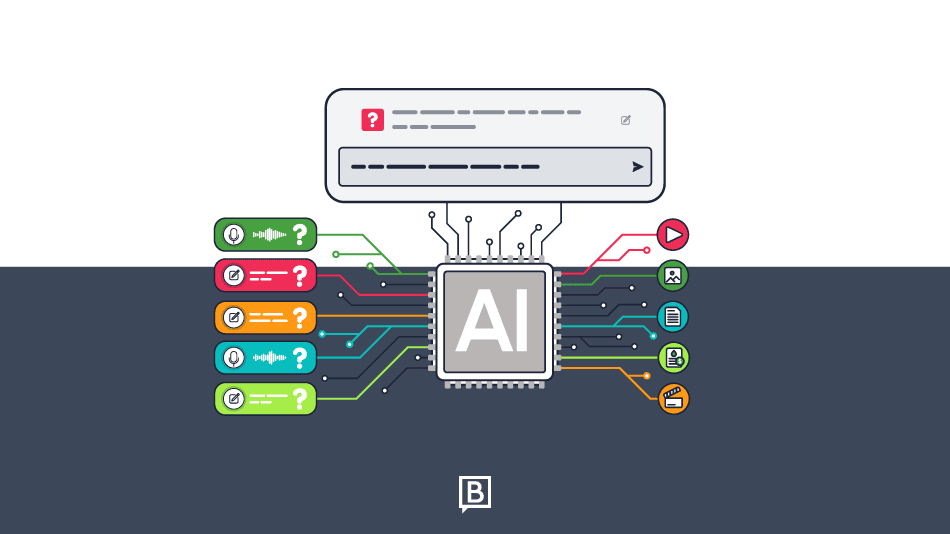
In simple terms, Answer Engine Optimization is about structuring your content so that AI tools, like ChatGPT, Google’s AI Overviews, Bing Copilot, and voice assistants, can easily understand it and pull it in as a direct response to someone’s question.
While SEO was all about ranking and driving clicks, AEO is about being helpful at scale. It’s not just about being found, it’s about being useful.
If SEO helped people discover your content, AEO helps people get what they came for—fast.
Are You Still Writing for Humans, or Are You Writing for Their Smart Devices?
For starters, AI-driven search isn’t coming. It’s already here. Ask your phone, “What’s the best time to post on Instagram?” and it might read back a snippet from someone’s blog.
Ask ChatGPT how to unclog a sink, and it’ll summarize a few sources (maybe even yours if you’ve optimized for it!).
Additionally, just by searching in Google you’re seeing answers pop up right at the top of your search. For example, check out what happened on Google when I asked, “what’s content marketing?”

They, too, are experimenting in Search Labs with something called SGE, or Search Generative Experience, which uses generative AI. I’m getting the answer to my question without having to click on organic content listed by Content Marketing Institute, MailChimp, and more.
And I definitely don’t need to click on Adobe’s sponsored content.
That’s AEO in action. If your content isn’t showing up in these responses, you’re missing a growing chunk of visibility.
AEO Isn’t the Same as Zero-Click Content (But They’re Definitely Related)
Let’s clear up a common mix-up. AEO is all about creating content that machines can read, understand, and surface as answers.
Zero-click content is about where the value is delivered—on-platform, without the need to click anything. Think LinkedIn carousels that teach you something valuable right there in the feed. Or Google showing the full answer in a snippet box so users never visit your website (like in my Google example above).
That’s zero-click content.
In other words:
- AEO makes your content the answer.
- Zero-click content makes your content immediately useful.
Smart brands are doing both.
Why AEO Matters Right Now, Especially for Social Media & Customer Experience
Let’s get real for a second. Most of your customers are already asking you questions (your FAQs), whether it’s in your DMs, in your comments, reviews, or through support emails.
These are goldmines for AEO. If you’re paying attention, these questions are telling you exactly what your audience wants to know. Not only that, they tell you the exact words they use to ask.
Use that language! Build content around it. Make it easy for AI tools to connect the dots. That’s how you become the answer, not just a search result.
Furthermore, when AI tools start surfacing your content as the answer, you’re not just getting visibility—you’re building trust.
How to Start Using Answer Engine Optimization Today (Without Overhauling Everything)
Here’s the good news: you don’t have to reinvent your entire content strategy to get started with AEO. You just need to shift how you present your content.
Step 1: Turn FAQs Into Thumb-Stopping Content
Got a list of questions your customers are constantly asking? GOOD. That’s content gold.
Now, don’t just slap those answers on a dusty FAQ page and call it a day. Break them down into bite-sized, binge-worthy nuggets:
- Write a blog post that sounds like your smartest friend giving advice over coffee.
- Create a LinkedIn post that actually sparks conversation.
- Update a juicy section on your site that doesn’t read like a robot wrote it.
As an example, we get a lot of questions about engagement, deeper engagement, and how engagement leads to sales. Based on that, I wrote the below blog post.

[Source]
Pro Tip: Answer like you would in the DMs. Be human. Be helpful. Skip the corporate-speak.
Your audience isn’t looking for perfect, they’re looking for real. And real answers build real trust, fast.
Step 2: Make It So Easy to Skim, Even Your CEO Will Read It
Let’s be honest: no one’s reading your content word-for-word. Not even you. That’s why structure isn’t optional! It’s strategy!
Think like a human (and a helpful little AI bot):
- Use headers that actually say something.
- Keep paragraphs snack-sized; I go for 1 to 3 lines MAX.
- Lean into lists and ✅ bullet points ✅.
- Bold your takeaways so they pop on the scroll.
This isn’t about dumbing it down. It’s about speeding it up. If someone can glance and get it, you’ve already won.
Skimmable = shareable. Period.
Step 3: Test It Like a Tech-Savvy Sleuth
You’ve written the thing. Now it’s time to ask the million-dollar question: Would you find this content helpful if you Googled it?
Or, better yet, pop that question into ChatGPT or Google SGE (Search Generative Experience, if you’re fancy).
- If your content isn’t showing up?
- Or the AI gives a jumbled, “meh” answer?
Houston, we have a messaging problem. That’s your cue to tweak!
- Ensure the answer is clear (and then make it clearer).
- Make it shorter (or more structured — see Step 2).
- Confirm it feels actually helpful, not keyword-stuffed fluff.
Remember: If AI can’t summarize it and humans can’t skim it, your content isn’t ready for prime time.
Test. Tweak. Repeat. That’s how you stay findable and fabulous.
The Real Magic? You Already Have Everything You Need.
Surprise: You don’t need a brand-new strategy. You just need to repurpose what you’re already doing.
Ever answered a customer’s question in:
- Your email?
- During a sales call?
- On a comment thread or DM?
Congrats! You’re already doing AEO (Answer Engine Optimization, if we’re getting technical).
The only difference now? You need to package that brilliance so AI tools — and actual humans — can find it.
Here’s your move:
- Next time you answer a great question, copy/paste it into a doc.
- Boom. You’ve got the start of a blog post, a social series, or a killer FAQ update.
Stop overthinking it. Start turning conversations into content.
The real flex in 2025? Making useful answers look effortless.
What Does Answer Engine Optimization Success Actually Look Like?
Here’s where it gets juicy. With AEO, you might not see your usual traffic spike. You might not even get the click.
But guess what? You still win.
Because when your content is pulled into an AI-generated answer — whether that’s a chatbot, search snippet, or smart speaker — your brand shows up as the trusted source.
- Now you have visibility without vanity metrics.
- That’s reach without relying on ranking.
- This is how you maintain relevance in a post-click world.
And that, my friend, matters more than ever.
Answer Engine Optimization Rookie Mistakes to Avoid
If you’re new to AEO (or just dabbling), avoid these common missteps that tank your chances of being the answer:
- Writing for bots instead of humans. Keyword-stuffing is out. Conversations are in. AI tools reward clear, helpful content that sounds like it came from a real person, not a clunky robot.
- Using brand-speak instead of customer language. Don’t call it “frictionless onboarding.” If your customer calls it “getting started fast,” you should too.
- Skipping structure. AI isn’t psychic. Use headers, lists, and bolded key phrases to guide the machine (and your reader!) through your answer.
Wait … Does AEO Work for Voice Search Too?
Oh YES it does. Think about how people talk to Siri or Alexa:
- “Hey, how do I reset my router?”
- “What’s the best CRM for small business?”
- “Why is my phone overheating?”
They’re asking questions, expecting short, clear, useful responses.
If your content is:
- Structured for skimming
- Written like a helpful human
- Direct and to the point
…it’s already on its way to showing up in voice search results. Voice is just another surface where AEO content can shine.
Answer Engine Optimization Tools Worth Exploring
Want to level up your Answer Game™? Add these tools to your toolbox:
- Schema Markup. Adds extra context so AI gets what your content is about.
- Frase or Jasper. AI tools that help you draft, optimize, and align with search intent.
- Search Console + SGE Tracking Tools. See where your content shows up in AI-generated results (and where it doesn’t… yet).
Final Thought: AEO Isn’t About Gaming the System. It’s About Serving the Seeker.
If you’ve been around me for more than 5 minutes, you know my philosophy: Conversations > Campaigns. Always.

AEO is just the next evolution of that; it’s …
- Scaling helpful answers.
- Making your content more accessible.
- Showing up when and where your audience needs you — even if they never click a single thing.
This isn’t just a strategy shift. It’s a mindset shift. Be the answer. Be the helpful human in a sea of search noise.
That’s how you win with AEO.
FAQs
- What’s the biggest difference between SEO and AEO? SEO is about getting ranked in search results. AEO is about providing clear, direct answers that AI tools can use immediately.
- Is AEO only important for AI tools like ChatGPT? Nope! It helps across platforms—Google, Bing, social media, voice search, and more.
- Can small businesses benefit from AEO? Absolutely. Especially if you serve local or niche markets—answering common questions gets you discovered fast.
- How can I check if my content is AEO-optimized? Search your content’s target question in ChatGPT or Google. If your site doesn’t appear—or the answer is unclear—it needs refining.
- Will AEO replace traditional SEO completely? Not completely. But it’s evolving SEO into something more user-centric, faster, and smarter.

Latest posts by Brooke B. Sellas (See All)
- Customer Experience Truths Happen In Real Time - February 4, 2026
- Social Listening: The Problem Isn’t Your Tools! - January 28, 2026
- Predictive Social Care: The Mindset Shift Most Teams Need! - January 21, 2026