When Brand Safety Becomes Brand Invisibility
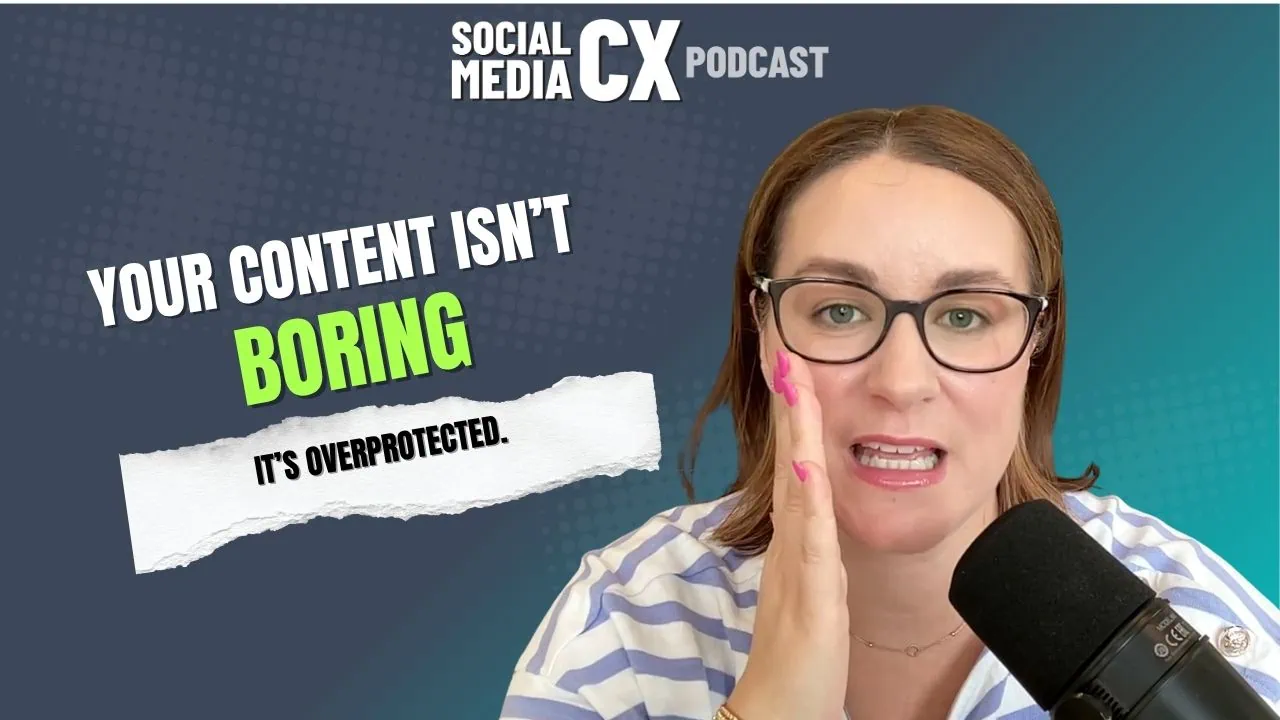
Table of Contents
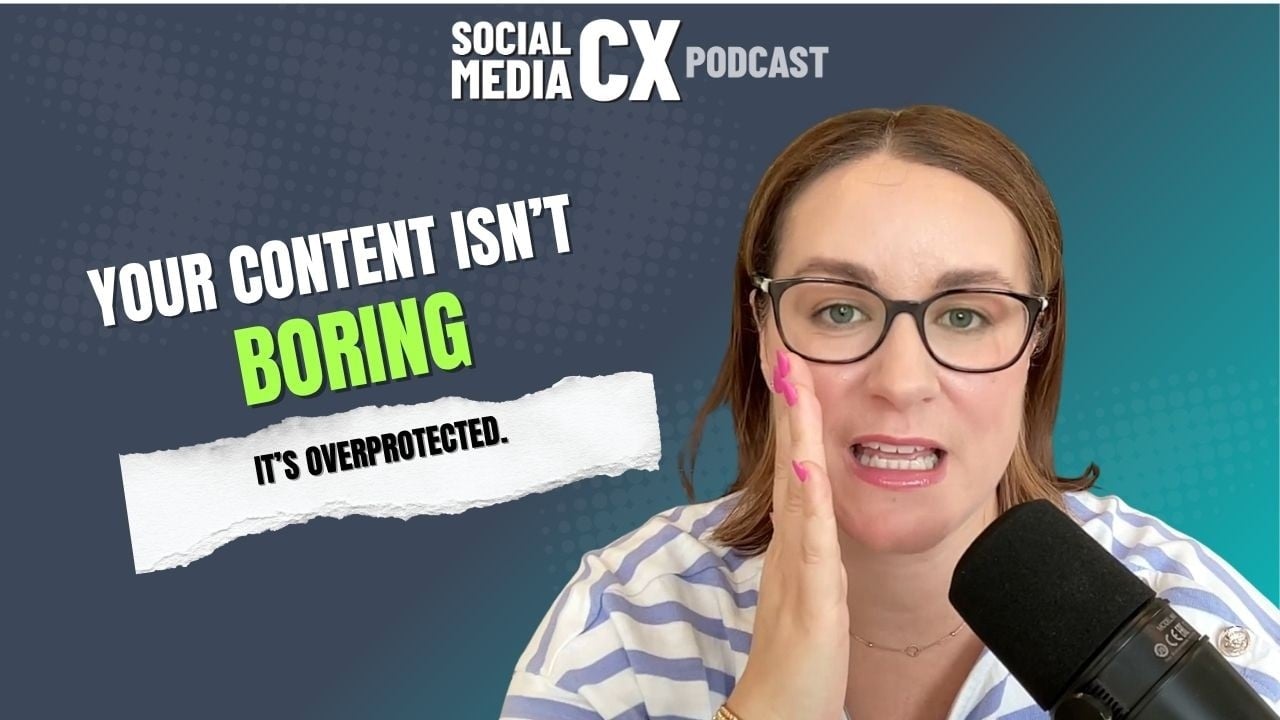
Enterprise brands are producing more content than ever before, yet many are seeing less engagement, fewer conversations, and declining visibility across social media.
The problem is not always the quality of the content.
In many cases, the problem is that the content has been stripped of the very thing audiences respond to most: perspective.
As social platforms increasingly reward discussion, replies, and interaction, many organizations are still optimizing for neutrality, caution, and broad approval. The result is polished content that technically checks every box but gives people no reason to respond.
That disconnect is becoming one of the biggest problems in modern brand communication.
This article is part three of our Onion Theory series based on Social Penetration Theory, a communication framework that explains how relationships deepen over time through increasing levels of openness and emotional connection.
In the first article, we explored how surface-level clichés limit connection and weaken audience trust. In the second, we looked at why facts alone are no longer enough to sustain meaningful engagement. This third layer moves into opinions, which is where conversations finally begin to deepen.
Because relationships do not grow through information alone.
They grow through perspective.
Why Opinions Create Better Brand Content Engagement
Think about the conversations you remember most in your own life.
The ones where you lost track of time. The ones where you walked away thinking differently. The ones where someone said something that made you pause, disagree, laugh, or lean in closer.
Those were probably not conversations built entirely around facts.
They were conversations built around perspective.
The same dynamic exists in social media today, whether brands acknowledge it or not.
Platforms increasingly reward interaction itself:
- comments
- replies
- discussion
- debate
- participation
LinkedIn now shows impression counts on comments, not just posts. That shift tells us something important. Participation is becoming more valuable than passive visibility.
As Brooke Sellas explains:
“The algorithm doesn’t care that you posted something. It cares that you said something worth responding to.”
That single statement explains why so much enterprise content struggles to generate meaningful brand content engagement.
Many organizations still treat social media like a press release distribution channel. They publish polished, factually accurate updates that feel safe and professional, but emotionally flat.
The result is content that gets seen but not discussed.
Liked but not remembered.
Consumed but not connected to.
Why Enterprise Brands Avoid Opinions on Social Media
If opinions create stronger engagement, why are so many brands hesitant to express them?
One of the biggest reasons is fear.
In highly regulated industries like fintech, healthcare, insurance, and financial services, teams are understandably cautious about risk. Every post may pass through compliance, leadership, marketing, and legal review before publication.
Nobody wants to create a reputational issue because a social post sounded too opinionated.
But many organizations have unintentionally started treating all opinions as dangerous.
That is a mistake.
There is a major difference between controversial opinions and industry perspective.
A brand does not need to comment on politics to have a point of view. It does not need outrage or performative controversy to create conversation.
Companies are allowed to have opinions about:
- customer experience
- service standards
- industry trends
- leadership decisions
- operational priorities
- what works
- what does not
As Brooke says:
“Opinions about your domain are not only safe. They’re essential.”
That distinction matters because audiences increasingly expect thought leadership to contain actual leadership.
Not just information.
The Problem With Over-Approved Content
Another major challenge is approval culture.
Inside many organizations, content passes through so many review layers that every strong perspective gets softened before publication.
Legal reviews it.
Compliance reviews it.
Leadership reviews it.
Marketing reviews it.
By the end of the process, the content may still be technically accurate, but it no longer feels human.
As Brooke puts it:
“Content that says nothing generates nothing.”
That line captures one of the biggest problems in modern thought leadership.
Many brands confuse professionalism with neutrality.
But neutrality rarely creates connection online.
Audiences are no longer looking only for information. Information is everywhere. What audiences want now is interpretation, clarity, conviction, and perspective.
They want to know what a company believes, not just what it knows.
This is one of the central ideas behind the Talk Worthy Content course, which helps brands create content that encourages conversation instead of passive scrolling.
Not by manufacturing controversy, but by communicating perspective with confidence and consistency.
Engagement Is Not the Same as Agreement
One of the biggest misunderstandings in social media strategy is the belief that engagement should always look positive and agreeable.
Many brands still define success as applause:
- likes
- compliments
- passive agreement
But real engagement is often more complex than that.
Real engagement includes:
- discussion
- nuance
- disagreement
- curiosity
- participation
When someone comments, “I actually see this differently,” that is not automatically a failure.
Sometimes it is proof the content finally gave people something meaningful to react to.
As Brooke explains:
“Disagreement is not a failure of your content. It’s evidence that your content said something worth responding to.”
That is also what social algorithms increasingly reward.
Platforms want conversation because conversation increases interaction and dwell time. The brands gaining visibility today are often not the loudest brands. They are the brands creating environments where audiences feel invited to participate.
Why Perspective Creates Stronger Thought Leadership
This conversation is not about encouraging brands to become argumentative online.
It is not about chasing outrage or turning every company into a hot-take machine.
It is about developing enough conviction to clearly express what your organization believes about its work, customers, and industry.
Because audiences rarely advocate for brands that never stand for anything.
And right now, many organizations sound interchangeable online.
Over-polished messaging often removes the very perspective that creates differentiation.
But perspective creates memory.
Perspective creates trust.
Perspective creates conversation.
That is ultimately what this layer of Social Penetration Theory reveals. Relationships deepen when communication moves beyond surface-level information and into perspective, belief, and emotional honesty.
The same principle applies to brand communication.
Trust is not built through information alone.
It deepens through interaction, consistency, and shared perspective over time.
The Hidden Cost of Playing It Safe Online
Many enterprise organizations are still optimizing their content strategy around approval and risk reduction.
But social media platforms increasingly reward something different:
- conversation
- clarity
- perspective
- participation
That creates a growing tension for leadership teams.
Because organizations that optimize only for safety may eventually discover they optimized the personality out of their own thought leadership.
Not because the content lacked information.
But because nobody felt invited to respond to it.
If you missed the earlier parts of this series, start with our discussion on clichés and facts inside the Onion Theory framework. Together, these conversations reveal why relationship-driven content requires more than visibility alone.
And if your organization is struggling to create content people actually engage with, the free Talk Worthy Content course breaks down how to build conversation-driven content strategies that strengthen trust, engagement, and audience connection.
Read the Transcript
[00:00:00] Why Safe Content Gets Ignored
Disagreement is not a failure of your content, it’s evidence that your content said something worth responding to.
And my friends, that is exactly what the algorithm rewards on social media.
Hello, everyone. It’s Brooke Sellas back again with another episode of the Social Media CX Show. If you don’t know me, I’m Brooke Sellas, CEO of B Squared Media, author of Conversations That Connect, and someone who happens to have a lot of opinions, which, as you’re about to find out, is actually a competitive advantage.
We’re in week three of our May series on the Social Penetration Theory, which we are calling the Onion Theory, or the SPT for short. If you’re just joining us, here is the quick downlow, but I would recommend going to watch the other episodes. The SPT, or the Onion Theory, is a 1973 communication framework that says relationships deepen through four layers of progressive self-disclosure: cliches, facts, opinions, and feelings.
In week one, we talked about cliches, which are the surface layer conversations, and it’s where most branded content on social media sits. Week two, we talked about facts. They’re necessary, they’re credible, but they’re not sufficient for real engagement or meaningful engagement.
[00:01:31] The Opinion Layer Explained
Today, we’re going into layer three, which is opinions. And I’m gonna make you a promise right now. This is the episode that’s going to change how you think about your social media content forever.
Because opinions are where conversations actually start. Opinions are what the algorithm is desperately hungry for right now. And opinions are the layer where most brands, especially enterprise-sized brands, and especially financial services brands, go completely, utterly, painfully silent. And it’s costing them dearly.
So let’s get into it. In the Onion Theory, layer three is what they call effective exchange layer. This is where Altman and Taylor said something really important. This is the first layer where real intimacy begins. Now, we’re not talking about intimacy in the way we often think about it with relationships, but intimacy in the way of building a relationship and getting to trust, right?
There’s no information exchange. There’s no pleasantry. It’s just intimacy because we’re getting to our opinions, the psychographical data, the, the beliefs, the attitudes, the feelings, all of that that make up who we are. Sharing an opinion, as I’m sure you know, is an act of vulnerability. Because you’re not just stating a fact, “My name is Brooke.”
You’re taking a position, and, “I think your content probably sucks because it’s all cliché content.” Woo, big opinion, right? You’re saying, “This is what I think. This is where I stand. This is the hill I’m gonna die on,” and yes, I’m gonna die on this hill. But that vulnerability, that willingness to plant the flag, so to speak, is what invites other people to respond, because they want to give you their opinion on said thing.
Think about the conversations that you’ve had that you remember the most, the ones that kept going, the ones where you lost track of time, and it felt like you were there for five minutes, but you looked up and you were three hours into a conversation. The ones where you left feeling like you really connected with someone.
I bet you those weren’t conversations where someone recited facts to you. “Hello, my name is Brooke. Hello, I own B Squared Media. Hello, I’m talking to you on this podcast right now.” No. They were probably conversations where someone said something that made you think. Or disagree, maybe even really, really, really, really disagree. Or they made you lean in a little bit.
Like, “Wait a minute. What? Tell me more about that.” That is the opinion layer hard at work, and it works exactly the same way in real life on social media.
[00:04:37] Why Opinions Feel Risky for Brands
Now, if opinions are so powerful, if they’re what drives real meaningful engagement, real conversation, and real algorithm fighting content, why do most brands avoid opinions?
I know exactly why. I’m gonna give you the three reasons why, and I’m gonna name all three because I think they’re all worth examining. We’ve been working in social media for 20 years, so trust me, I know these excuses, reasons, inside and out. So here we go. Number one, fear of controversy. Brands are terrified of saying the wrong thing. Or maybe they’re terrified of alienating a segment of their audience.
Of course, they all worry about ending up in a PR crisis because someone on the social team posted an opinion that leadership didn’t approve of. And look, I totally get that. That is not an irrational fear, especially in those highly regulated brands like financial services, where every word is scrutinized.
But here’s what I want to push back on. There’s a difference between a controversial opinion and just regular old everyday opinions. You don’t have to weigh in on politics. You don’t have to take sides on hot button cultural issues. But have you noticed how many comments those types of content get?
Yeah, there’s a reason behind it. The algorithms push these things. You can have strong, clear, defensible opinions about your industry, or about how customers should be treated, or about what good social care looks like, hello, or about which metrics actually matter, without touching anything that would give your legal team a heart attack.
Opinions about your domain, those are not only safe, they’re essential.
Now, reason number two is approval culture. Oh boy, I love this one. In most enterprise organizations, really even the mid-market and sometimes the smaller guys, content has to go through multiple rounds of review before it gets posted.
We talk to legal, and compliance, and marketing, and leadership… and what happens during that process, every little edge, every little differentiator or opinion kind of gets sanded off. We’re just taking the sandpaper and we’re smoothing out those rough edges. Every strong claim gets softened. Every opinion gets watered down into something so carefully worded that it says absolutely nothing at all. Which ironically, is the most dangerous outcome of all, because content that says nothing generates nothing, and now we’re spending all of this time and money on social and getting nowhere.
[00:07:35] Engagement vs Applause
Hmm. Reason number three is that a lot of brands seem to mistake agreement for engagement. Mm-hmm. A lot of brands think engagement means everyone clapping along, lots of likes, lots of, “Great point. You’re amazing. You’re doing great, sweetie.” Lots of people nodding in agreement. But that’s not engagement, that’s applause.
Real engagement, the kind that drives reach through the algorithms, the kind that builds that community, the kind that moves people includes disagreement. We are humans. I don’t want to have you nod along and smile all the time. I want you to disagree with me. That’s how we get to know each other.
This is how we build trust, and loyalty, and relationships. Pushback is so important. When people say, “I see it differently,” or, “Have you considered this?” That is wonderful. This is how we grow and have more conversations and get to level four feelings, which will come next week.
[00:08:43] Why Disagreement Helps Content Perform
But disagreement is not a failure of your content, it’s evidence that your content said something worth responding to.
And my friends, that is exactly what the algorithm rewards on social media. Let me give you the data on this because I know some of you are looking for the receipts, which is, yes, me using facts to launch an opinion. Very meta, very intentional. LinkedIn engagement is up 33%, even as organic reach on LinkedIn, meaning, you know, the reach on your content that you’re posting, has collapsed by 71% since last year.
Facebook engagement is up 11%. Instagram engagement for creators who pivoted to conversation through their content is up 150%. So the platforms are not being subtle about what they want. They are actively and aggressively rewarding content that generates conversation, comments, replies, debates, discussions.
Why? Because it creates dwell time. And even though Americans spend around eight hours a day on social media platforms, they want you spending all 24 hours in your day on there. So anything that creates dwell time, meaning more time on their platform, is going to be rewarded and lifted up inside of that algorithm.
And LinkedIn, as I talked about on last week’s show, is now showing you comment-level impression data. Meaning your comments are now getting reach, and sometimes those comments are getting more reach than your actual posts. What does this tell you?
[00:10:26] What Social Algorithms Actually Reward
It tells you that the algorithm doesn’t care that you posted something, it cares that you said something worth responding to.
Cliches don’t do that. Facts alone don’t do that. Opinions absolutely do that. Because when you post a strong, clear, defensible opinion about something your audience cares about, when you plant that flag and you say, “I am gonna die on this hill,” you give people something to engage with. They can agree, they can disagree, they can build onto it, they can push back against it.
Literally, I spend all my time on LinkedIn, and this is exactly what I spend my time doing, engaging, agreeing, disagreeing, pushing back, building on. That is the currency of social media algorithms right now, and most brands are broke.
[00:11:17] How to Create Opinion-Driven Content
Okay, so practically speaking, how do you do this? How do you move from safe, factual content into opinion-driven content without losing your mind or getting in trouble by compliance or legal?
Here’s the thing no one tells you, by the way. You don’t have to start with a hot take, although I love hot takes. I actually call this non-controversial controversial content, ’cause I’ll do a hot take on something that’s not controversial at all.
It is to me, but it’s not, like, political or whatever. You can start with a poll. Every single social media platform has them, LinkedIn, Instagram, Facebook. They’re built in, they’re easy, and they are hands down the lowest barrier to entry for getting your audience to actually talk back to you. Because here’s what a poll does that a regular post doesn’t.
It makes responding effortless. You’re not asking someone to compose content or fill in the right words, or you’re not worried about how you’re gonna sound. You’re just literally asking them to tap a button. That is it.
Now here’s the part I really want you to hear because the progression is what most people miss. Start easy and then go harder. So step one would be easy polls, binary choices, low stakes, no wrong answers kind of polls, right? The kind of poll where someone can respond without thinking too hard.
So like, I might say something like, “When a brand doesn’t respond to your comment, what do you do?” And then the poll questions would be move on or remember it forever, right? And people are going to engage on that poll, and I’m gonna get voice of customer data on whether people get upset by this or don’t.
It’s easy, it’s relatable, and almost everybody has an opinion on something like this. So the barrier to entry is basically zero. Now, step two would be going into harder polls because now you’re asking for a real position, something that requires a tiny bit of thought, something where the opinions aren’t equally comfortable.
So this one might look like, “Honest question. Does your brand treat social media as a customer experience channel or a content distribution channel?” Now people have to think. They have to be a little honest. Now the responses start to mean something, and the comments that follow mean even more. From there, we’re gonna go into fill-in-the-blank type questions because this is where you transform from multiple choice, kind of almost passive engagement with the tapping, to open responses, but with a scaffold that makes it easy.
So something would look like for me maybe “The biggest barrier to better social care at my organization is blank.” You’re still making it easy to respond because you’ve given them the whole sentence structure. But now they have to supply the substance, and what they supply is voice of customer data.
That also becomes your content ideas. It’s the exact language that your prospect used to describe their own pain. We can use this language in our marketing and sales messages to align closer with the customer.
[00:14:37] Training Your Audience to Respond
Finally, we get to step four which is just ask. This is where it gets really good and where I sit in social but only because I’ve been doing this for years.
But once your audience is in the habit of responding to you, once they trust that you’re going to read that comment and engage with it, because y’all, I see way too many social media experts putting out clickbait, comment bait, getting people to comment and then just going through and liking the post, not even engaging back.
Ew, ew. Stop that. That’s gross. Don’t do that, and don’t hang out with people who do it, especially not on social. So once they’re engaging, they’re responding, and you’ve conditioned them to do this, the key is to ask at this point and watch the comments roll in. So I could say something like, “What’s the one thing you wish your leadership understood about social media algorithms?”
No poll, no fill in the blank, just a direct, honest question from my audience. And they’ve learned to trust me, so they’re going to respond. That is the opinion layer fully activated. It’s really not that hard. And that, not coincidentally, is exactly what the algorithms are rewarding right now across every single platform.
So the progression isn’t complicated, but it does require a little bit of patience. You have to earn the right to ask hard questions by starting with the easy ones. If you remember the photo of the onion that I shared in the previous podcast episodes, which I’ll pop up on screen right now magically through the help of Sarah, my producer, you can see there, there’s breadth around the onion and depth.
It requires a little bit of patience. You have to show up consistently. You have to actually respond when people engage, which, surprise, is exactly what the Onion Theory has been telling us since 1973: relationships deepen gradually.
So does your audience’s willingness to talk back. So start with a poll, work your way into conversations, and never stop showing up when people respond. This is the whole thesis, by the way, of Talk Worthy Content. It’s how you move from cliches and facts, which most brands are very comfortable with, into opinions and feelings, which is where the real engagement lives.
[00:17:03] Conviction vs Controversial
And I wanna be really clear, this isn’t about being controversial, again, for the sake of controversy. We’re not doing that. It’s not about manufacturing drama or chasing engagement at the expense of your brand. It’s about having enough conviction in what you believe about your industry, your customers, your products, your services, your methodologies, whatever it is, to say it out loud, clearly, consistently, and in a way that invites real conversation.
That is what the algorithm rewards, it’s what builds community, and it’s what turns those followers that you’ve been working so hard to collect into actual advocates for your brand. Do you want followers or advocates? Hmm.
We built the Talk Worthy Content course to teach all of this. How to find your brand’s opinion layer, how to express it in a way that’s on brand and on message, how to structure content consistently that generates the kind of engagement that actually matters, and y’all, it is completely free.
It’s waiting for you at bsquared.media. Go to resources, courses, and then look at Talk Worthy Content. I’ll also link it in the show notes, which if wherever you’re watching or listening is the transcript on that platform.
Whew, we have come a long way so far this month. Layer one, cliches, the surface, where most brands are stuck.
Layer two, facts, the foundation. Necessary, but not sufficient. Layer three, opinions, the engine, where conversations actually start to get good. Next week we will go through layer four, which is the deepest layer, and the one that took us years to fully understand, which is feelings.
As always, thank you for being here today. If this episode gave you the permission you’ve been looking for to actually say something real on social, use it. Post that opinion, plant that flag, see what happens, and then come tell me all about it. Find me on LinkedIn, drop me a comment, send me a DM. Let’s have the conversation.
Find me so we can converse. Grab that free Talk Worthy content course, and hey, if you’re loving the May series, drop me a review. It takes 30 seconds, but it means the world to me. See you next week for the feelings layer. Bring your tissue. Just kidding, maybe. Until then, think conversation, not campaign.
Want to hear the full conversation? Listen to the Social Media CX Podcast on YouTube. And if your team is thinking about what responsible social listening in banking or financial services actually looks like at scale, check out the State of Social Care Report 2026.
Finally, as always, Think conversation, not campaign.™

Latest posts by Brooke B. Sellas (See All)
- You’re Treating Business Intelligence Like Social Engagement - August 19, 2026
- Your Customer Complaints Are Shaping What AI Says About Your Brand - August 12, 2026
- The Customer Signals Hidden Inside Your Social Care Data - August 5, 2026

Written by award-winning strategist Brooke Sellas, this weekly 5-minute power-up will help you turn social interactions into loyalty, retention, and revenue.