It happens all the time. A customer tweets at your brand with a problem. You’ve got your social media team on high alert, and they swoop in with a response in under 10 minutes.
Your social care response time looks impressive on paper, right? But what if that response is a generic, “We’re looking into it,” and the customer hears nothing for another 24 hours?
That initial speedy reply doesn’t mean much now, does it?
We see this all the time. Brands fixate on social care response time AND forget what really matters: actually solving the customer’s problem and making them feel heard. It’s like putting a Band-Aid on a broken leg. Sure, you acted quickly, but you didn’t fix the issue.
It’s time to look beyond the stopwatch and start measuring what truly counts in social customer care. As a recent Deloitte report shows, social media budgets are on the rise, so it’s more important than ever to prove your ROI.
The Problem with Social Care Response Time Tunnel Vision
Focusing only on social care response time is a classic case of missing the forest for the trees. It’s an easy metric to track, and it looks great on a report.
But it doesn’t tell you the whole story. A fast response is just the first step. What about the quality of that response? Was the issue resolved? Is the customer happy?
These are the questions that really get to the heart of social care ROI. And if you’re not asking them, you’re leaving money on the table.
Let’s play a little game of “would you rather.” Would you rather visit a doctor who sees you immediately but misdiagnoses your condition, or one who takes a bit longer but actually fixes what’s wrong? The same principle applies to social customer care. Speed without substance is just noise.
The obsession with social care response time has created a culture of reactive rather than proactive customer service. Teams are so busy hitting their SLA targets that they’re not thinking strategically about the customer experience. They’re playing whack-a-mole instead of building relationships.
The Hidden Costs of Response Time-Only Metrics
When you focus solely on social care response time, you’re creating unintended consequences that hurt your brand.
First, you’re training your team to prioritize quantity over quality. They rush to respond with templated responses that don’t address the customer’s specific concern. This leads to frustrated customers who feel like they’re talking to a robot.
Second, you’re missing opportunities for meaningful engagement. Social media is a relationship-building platform. When you’re only focused on response speed, you’re not creating genuine connections that turn customers into advocates.
Third, you’re not learning from your customers. Each interaction is a goldmine of feedback, but if you’re just trying to close tickets quickly, you’re not capturing those insights.
FINALLY, you’re setting unrealistic expectations. Customers expect instant responses at all hours, which isn’t sustainable. This creates a cycle where you’re constantly chasing an impossible standard.
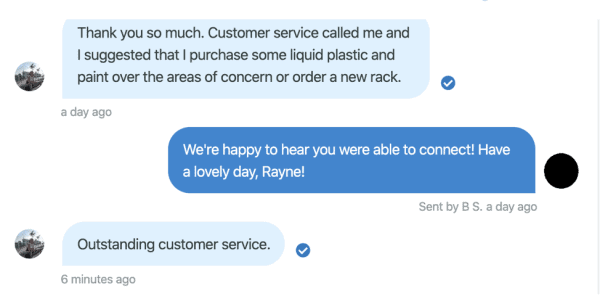
[Image Source: Our Amazing Community Managers!]
Why Social Care Response Time Isn’t Everything
Here’s the thing about social care response time: it’s just one piece of a much larger puzzle. While it’s important to acknowledge customers quickly, what happens after that initial response is what really matters.
Consider this scenario: Brand A responds in 5 minutes with a generic “We’re looking into this.” Brand B takes 30 minutes but responds with a personalized message that shows they understand the issue and provides a clear next step. Which creates a better customer experience?
Many brands are still chasing that 5-minute response time at the expense of everything else. They’re optimizing for the wrong metric.
Measuring What Matters: Beyond Social Care Response Time
So, how DO you measure the true success of your social care efforts? It’s about looking at a broader set of metrics that paint a complete picture of the customer experience. Here are the key metrics that drive real business results:
- Resolution Rate: This is the big one. What percentage of customer issues are actually being resolved on social media? A high resolution rate means your team is not just responding quickly, but actively solving problems. According to Sprout Social, the resolution rate illustrates how well your internal teams collaborate to find solutions for customers in a timely manner, directly impacting customer expectations.
- Customer Satisfaction (CSAT): Are your customers happy with the support they’re receiving? A simple post-interaction survey can provide a wealth of information about what’s working and what’s not. This metric directly correlates with customer retention and lifetime value.
- Sentiment Analysis: Go beyond just counting mentions. Are people talking about your brand in a positive or negative light? Tracking sentiment over time can show you the real impact of your social care efforts. Positive sentiment often leads to organic word-of-mouth marketing.

- Customer Effort Score (CES): How easy is it for your customers to get the help they need? The less effort required from them, the better their experience. According to a recent article from Salesforce, creating a seamless customer experience is key. Low-effort experiences create loyal customers.
- Advocacy and Loyalty: Are your social care interactions turning customers into fans? Look for signs of advocacy, like positive shout-outs and user-generated content. That’s the kind of ROI you can’t put a price on.
But here’s where it gets interesting. These metrics don’t just measure customer satisfaction; they directly impact your bottom line.
The Business Impact of Moving Beyond Response Time Metrics
- Resolution Rate and Revenue Protection: By resolving issues effectively, you prevent negative word-of-mouth that could impact future sales. Studies show that customers who have their issues resolved are actually more loyal than those who never had a problem.
- CSAT and Customer Lifetime Value: Happy customers spend more money. A one-point increase in CSAT (Customer Satisfaction Score) can lead to significant increases in customer lifetime value. Plus, satisfied customers recommend your brand to others, reducing acquisition costs.
- Sentiment and Brand Equity: Positive sentiment on social media contributes to overall brand equity. Brands with strong social sentiment often command premium pricing for their products and services.
- CES (Customer Effort Score) and Operational Efficiency: When you make it easy for customers to get help, you reduce repeat contacts and escalations. This means your team can handle more cases without increasing headcount.
- Advocacy and Organic Growth: Customer advocates are your best marketing channel. They’re more trusted than any advertisement, and they work for free.
Balancing Social Care Response Time with Quality
Now, we’re not saying that social care response time doesn’t matter at all. It absolutely does. Customers want to feel acknowledged quickly. But the key is finding the right balance between speed and substance.
Let’s break it down. Your initial response should be fast and empathetic, but it doesn’t need to solve the entire problem. Use that first interaction to show the customer that you’ve heard them and that you’re taking their concern seriously. Then, take the time you need to provide a thoughtful, complete solution.
This approach not only improves your social care response time metrics but also delivers better outcomes. You’re hitting your SLA targets and creating satisfied customers. It’s the best of both worlds.
The Outsourcing Advantage for Response Time and Quality
Now, you might be thinking, “That’s a lot to track. We don’t have the resources for all that.” And you’re not alone. That’s where outsourced social care comes in. By partnering with a specialized team (like us!), you can tap into a wealth of expertise and resources that you might not have in-house.
An outsourced team can help you:
- Optimize social care response time without sacrificing quality: They know how to balance speed with substance, ensuring you meet SLA targets while delivering meaningful solutions.
- Implement a robust measurement framework: Go beyond response times and track the metrics that really matter. They bring best practices from working with multiple brands and industries.
- Provide 24/7 coverage: Your customers are online at all hours. An outsourced team can ensure you’re always there to help, maintaining consistent response times without the overhead of round-the-clock staff.
- Scale your efforts: As your brand grows, so will your social care needs. An outsourced partner can scale with you, maintaining quality response times even during peak periods.
But here’s the kicker … outsourced teams often deliver better ROI than in-house teams. Why? Because they’re specialists. They live and breathe social customer care, and they’ve seen what works across different industries and brand types.

Building a Culture Beyond Response Time Obsession
Shifting from social care response time obsession to outcome-focused metrics requires more than changing your dashboard. It requires a fundamental shift in how your organization thinks about customer service.
Start by redefining success for your social care team. Instead of rewarding speed, reward problem-solving. Celebrate the team member who turns an angry customer into a brand advocate, not just the one with the fastest response time.
Invest in training that goes beyond platform mechanics. Teach your team about empathy, active listening, and creative problem-solving. These soft skills separate good customer service from great customer service.
Ready to start thinking about your social media efforts in a new way? Our Ultimate Social Media Roadmap can help you get started.
It’s Your Turn
How are you measuring the success of your social care? Are you still stuck on response times, or are you looking at the bigger picture? The shift from speed-focused to outcome-focused metrics isn’t just a nice-to-have; it’s a competitive necessity.
The brands that figure this out first will have a significant advantage in building customer loyalty and driving business growth. Don’t let your competitors beat you to it.
Frequently Asked Questions About Social Care Response Time
Q: What’s the ideal social care response time for most brands?
A: While industry standards suggest responding within 1-4 hours, the “ideal” time depends on your audience and industry. More important than hitting a specific number is being consistent and following up with quality solutions.
Q: How do we balance social care response time with quality responses?
A: Use a two-step approach: acknowledge quickly (within your SLA), then follow up with a comprehensive solution. This satisfies both speed and quality requirements.
Q: What if our social care response time suffers while we focus on other metrics?
A: Initially, you might see a slight increase in response times, but this usually levels out as your team becomes more efficient at problem-solving. The key is to communicate with customers about what you’re doing and why.
Q: Can small businesses track these advanced metrics, or should they stick to response time?
A: These metrics are actually more important for small businesses because every customer relationship matters more. You don’t need expensive tools to track CSAT or resolution rates alongside response time.

Latest posts by Brooke B. Sellas (See All)
- Ready To Find Your Marketing Magic? Take Our Quiz! - November 19, 2025
- Social Media Customer Psychology: Understanding Expectations Elevates Social Care - November 12, 2025
- Seeking A Social Media Mentor? How To Find The Right One To Help You Boost Results That Matter - November 5, 2025